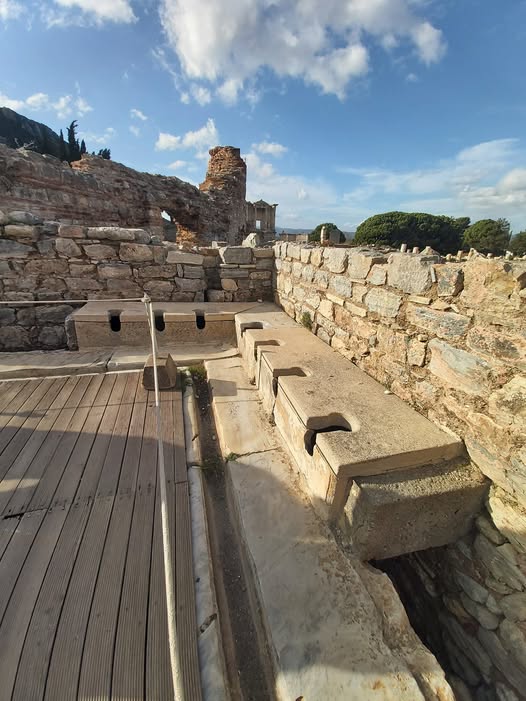

Ephesus in western Turkey is one of the most famous and stunning Greco-Roman cities. It is famous for its impressive ruins — perhaps most famously the Library of Celsus. But there are other impressive ancient Roman monuments there as well including the well-preserved and restored Theater of Ephesus.
At the Theater of Ephesus, visitors can marvel at the excellent acoustics of ancient Greco-Roman theaters. If it is quiet enough (there can be large crowds at Ephesus) visitors can have a chat with each other on opposite sides of the theater.
Ephesus – One Of The Greatest Greco-Roman Cities Of The Roman Empire
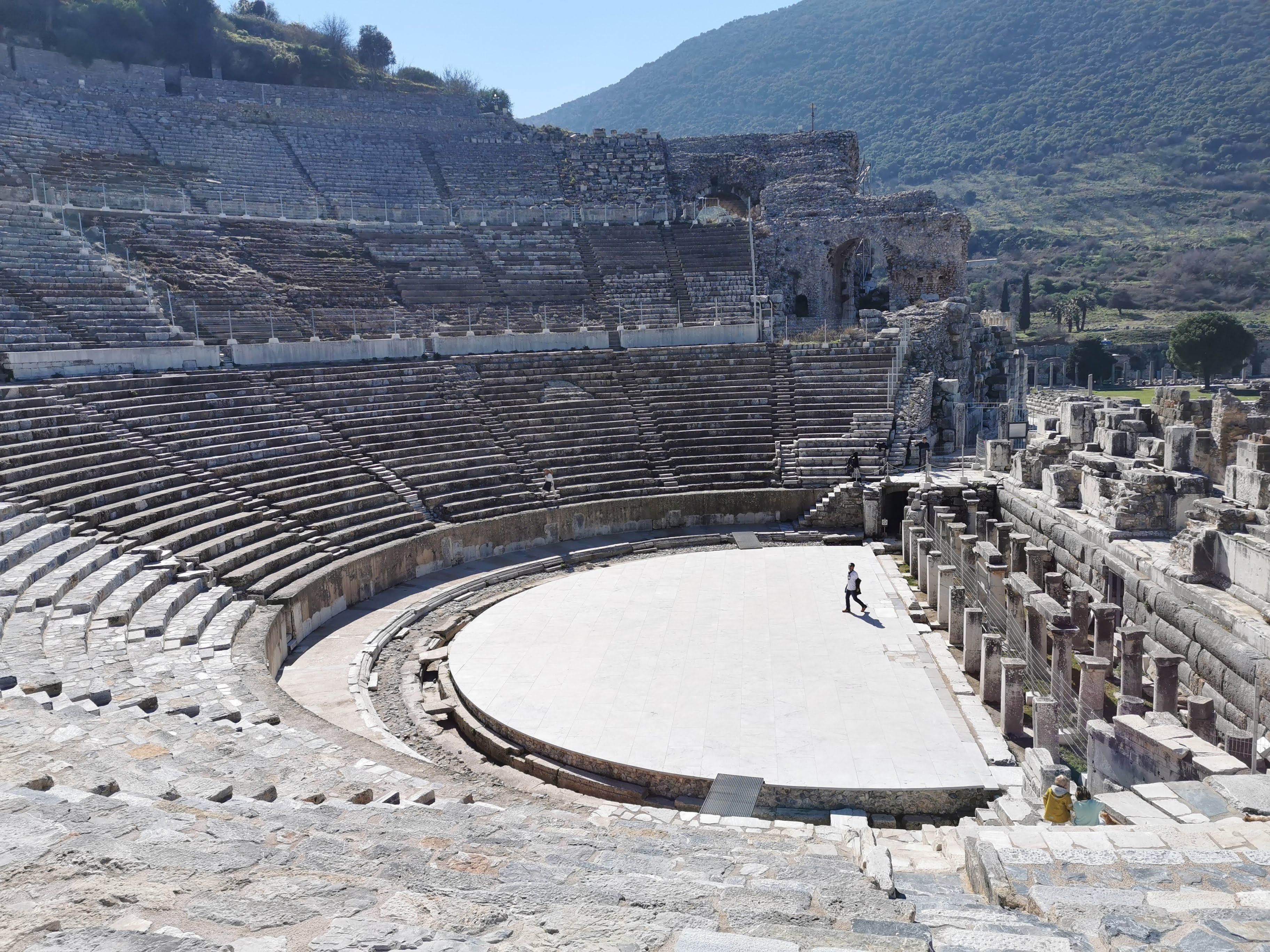
Roman Theater at Ephesus
Ephesus features prominently in the Book of Acts and the early development of Christianity. Legend has it that St. John came and lived there after St. Paul had preached there. Later, Mary the Mother of Jesus, moved and lived there for the rest of her life with St. John.
- Founded: 10th Century BC
- Abandoned: 15th Century AD
Ephesus was one of the largest and most important cities of the Roman Empire. It was an ancient Greek city that was absorbed into the Roman Empire and prospered during Roman times. The city had its share of calamities over the years including wars and earthquakes, but it was the silting up of its harbor that eventually doomed the city.
The city was abandoned, and now it is one of the greatest archeological sites in what is today Turkey. The streets are well-preserved, the wealthy neighborhood of Ephesus is a special attraction (called the Terrace Houses), the Library of Celsus is one of the most iconic Roman monuments, and the city has at least two impressive theaters.
Other ancient monuments like the Hippodrome and the walls have not yet been excavated.
The Great Theater Of Ephesus – One Of The Best Preserved Of Ancient Rome
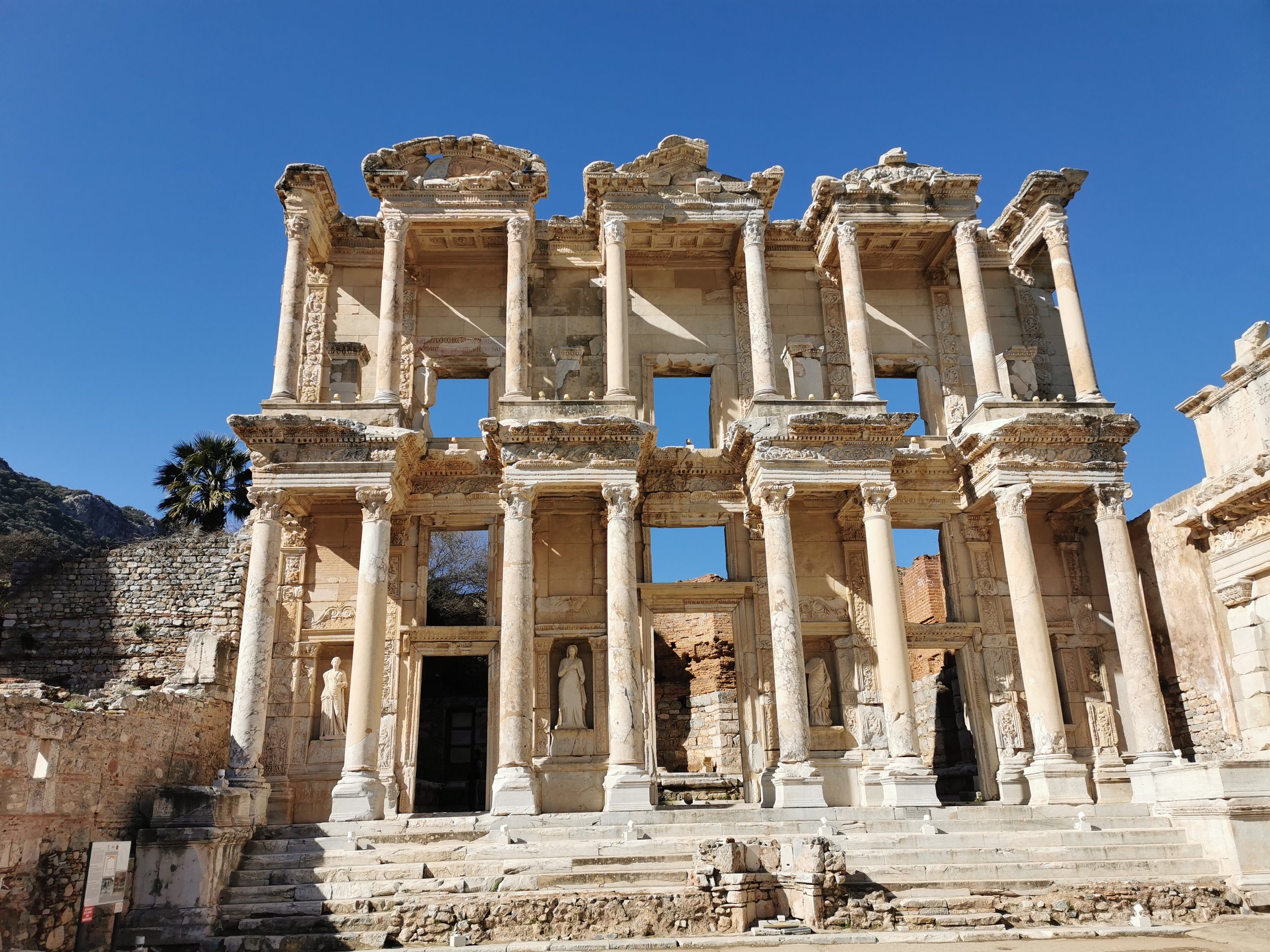
Library of Celsus in Ephesus
The Theater of Ephesus traces its origins to the Hellenistic (Greek) period. The Romans enlarged the theater during the reign of Emperor Claudius (who reigned from 41 to 54 AD) and the two-story stage was added during the reign of Emperor Nero (54 to 68 AD).
Later on, a third story to the stage was added. Earthquakes between 359 and 366 AD damaged parts of the theater (although repairs were carried out later on).
- Enlarged: Between 41 and 54 AD
- Capacity: 24,000 Spectators
A water channel was created in the upper section of the seats of the theater during the construction of an aqueduct in the 2nd century (the aqueduct brought water to the Trajan nymphaeum). An awning was also added in the 2nd century to shield spectators from the sun and rain.
The theater of Ephesus was constructed with marble and is a great example of how old Greek buildings were transformed by later Roman architects. The theater overlooks Harbor Street (leading to where the ancient harbor used to be before it silted up).
It is estimated that the ancient theater would have been able to hold an audience of 24,000 spectators.
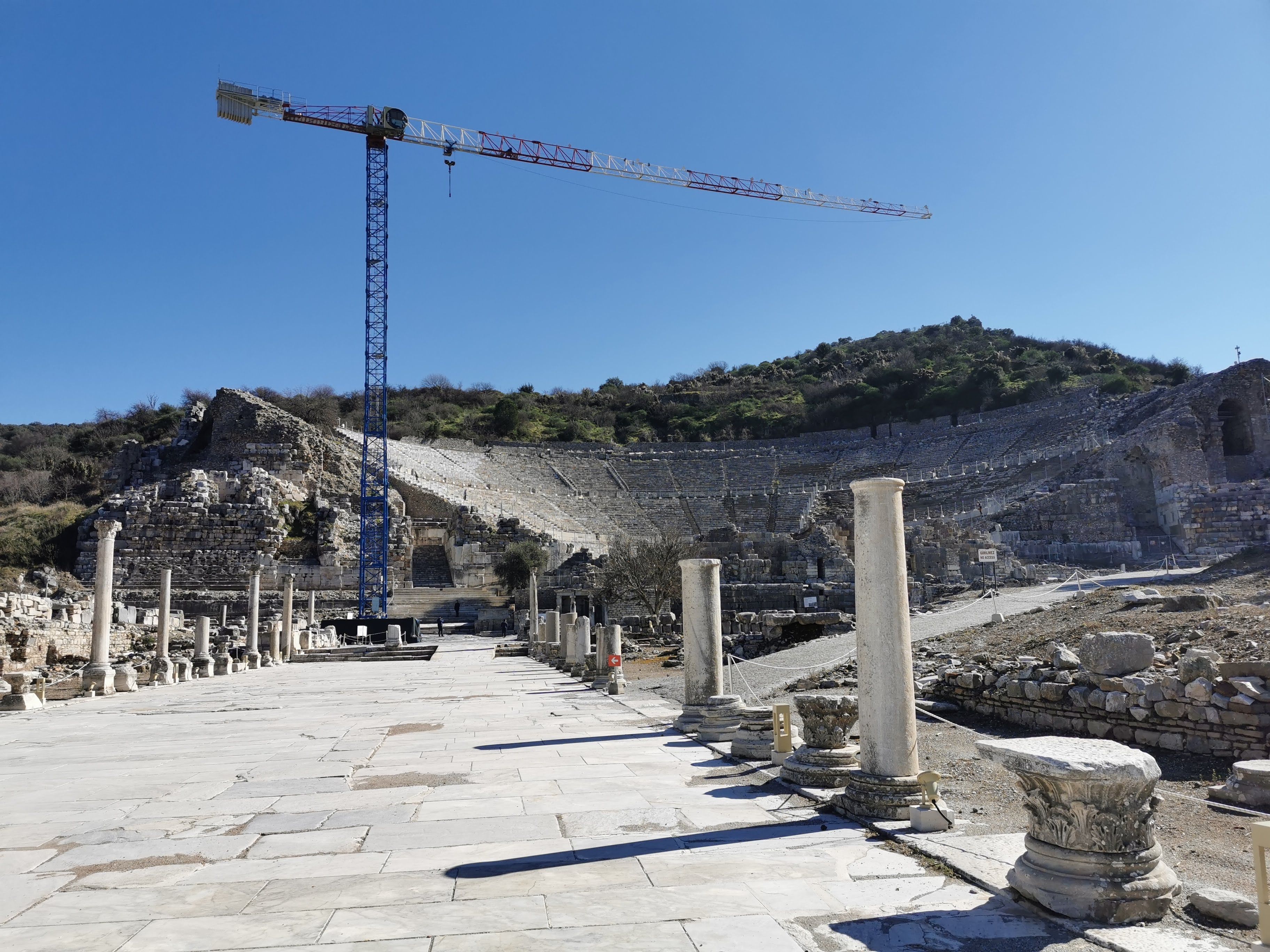
Harbor Street & The Great Theater of Ephesus
The Theater of Ephesus is also mentioned in the Book of Acts. During the riot in Ephesus against St. Paul instigated by the jeweler, Demetrius, the crowd is recorded to have moved toward the theater. The record states that St. Paul was encouraged not to enter the theater by his friends.
Visiting The Great Theater Of Ephesus & What To Know
The closest major city to Ephesus is the city of Izmir (ancient Smyrna). Alternatively, visitors can stay in the town of Selçuk, only a couple of miles from the entrance to the archeological site.
Visitors should get a ticket that includes all the local attractions in a combined ticket (including the archeological museum at Selçuk, the Terrace Houses, and the St. John’s Basilica).
- Opening time: 8:30 am to 6:00 pm (ticket office closes 5:00 pm)
Ticket Options (prices change constantly because of high inflation in Turkey)
- Ephesus Only
- Ephesus & Terrace Houses
- Ephesus, Terrace Houses, Archeology Museum, & St. John’s Basilica

Seats of the Great Theater of Ephesus
Visitors can see the Great Ephesus Theater with a general admission ticket. The theater is hard to miss as there is one main tourist route through the ancient ruins of Ephesus.
- Temple of Artemis Entry Fee: Free (Open 24/7)
Another greatly diminished attraction at Ephesus (outside the archeological site) is the remains of the Temple of Artemis, one of the Seven Wonders of the Ancient World. Today, only the foundations and a single partially stacked column of the ancient temple remain.
As impressive as it is, the Theater of Ephesus is not even the best-preserved ancient theater in Turkey; that is the theater of Aspendos near Antalya.