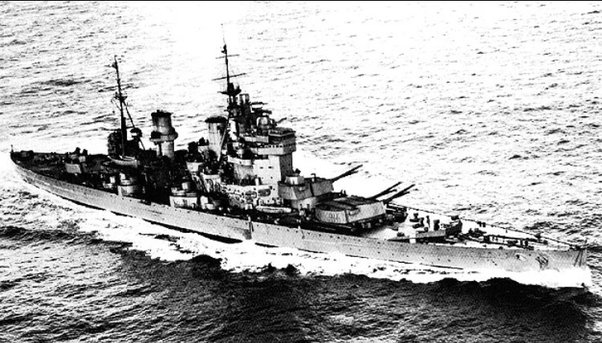
KMS Bismarck
- Type: Battleship
- Displacement: Approximately 41,700 tons (standard)
- Length: 251 meters (823 feet)
- Armament:
- 8 × 38 cm (15 in) SK C/34 guns
- 12 × 15 cm (5.9 in) SK C/28 guns
- Various anti-aircraft guns
- Armor:
- Belt armor up to 320 mm (12.6 in)
- Deck armor up to 100 mm (3.9 in)
- Speed: Approximately 30 knots
- Operational History: Notable for sinking the HMS Hood and being involved in the Battle of the Denmark Strait. Ultimately sunk in May 1941 after a pursuit by British naval forces.
HMS King George V
- Type: Battleship
- Displacement: Approximately 42,100 tons (standard)
- Length: 227 meters (745 feet)
- Armament:
- 10 × 14 in (356 mm) Mk VII guns
- 12 × 5.25 in (134 mm) dual-purpose guns
- Various anti-aircraft guns
- Armor:
- Belt armor up to 360 mm (14.2 in)
- Deck armor up to 114 mm (4.5 in)
- Speed: Approximately 28 knots
- Operational History: Served throughout World War II, participating in various operations, including the Battle of the North Cape and supporting landings in Normandy.
Comparison
- Firepower: The Bismarck had larger caliber guns (15 in vs. 14 in) and a slightly greater number of main guns. However, the King George V had a more balanced armament with effective secondary guns.
- Armor: The King George V had slightly thicker belt armor, which could offer better protection against shells.
- Speed: Bismarck had a slight speed advantage, which could be critical in naval engagements.
- Operational Success: The King George V had a more extensive operational history and was involved in several significant battles, whereas the Bismarck’s operational life was cut short.
Conclusion
Determining which battleship is “better” depends on the criteria used. In terms of firepower and speed, the Bismarck had advantages, but the King George V had superior armor and a more successful operational history. Overall, both ships were formidable in their own right, and their effectiveness could vary based on the context of their engagements.