The Altar at Tikal: Unveiling the Complex Relationship Between Maya and Teotihuacan
Alright, your laid-back editor here, ready to dive into some ancient Maya mysteries. No big deal, but this new discovery at Tikal is kind of a game-changer.
Deep within the Guatemalan jungle, nestled near the heart of the ancient Maya city of Tikal, archaeologists have unearthed a painted altar that’s sending ripples through the field of Mesoamerican studies. This find, dating back to the late 300s A.D., is providing unprecedented insights into the intricate and, at times, turbulent relationship between Tikal and the distant metropolis of Teotihuacan. Just thinking out loud, but this altar seems to confirm that the connection between these two powers was far more profound than previously imagined.
Before we get too far ahead, let’s set the stage. Tikal, located in present-day Guatemala, was one of the most important and powerful cities of the Maya civilization. Emerging as a small settlement around 850 B.C., it blossomed into a major dynastic center by 100 A.D., boasting towering temples and a sophisticated society. Meanwhile, roughly 630 miles to the west, outside of modern-day Mexico City, lay Teotihuacan. This urban behemoth, a sprawling metropolis renowned for its iconic Pyramids of the Sun and Moon, exerted immense influence across Mesoamerica from around 100 B.C. to A.D. 750.
The relationship between these two giants has long been a subject of scholarly debate. Initial evidence suggested a trading partnership, with the Maya supplying Teotihuacan with valuable resources like jade, exotic bird feathers, and cacao. However, this seemingly amicable relationship took a dramatic turn, a shift that this altar may shed some light on.
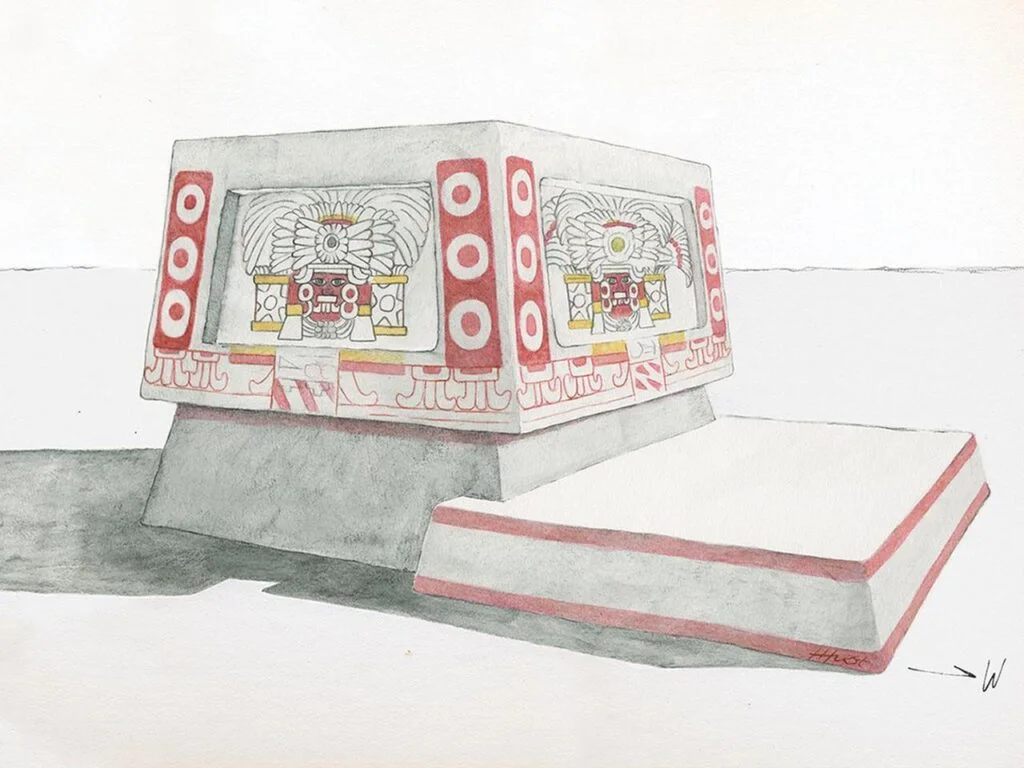
The altar itself is a rectangular limestone structure, measuring approximately a yard wide and nearly two yards long, standing about a yard tall. Its painted panels, adorned in vibrant reds, blacks, and yellows, depict a figure strikingly similar to the “Storm God” of central Mexico, a key deity in the Teotihuacan pantheon. According to Stephen Houston, a professor at Brown University (2025 USNews Ranking: 13) , the altar’s craftsmanship suggests it was created by an artisan from Teotihuacan.
Adding to the intrigue, the altar was discovered within an elite residential complex near Tikal’s city center. Inside, archaeologists made some unsettling discoveries: the remains of a child buried in a seated position, a burial practice common in Teotihuacan but rarely seen in Tikal, as well as an adult interred with a dart point crafted from green obsidian, a material distinctly associated with Teotihuacan. Another coffee won’t hurt, but these findings initially point towards a significant Teotihuacan presence, perhaps even an occupation, in Tikal during this period.
The placement of the altar and the artifacts found within it have led to initial interpretations suggesting a period of intense Teotihuacan influence, possibly even dominance, over Tikal. The child burial, in particular, raises questions about the nature of this influence and the potential imposition of Teotihuacan rituals and beliefs on the Maya population. Moreover, the subsequent burial of the altar and surrounding structures suggests a deliberate act, possibly reflecting the complicated feelings the Maya had towards Teotihuacan.
A Tumultuous Partnership: From Trade to Conquest and Cultural Exchange
But hey, who’s counting? Let’s delve a little deeper into this evolving relationship between Tikal and Teotihuacan. It appears that the initial trading partnership, while beneficial, eventually morphed into something far more complex, and frankly, a bit tumultuous. Tikal’s burgeoning prominence, its rising wealth and influence, seems to have attracted the attention of its more powerful neighbor. As Houston puts it, Tikal’s growing importance likely drew unwanted attention from Teotihuacan, leading to an influx of foreigners and, ultimately, a significant shift in the power dynamic.
The historical record, pieced together from glyphs, stelae, and other archaeological evidence, hints at a dramatic turning point around 378 A.D. A mutilated stone inscription speaks of a violent event, a “decapitation” of a kingdom, suggesting a forceful takeover orchestrated by Teotihuacan. This event, often referred to as a coup, saw the reigning Tikal king replaced by a puppet ruler, one seemingly installed and controlled by Teotihuacan. Sihyaj K’ahk’, also known as “Born from Fire,” is often cited as the figure who led this takeover, likely originating from Teotihuacan and establishing a new order in Tikal.
Supporting this narrative is the discovery of a scaled-down replica of the Teotihuacan citadel, La Ciudadela, located just outside Tikal’s city center. This complex, revealed through the use of LiDAR technology, strongly suggests a Teotihuacan occupation or at the very least, a significant surveillance presence in Tikal prior to the supposed coup. It’s like they were building a little Teotihuacan right in Tikal’s backyard, a clear indication of their intentions.

Archaeological digs have further bolstered the idea of a Teotihuacan military presence. Green obsidian spear points, a hallmark of Teotihuacan warriors, have been unearthed at Tikal, along with construction techniques characteristic of central Mexico. These finds paint a picture of a city under foreign influence, possibly even outright control. It’s not just about trade anymore; it’s about power, dominance, and the imposition of one culture onto another.
This period of Teotihuacan dominance undoubtedly led to significant cultural exchanges, albeit under less-than-ideal circumstances. Teotihuacan architectural styles, religious iconography, and burial practices began to appear in Tikal. The elite residential complex where the altar was discovered is a prime example, showcasing a blend of Maya and Teotihuacan artistic and architectural elements. The Maya, while maintaining some of their cultural identity, were clearly influenced by their powerful overlords.
However, this influence wasn’t necessarily welcomed. The subsequent burial of the altar and the surrounding structures speaks volumes about the Maya’s complicated feelings toward Teotihuacan. Was it an act of defiance? A ritualistic cleansing? Or perhaps a nostalgic farewell to a period of stability, even if it was imposed from the outside? It’s possible that the Maya harbored a deep resentment towards Teotihuacan’s control, a desire to reclaim their own cultural identity and political autonomy.
Yet, paradoxically, there might also have been a sense of nostalgia for the era when Teotihuacan exerted its influence. As Houston notes, Tikal’s collective memory of the coup was “complicated,” suggesting that the Maya may have viewed this period with a mix of resentment and perhaps, a certain degree of respect for Teotihuacan’s power and influence. Even during Tikal’s later decline, there seemed to be a lingering sense of admiration for the time when Teotihuacan was powerful and interested in the Maya world, influencing local politics even from afar. Your laid-back editor sees a tangled web of emotions at play here, a testament to the complex and often contradictory nature of human history.
Ritual and Sacrifice: Unpacking the Altar’s Symbolic Meaning
Now, about that altar… just thinking out loud, but it’s more than just a pretty artifact; it’s a window into the ritual practices and belief systems of both the Maya and Teotihuacan. The altar itself likely served as a focal point for various ceremonies, a stage for interactions with the divine. Its placement within an elite residential complex suggests that these rituals were not merely public displays, but also deeply intertwined with the lives and power structures of Tikal’s ruling class, or perhaps more accurately, the Teotihuacan-influenced elite.
One of the most unsettling aspects of the discovery is the child burial found within the altar. Child sacrifice, while relatively common in Teotihuacan, was a much rarer occurrence in Tikal. The presence of this burial raises troubling questions about the extent to which Teotihuacan religious practices were imposed upon the Maya. Was this child a local Maya, sacrificed to appease Teotihuacan deities? Or was the child brought from Teotihuacan, a symbolic gesture of dominance and cultural imposition?
Archaeologist Lorena Paiz, who spearheaded the discovery, has suggested that the Teotihuacan altar was likely used for sacrifices, particularly of children, noting the remains of three children, each no older than four years old, were found around the altar. This could reinforce the idea that Teotihuacans were traders who traveled throughout Guatemala, establishing residential complexes with central altars used for sacrifice.
It’s important to remember that sacrifice, in the Mesoamerican context, was not simply an act of cruelty. It was a deeply religious act, a way to appease the gods, ensure the continuation of the cosmos, and maintain the delicate balance between the human and divine realms. Blood, in particular, was seen as a potent offering, a life force that could nourish the gods and ensure the fertility of the land. The Maya, like many other Mesoamerican cultures, practiced ritual blood-letting, often involving self-inflicted cuts on the tongue, earlobes, or genitals. These acts of self-sacrifice were performed by rulers and elites to honor ancestors, seek divine guidance, and legitimize their power.
Beyond sacrifice, the Maya engaged in a wide range of other rituals and offerings. They offered incense, jade, precious stones, and food to the gods. They built temples and pyramids to honor their deities and commemorate important events. They performed elaborate dances and ceremonies to mark the cycles of the calendar and ensure the prosperity of their communities. These practices were all part of a complex web of beliefs and rituals that shaped every aspect of Maya life.
The altar’s painted panels provide further clues about the religious beliefs and political ideology at play. The depiction of the “Storm God,” a key deity in the Teotihuacan pantheon, is particularly significant. This god, often associated with rain, fertility, and warfare, was a symbol of Teotihuacan power and influence. By depicting him on the altar, the Teotihuacan elite were essentially asserting their religious and political dominance over Tikal.
The other iconographic elements on the altar, such as the feathered headdress and the shields or regalia that flank the central figure, also carry symbolic weight. These symbols likely represented specific aspects of Teotihuacan religious beliefs and political ideology, reinforcing the message of Teotihuacan power and authority. Ana Claudia Monzon, an official with the Guatemalan Ministry of Culture, noted that the altar possesses a multitude of characteristics reminiscent of central Mexican influences. Edwin Roman stated that it is the strongest evidence to date of Mayan people who were deeply familiar with Teotihuacan culture.
In essence, the altar served as a potent symbol of Teotihuacan influence, a physical manifestation of their religious beliefs and political ambitions. It was a tool used to legitimize their rule, to assert their cultural dominance, and to integrate Tikal into the broader Mesoamerican religious landscape under Teotihuacan’s control. However, as we’ve already discussed, the Maya’s response to this influence was far from simple, a complex mix of acceptance, resistance, and perhaps, even a touch of nostalgia.
Tikal’s Resilience: Reemergence and the Legacy of Teotihuacan
Your laid-back editor back again, ready to explore the next chapter in this Tikal saga. So, Teotihuacan had its time in the sun, but what happened after? Did Tikal simply fade into obscurity, forever marked by this foreign influence? Not quite. In fact, Tikal demonstrated remarkable resilience, eventually reemerging and rising to even greater prominence in the centuries that followed.
The period after Teotihuacan’s direct influence waned saw Tikal strategically absorbing and adapting elements of Teotihuacan culture. They didn’t simply reject everything; instead, they selectively integrated aspects that strengthened their own political, economic, and military systems. Think of it as cultural appropriation, but with a healthy dose of Maya ingenuity.
This adaptation is evident in Tikal’s art and architecture. While maintaining its distinct Maya style, Tikal incorporated Teotihuacan motifs and techniques, creating a unique fusion of artistic expression. The use of talud-tablero architecture, a hallmark of Teotihuacan, became increasingly common in Tikal’s monumental structures. Similarly, Teotihuacan-inspired iconography began to appear in Maya art, subtly blending foreign symbols of power with traditional Maya imagery.
Politically, Tikal also learned valuable lessons from Teotihuacan’s model of centralized power. While the Maya political landscape was often characterized by fragmented city-states, Tikal, after its experience with Teotihuacan, seemed to consolidate its authority, establishing a more centralized and hierarchical system of governance. This allowed Tikal to project its power more effectively, dominating its neighbors and expanding its influence throughout the Maya region.
Several factors contributed to Tikal’s growth and eventual golden age. Its strategic location, controlling key trade routes, allowed it to amass considerable wealth. Its sophisticated agricultural techniques, including the development of extensive irrigation systems, ensured a stable food supply. And its military prowess, honed through years of conflict and competition, enabled it to conquer and control neighboring territories.
Tikal reached its zenith between the 7th and 9th centuries A.D., becoming one of the most powerful and influential cities in the Maya world. Its kings commissioned magnificent temples, expanded the city’s infrastructure, and patronized the arts. Tikal’s influence extended far beyond its immediate borders, shaping the political and cultural landscape of the entire Maya region.
However, like all great civilizations, Tikal’s reign eventually came to an end. Around 900 A.D., the city began to decline, along with many other major Maya centers. The reasons for this collapse are complex and still debated by scholars, but several factors likely played a role. Environmental degradation, including deforestation and soil erosion, may have undermined the city’s agricultural base. Overpopulation may have strained its resources. And internal conflicts, fueled by competition for power and resources, may have weakened the city from within. A 2012 study in Geophysical Research Letters suggested that drought and deforestation contributed to this decline. A 2020 study in Scientific Reports noted that pollution, particularly high levels of mercury and phosphate in water reservoirs, may have also contributed.
The broader collapse of the Maya civilization remains one of the great mysteries of the ancient world. While Tikal’s decline was part of this larger trend, the city’s legacy endured. Its art, architecture, and political institutions left an indelible mark on the Maya world, shaping the course of Maya history for centuries to come. And the memory of Teotihuacan, once a powerful overlord, continued to resonate in Tikal’s collective consciousness, a reminder of the complex interplay of cultural exchange and political domination that shaped the city’s destiny. The complex story of Tikal reveals the intertwined nature of cultural exchange and political domination, with the city adapting and evolving to face external pressures, all while maintaining its unique identity.
Echoes of Empire: Drawing Parallels to Modern Colonialism
Your laid-back editor here, ready to draw some parallels, because history, man, it rhymes. No big deal, but the Teotihuacan-Tikal situation? It’s got echoes that resonate through the ages.
When we look at Teotihuacan’s interest in the Maya world, it’s hard to ignore the economic motivations. It wasn’t just about political control or cultural influence; it was about cold, hard resources. Teotihuacan craved those prized items unique to the Maya region – the vibrant plumage of tropical birds, the lustrous green jade, and of course, the rich, intoxicating cacao, the stuff we now know as chocolate. These goods were not just luxury items; they were symbols of status, power, and wealth, and Teotihuacan wanted a piece of the action.
This dynamic, of a powerful empire exploiting a region for its wealth, is a recurring theme throughout history. You see it in the Roman Empire’s exploitation of its provinces, in the European colonization of the Americas, and in countless other instances of imperial expansion. The pattern is often the same: a powerful civilization identifies a region rich in resources, establishes control through military force or political manipulation, and then extracts those resources to fuel its own growth and prosperity.
The discovery of the altar at Tikal, therefore, has broader implications for understanding the dynamics of early colonialism. It offers a glimpse into the complex interplay of economic interests, political power, and cultural exchange that characterized these early interactions between civilizations. It reminds us that even in the ancient world, empires were driven by the same basic desires that drive them today: the pursuit of wealth, power, and influence.
But hey, there’s also an ethical dimension to all of this. As archaeologists, we have a responsibility to interpret and present these findings in a way that is sensitive to the perspectives and experiences of the Maya people. We need to avoid perpetuating the narrative of Teotihuacan as simply a benevolent benefactor or a brutal conqueror. Instead, we need to recognize the complexity of the relationship, acknowledging both the positive and negative impacts of Teotihuacan’s presence on Tikal.
It’s crucial that the voices and perspectives of the Maya people are represented in our interpretations. We need to consider how the Maya themselves viewed Teotihuacan, their motivations for resisting or collaborating with them, and the lasting impact of this period on their cultural identity. Ultimately, the goal is to create a more nuanced and complete understanding of this fascinating chapter in Mesoamerican history, one that respects the agency and resilience of the Maya people in the face of imperial power.