

Carthage once dominated much of the Western Mediterranean and visitors can still see the artificial harbor (called ‘Cothon’) where its once-mighty fleet was based. Carthage was the foremost rival of the Roman Republic in the Western Mediterranean.
When the Romans finally crushed Carthage in the Third Punic War, they razed the city to the ground and forbade the city to be rebuilt (although it eventually was rebuilt). Here’s what to know about the Cothon of Carthage and how to see it today.
Carthage: The Western Mediterranean Power That Menaced & Terrified Rome
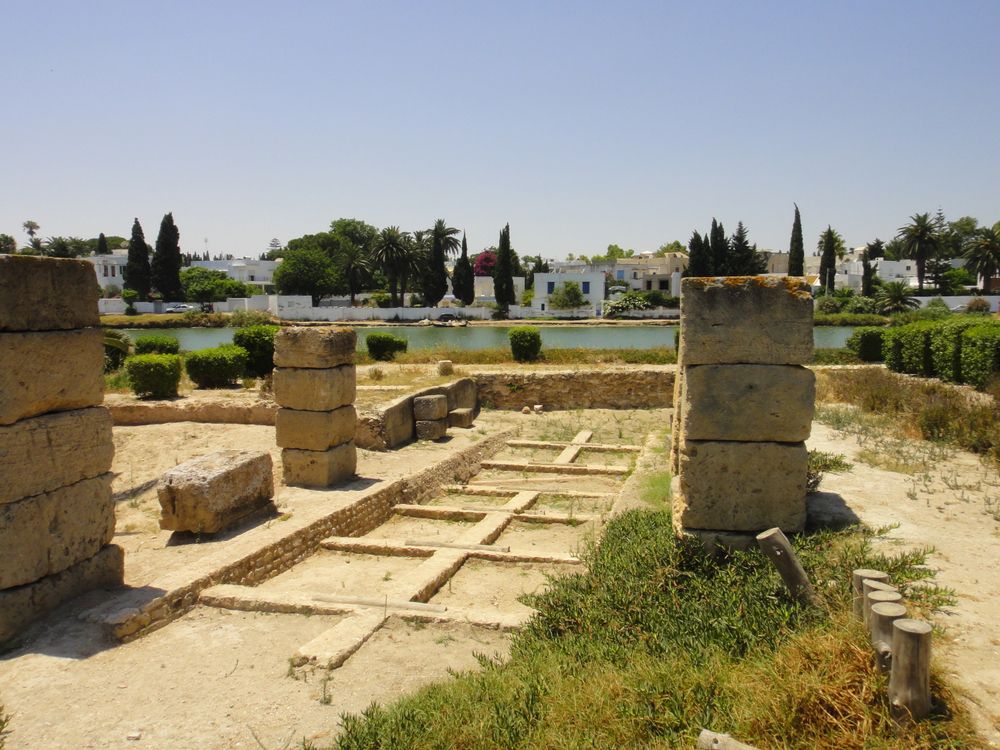
Modern Excavation Of A Boat Launch In The Cothon Of Ancient Carthage
Carthage started out as a colony of Phoenicia (Phoenicia was located in modern-day Lebanon). It was located where the modern city of Tunis in Tunisia stands today. Back then, this region of North Africa was much more fertile and productive than it is today (there has been a lot of desertification since then).
Carthage was the first to establish its rule over much of the Mediterranean. It not only conquered but also extensively traded with the territories it took. Carthage lasted for centuries, but it eventually faced competition with the growing Roman Republic emerging on the Italian peninsula.
The three Punic Wars it fought with Rome lasted from 264 to 146 BC, and it lost all of them.
- Founded: 9th Century (By Phoenicians)
- Wars With Rome: First, Second, Third Punic Wars
- Fell: 146 BC (Razed By Rome)
Much of the First Punic War was fought at sea between the rival navies of Carthage and Rome. The most famous of the three Punic Wars Carthage fought with Rome was the Second Punic War when Hannibal rampaged through Italy defeating Roman army after Roman army.
Hannibal was never able to deliver the knock-out blow to Rome and Rome eventually triumphed. How close Rome came to losing scarred Rome for centuries. The Romans metered out their revenge by leveling Carthage to the ground in the Third Punic War.
The Impressive Carthage Harbor Or ‘Cothon’
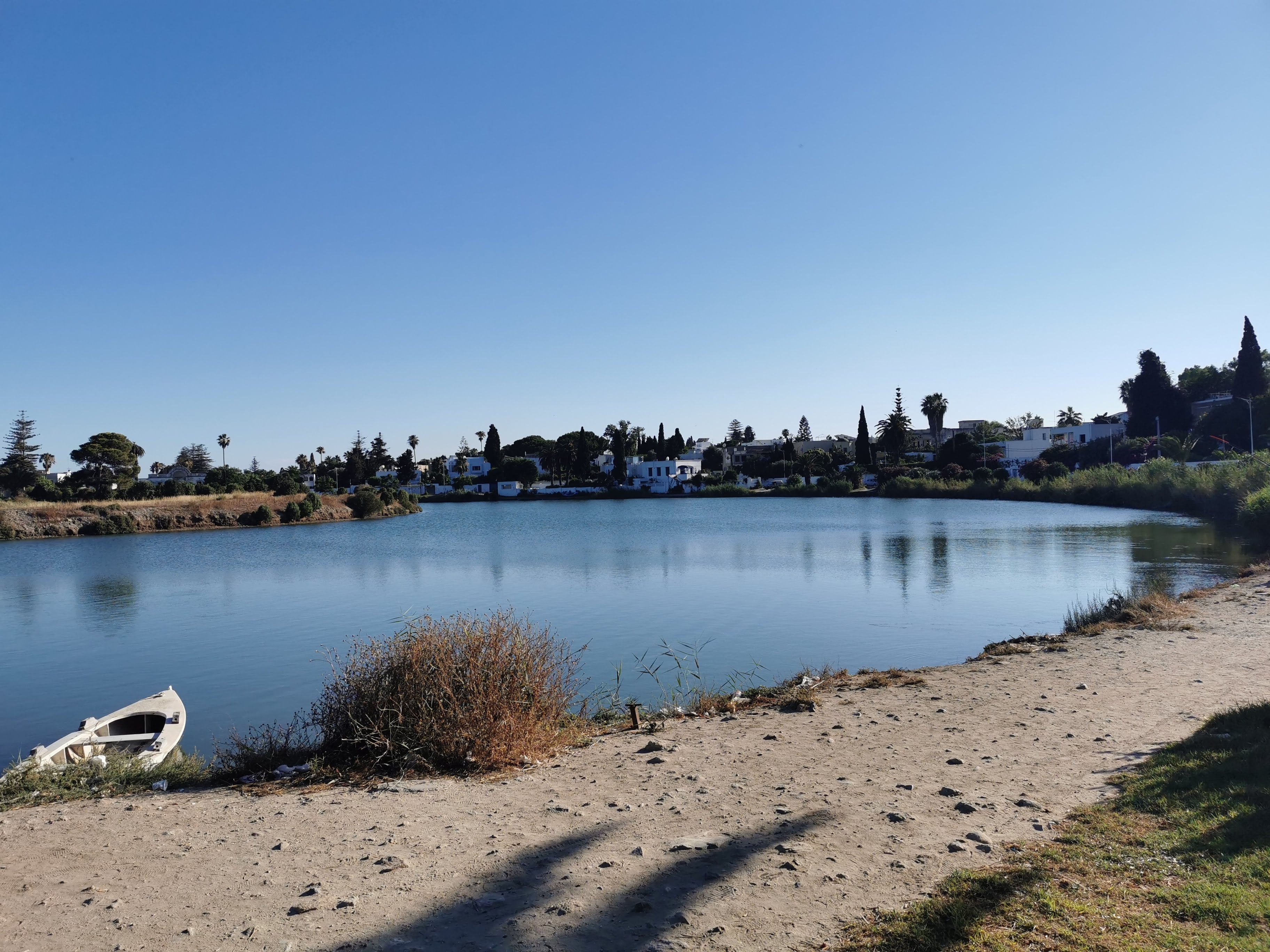
Cothon or the ancient harbor of Carthage
As a trading state with an empire, Carthage needed a powerful navy. The Carthaginians protected their navy during the Punic Wars (circa 200 BC) by building the Cothon of Carthage. While the cothon or inner harbor of Carthage was not the only inner harbor of its kind (there was another in Motya in Sicily), it is the most famous and most impressive.
The outer rectangular harbor was for merchant ships, while the inner protected harbor was reserved only for military use. The inner harbor was circular and was surrounded by an outer ring of structures that provided docking bays for the ships and for maintenance.
While what remains of the harbor today looks small and unimpressive, this was the ancient Norfolk Naval Base of the ancient Western Mediterranean. It is estimated that the complex could have housed up to 220 ships (they were quite small).
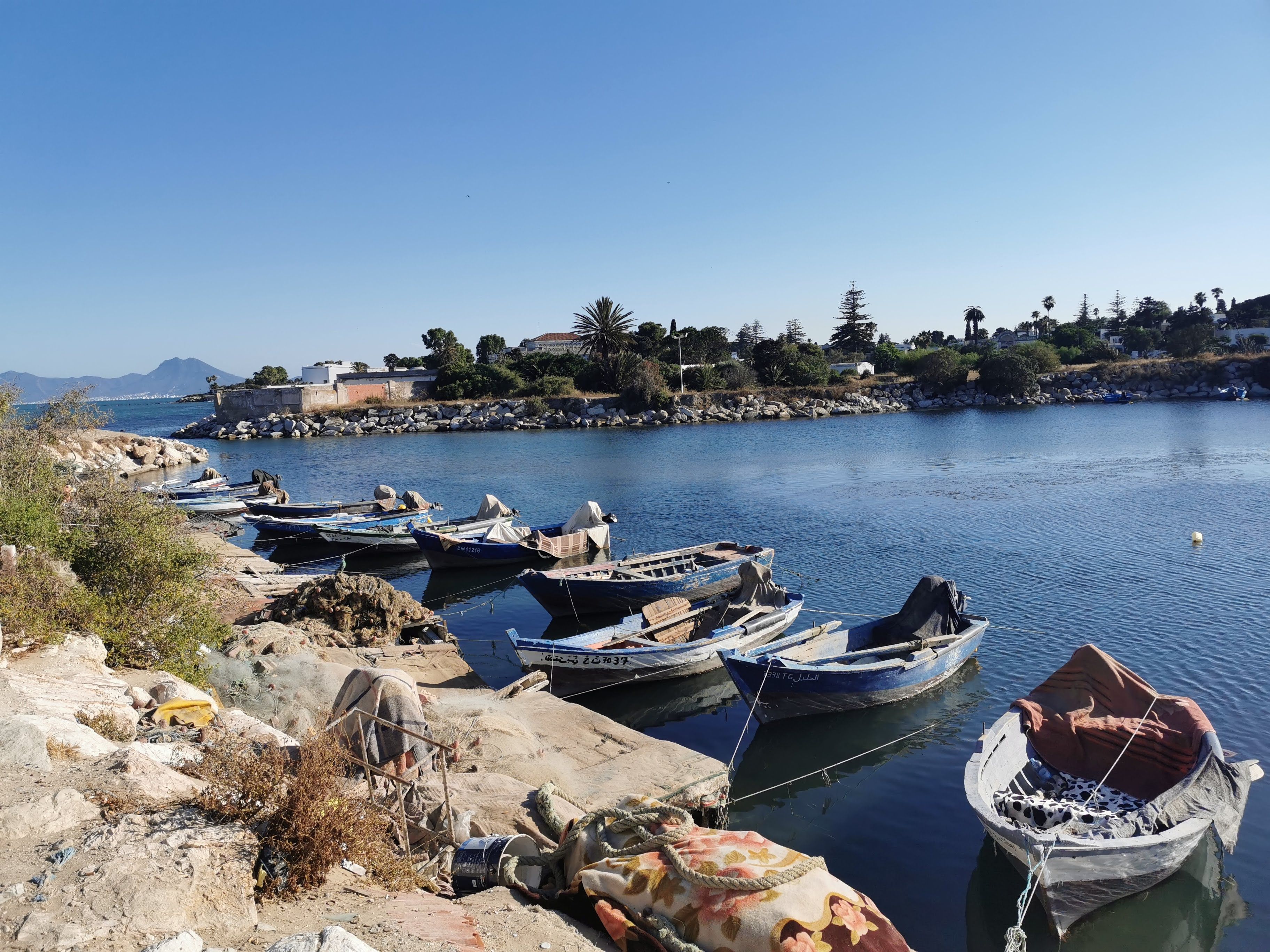
Cothon harbor of ancient Carthage today
There was once an outer wall that protected the harbor and its entrance was closed off by iron chains. It was only in the third and final Punic War that Rome captured and destroyed the harbor.
What To Know About Visiting Cothon – The Ancient Harbor Of Carthage
Today, visitors can see the remains of the ancient Carthage harbor. Travelers who do not understand the significance of the harbor do not bother to look at it twice. The harbor is partly filled in, the ancient buildings are all gone, and only small boats use it today.
- Location: Carthage, Tunis (Near Sidi Bou Said)
- Admission Fee: None
- Opening Hours: Not Applicable / Always Accessible
- Tourist Infrastructure: None
The region of Carthage where the harbor is located, is one of the more well-to-do parts of the greater city of Tunis. It is only a fairly short walk from the charming neighborhood of Sidi Bou Said which is set up the hill on a cliff overlooking the Mediterranean Sea.
The ancient Carthage harbor is not a developed tourist destination and mostly only people interested in history bother to see it. There are no admission fees, no tourist information panels, or really anything else.
Many people pass on right by it on their way to Sidi Bou Said unaware of the historical and archeological importance of the site.
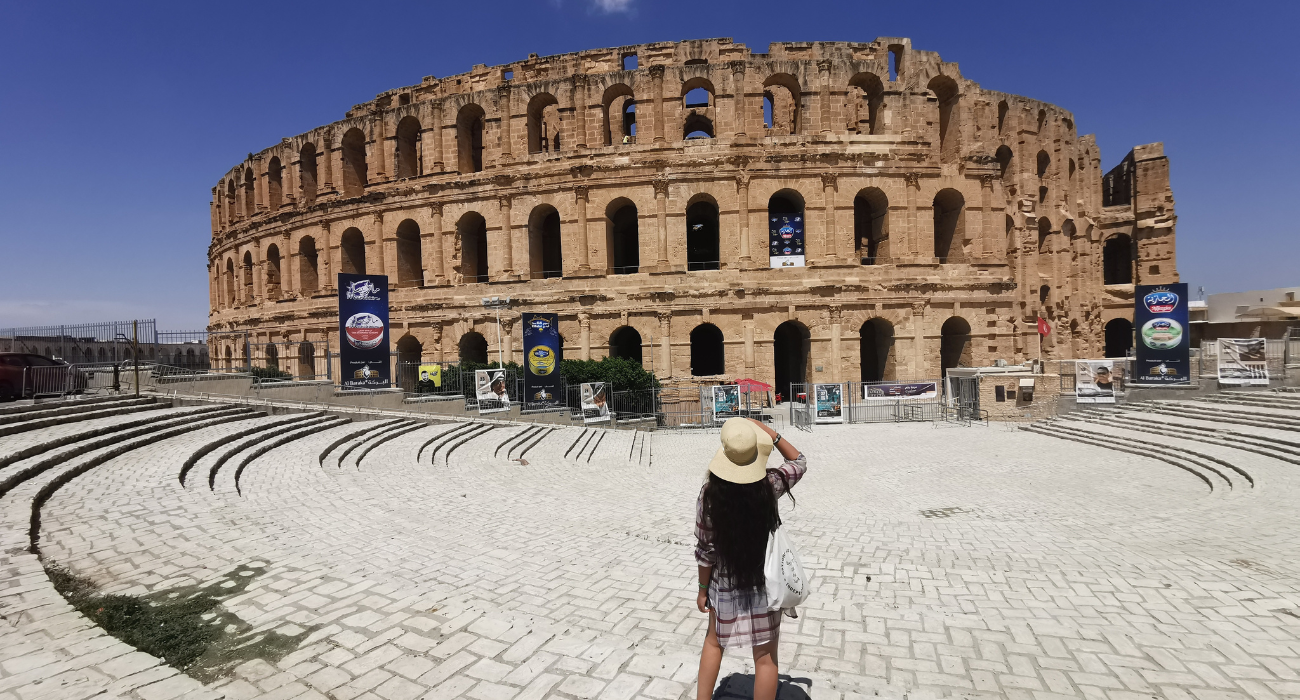
The Amphitheater of El Jem, Tunisia
Visitors can walk around the site and even swim in it if they like. There are no controls.
Tunisia was the Roman province called ‘Africa’ and was one of the most important and wealthy provinces of the empire. Go to El Jem in Tunisia and see the Amphitheater of El Jem that rivals the Colosseum in size and preservation. The Roman ruins are one of the great reasons to visit Tunisia.
Besides the ancient Carthaginian Cothon, visitors can see a few of the remaining Carthaginian ruins in the modern city of Tunis in Tunisia. Go in the summer, and watch a modern cultural performance in the ancient Roman theater in Carthage.