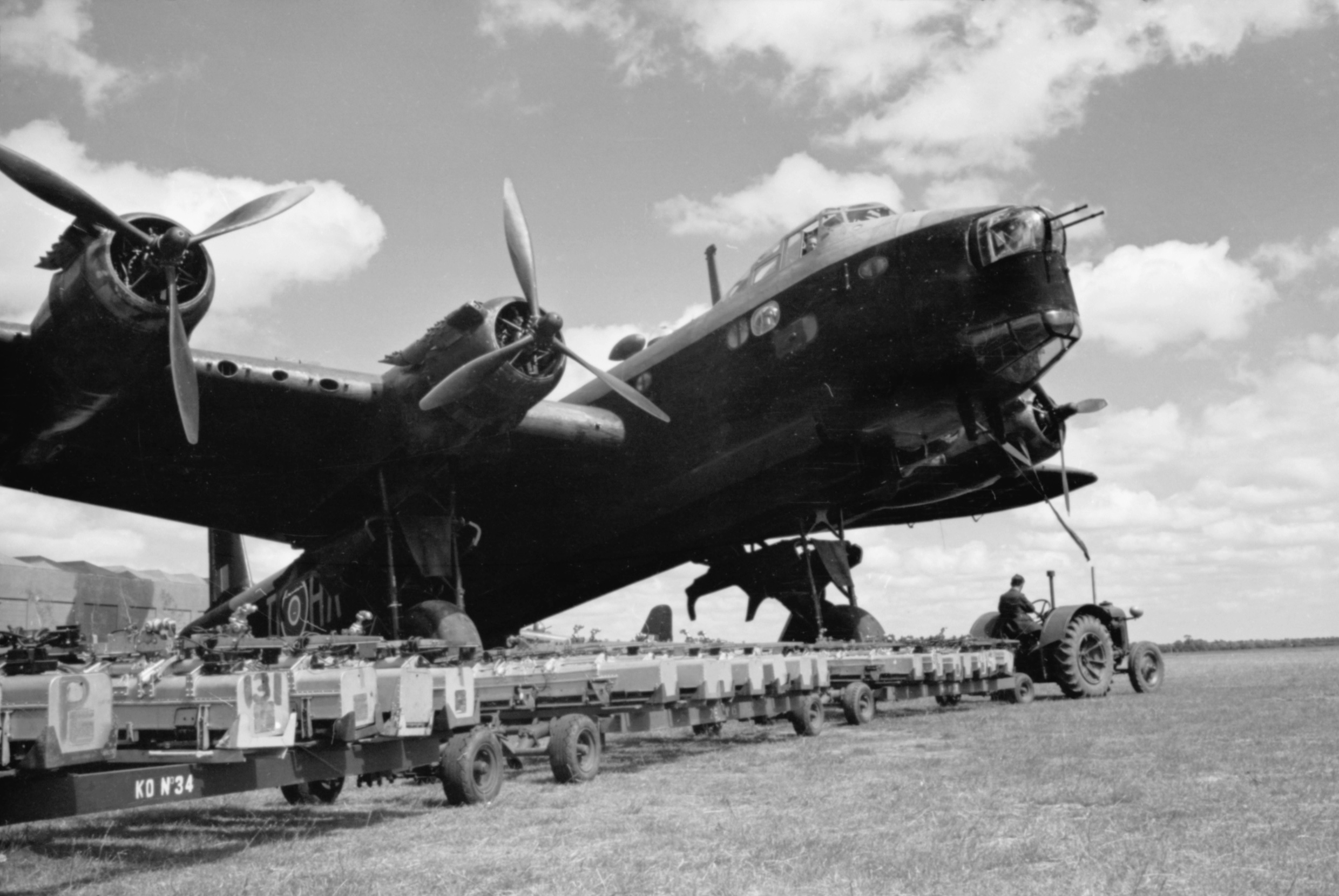
A haunting photograph from the archives of World War II captures the sheer resilience of the Short Stirling I heavy bomber BF517, belonging to the 75 Squadron. The image, accompanied by the caption, “The rear turret of Short Stirling I heavy bomber BF517 from 75 Squadron, severely damaged after a night fighter attack near Duisburg on April 27, 1943,” reveals the brutal reality faced by Allied aircrews during one of the most intense periods of the conflict.
The Incident: A Night of Peril Over Duisburg

On the night of April 27, 1943, the 75 Squadron of the Royal Air Force (RAF), which included squadrons from both British and New Zealand forces, was tasked with a bombing raid over Duisburg, a key industrial city in Germany’s Ruhr Valley. Duisburg was a prime target due to its steelworks and manufacturing plants, which were critical to the German war machine. The Short Stirling I BF517, a four-engine heavy bomber, was among the aircraft dispatched for this dangerous mission.
As the BF517 flew through the night sky, it came under attack by a German night fighter, likely a Messerschmitt Bf 110 or a Junkers Ju 88, both of which were commonly deployed by the Luftwaffe to intercept Allied bombers. The night fighters were equipped with radar and heavy armament, making them a deadly threat to the slow and heavily laden bombers like the Stirling. The photograph shows the rear turret of the BF517 riddled with bullet holes, its structure heavily damaged, and parts of the fuselage torn apart. The concentrated damage suggests a fierce and sustained assault, likely targeting the rear gunner position to neutralize the bomber’s defensive firepower.
The Cause: Vulnerability of the Short Stirling
The Short Stirling, while a pioneering design as the RAF’s first four-engine heavy bomber, had significant vulnerabilities that made it a prime target for enemy fighters. Introduced in 1940, the Stirling was known for its robust construction but suffered from a low operational ceiling, making it more susceptible to flak and fighter attacks compared to later bombers like the Avro Lancaster or Handley Page Halifax. Its rear turret, manned by a single gunner, was armed with four .303-inch machine guns, which were often outmatched by the heavier cannons of German night fighters. Additionally, the Stirling’s large silhouette and slower speed made it an easier target during night operations, especially in the heavily defended skies over the Ruhr Valley.
The specific cause of the damage to BF517 was the night fighter’s attack, which likely exploited the Stirling’s weaknesses. German night fighters often employed a tactic known as Schräge Musik (slanting music), where upward-firing cannons were used to attack bombers from below, targeting vulnerable areas like the belly and turrets. While the photograph does not confirm this tactic was used, the extensive damage to the rear turret suggests a direct and aggressive assault, possibly from a fighter closing in from behind or below.
The Aftermath: A Testament to Resilience
Despite the severe damage, the fact that the BF517 returned to base is a testament to the durability of the Short Stirling and the bravery of its crew. The 75 Squadron, which was the first Commonwealth squadron to be equipped with Stirlings, had a reputation for tenacity, often flying dangerous missions deep into enemy territory. The survival of the BF517 after such a brutal attack highlights the skill of the pilot and the determination of the crew to complete their mission and return home, even under dire circumstances.
The photograph itself is a stark reminder of the dangers faced by bomber crews during World War II. The rear turret, a critical defensive position, is almost unrecognizable, its Perspex canopy shattered and metal framework twisted. Bullet holes pepper the surrounding fuselage, indicating the intensity of the firefight. The image captures not just the physical toll of war but also the human cost—each hole a moment of terror for the gunner and crew aboard.
Legacy of the 75 Squadron and the Short Stirling
The 75 Squadron, which operated Stirlings until late 1943 before transitioning to Lancasters, played a significant role in the Allied bombing campaign against Germany. The squadron’s contributions came at a high cost, with many crews lost to enemy fighters, flak, and the inherent risks of night operations. The Short Stirling, though eventually phased out due to its limitations, laid the groundwork for the RAF’s strategic bombing efforts, proving the concept of the heavy bomber in the early years of the war.
This photograph of the BF517 serves as a powerful historical artifact, preserving a moment of survival amidst the chaos of war. It honors the courage of the 75 Squadron and the countless airmen who risked—and often gave—their lives to strike at the heart of the Nazi war machine. As we reflect on this image over 80 years later, it stands as a somber tribute to the sacrifices made in the skies over Europe during one of history’s darkest chapters.