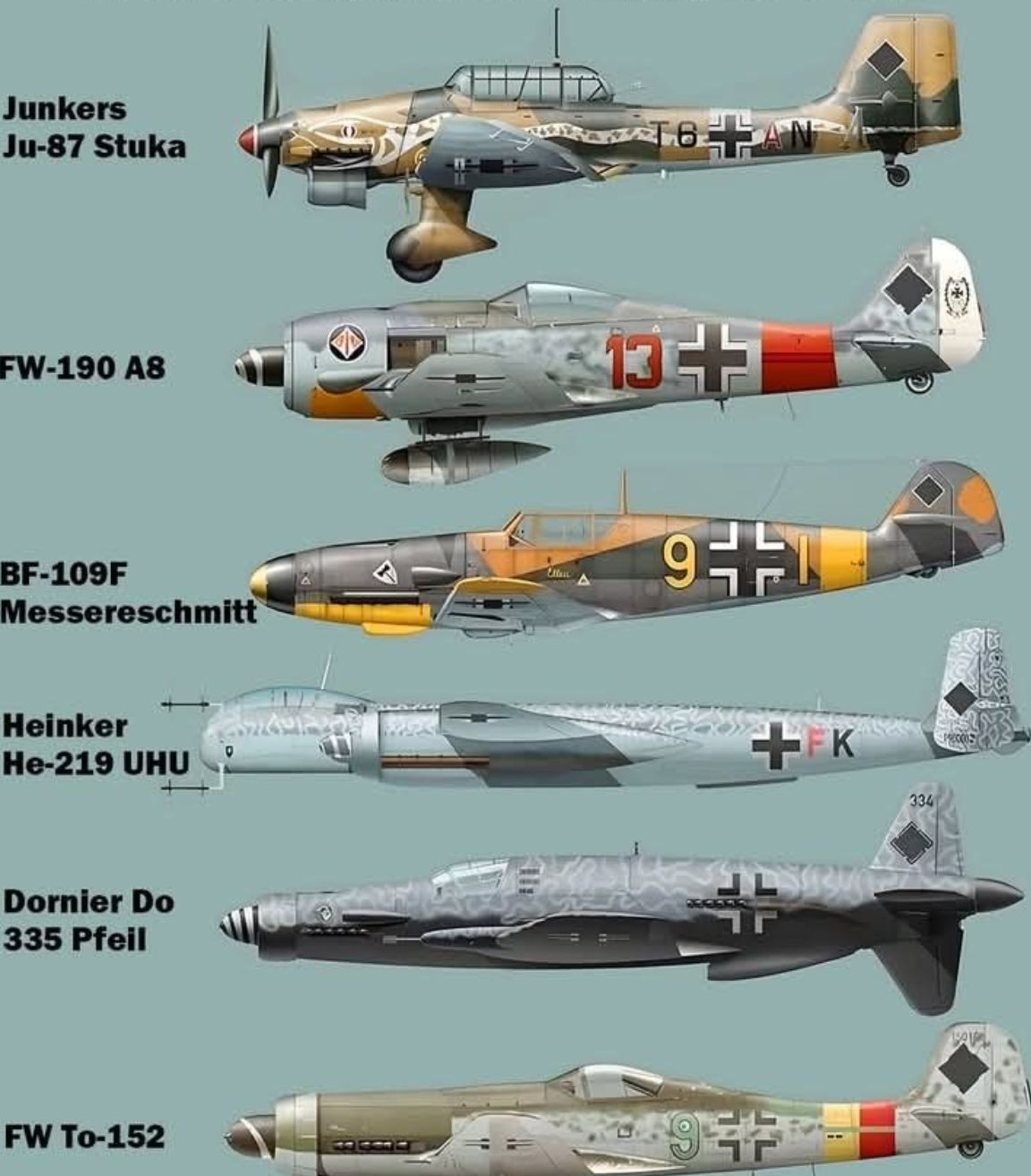

German-manufactured combat aircraft were some of the most agile and versatile aircraft during World War II. Before US-based companies introduced their combat aircraft, most German aircraft were frontline fighters of the war. Simple Flying compiled a list of top German fighter jets of the Second World War, as highlighted by The National Interest blog.
1.Messerschmitt Bf 109
Classification: Single-engine fighter aircraft
- Crew: 1
- Length: 8.95 m (29 ft 4 in)
- Wingspan: 9.925 m (32 ft 7 in)
- Height: 2.6 m (8 ft 6 in)
- Max takeoff weight: 3,400 kg (7,496 lb)
- Maximum speed: 530 km/h (330 mph, 290 knots) at sea level
- Cruise speed: 590 km/h (370 mph, 320 knots) at 6,000 m (20,000 ft)
The Messerschmitt Bf 109 is a single-engine German fighter designed and developed by Messerschmitt AG and Bayerische Fligzeugwerke (BFW) in the early 1930s. The aircraft performed its first flight in May 1935 and was introduced in February 1937. The all-metal monocoque design with a retractable landing gear and a piston engine quickly became the backbone of the Luftwaffe Fighter Force.
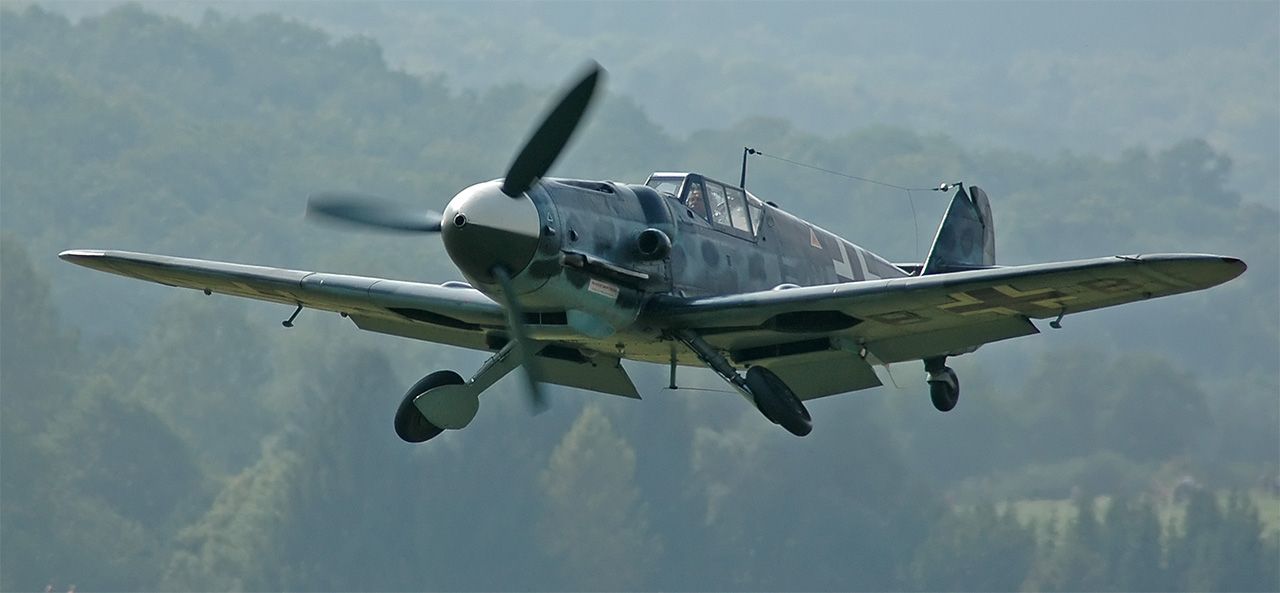
Photo: Kogo | Wikimedia Commons
One of the most advanced fighters of its time was powered by a single Daimler-Benz DB 605A-1 V-12 inverted liquid-cooled piston engine, generating 1,455 horsepower (1,085 kW) of takeoff thrust. With a service ceiling of 39,000 ft (12,000 m), the aircraft featured a combat range of 309 NM (355 miles, 572 km). The manufacturer built over 34,000 Bf 109s, with the last aircraft retiring from the Spanish Air Force in December 1965.
2.Messerschmitt Bf 110
Classification: Twin-engine fighter-bomber
- Crew: 2 or 3
- Length: 12.0714 m (39 ft 7.25 in)
- Wingspan: 16.2497 m (53 ft 3.75 in)
- Height: 4.128 m (13 ft 6.5 in)
- Max takeoff weight: 6,749 kg (14,880 lb)
- Fuel capacity: 1,272 L (336 US gal; 280 imp gal) in 4 center-section tanks
- Maximum speed: 475 km/h (295 mph, 256 knots)
The Messerschmitt Bf 110 is a twin-engine heavy fighter developed by Messerschmitt AG and Bayerische Fligzeugwerke (BFW) in the 1930s. The aircraft performed its first flight in May 1936 and entered service a year later. The aircraft was known as a premier offensive fighter and destroyer due to its speed, range, and combat capabilities.
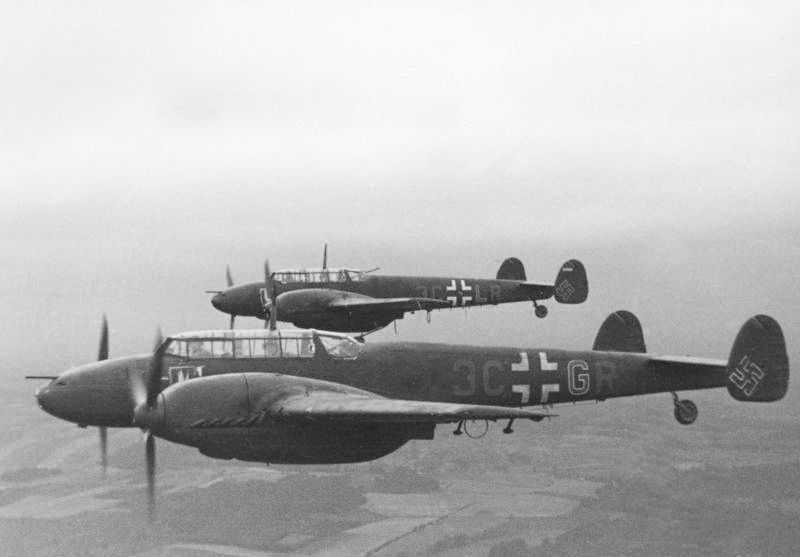
Photo: Das Bundesarchiv | Wikimedia Commons
The Bf 110 was powered by two Daimler-Benz DB 601A-1 V-12 inverted liquid-cooled piston engines, each producing approximately 1,050 horsepower (780 kW) of takeoff power. With a service ceiling of 32,800 ft (10,000 m), the aircraft featured a combat range of 491 NM (565 miles, 910 km). More than 6,000 units of the three-seat combat monoplane were built and operated by numerous European air forces.
3.Junkers Ju 88
Classification: Multirole combat aircraft
- Crew: 4 (pilot, bombardier/front gunner, radio operator/rear gunner, navigator/ventral gunner)
- Length: 14.4 m (47 ft 3 in)
- Wingspan: 20 m (65 ft 7 in)
- Height: 4.8 m (15 ft 9 in)
- Max takeoff weight: 14,000 kg (30,865 lb)
- Maximum speed: 470 km/h (290 mph, 250 knots) at 5,300 m (17,390 ft) and 12,500 kg (27,557 lb)
- Cruise speed: 370 km/h (230 mph, 200 knots) at 5,300 m (17,390 ft) economical cruising speed
The Junkers Ju 88 is a twin-engine multipurpose aircraft designed and developed by Junkers Aircraft and Motor Works (JFM) in the mid-1930s. The aircraft performed its first flight in December 1936 and was introduced in April 1939. The four-crew reconnaissance, bomber, and night fighter featured a streamlined fuselage and wings with inner panels for armament.
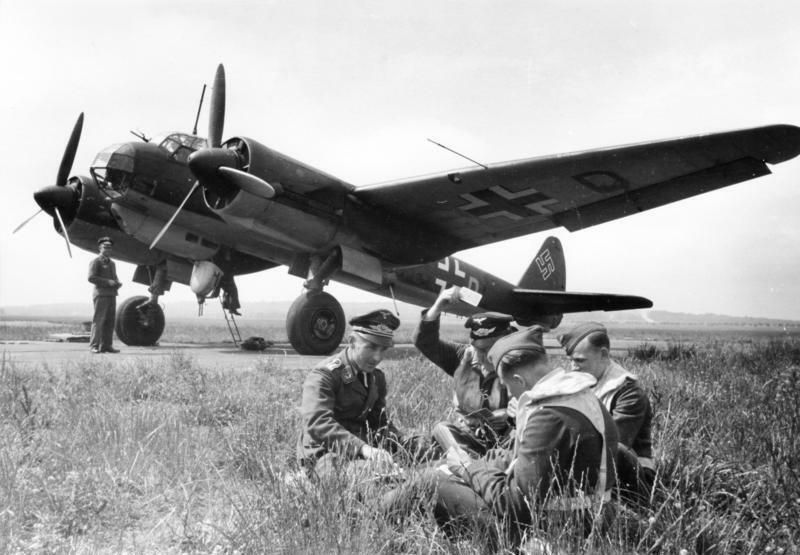
Photo: Das Bundesarchiv | Wikimedia Commons
One of the most versatile combat aircraft of the Second World War was powered by two Junkers Jumo 211J V-12 liquid-cooled inverted piston engines, each generating approximately 1,340 horsepower (1,000 kW) at take-off. With a service ceiling of 26,900 ft (8,200 m), the aircraft featured a range of 970 NM (1,110 miles, 1,790 km). More than 15,000 examples of the Ju 88 were built, with the last ones retiring in 1951.
4.Messerschmitt Me 262
Classification: twin-engine fighter and fighter-bomber versions
- Crew: 1
- Length: 10.6 m (34 ft 9 in)
- Wingspan: 12.6 m (41 ft 4 in)
- Height: 3.5 m (11 ft 6 in)
- Max takeoff weight: 7,130 kg (15,719 lb)
- Powerplant: 2 × Junkers Jumo 004B-1 axial-flow turbojet engines, 8.8 kN (1,980 lbf) thrust each
- Maximum speed: 900 km/h (560 mph, 490 knots)
The Messerschmitt Me 262 came in two versions: a standard fighter version (Schwalbe) and a fighter-bomber version (Storm Bird). The world’s first operational jet-powered fighter aircraft was designed and developed by Messerschmitt in the late 1930s. The multirole aircraft performed its first flight with jet engines in July 1942 and entered service in April 1944.
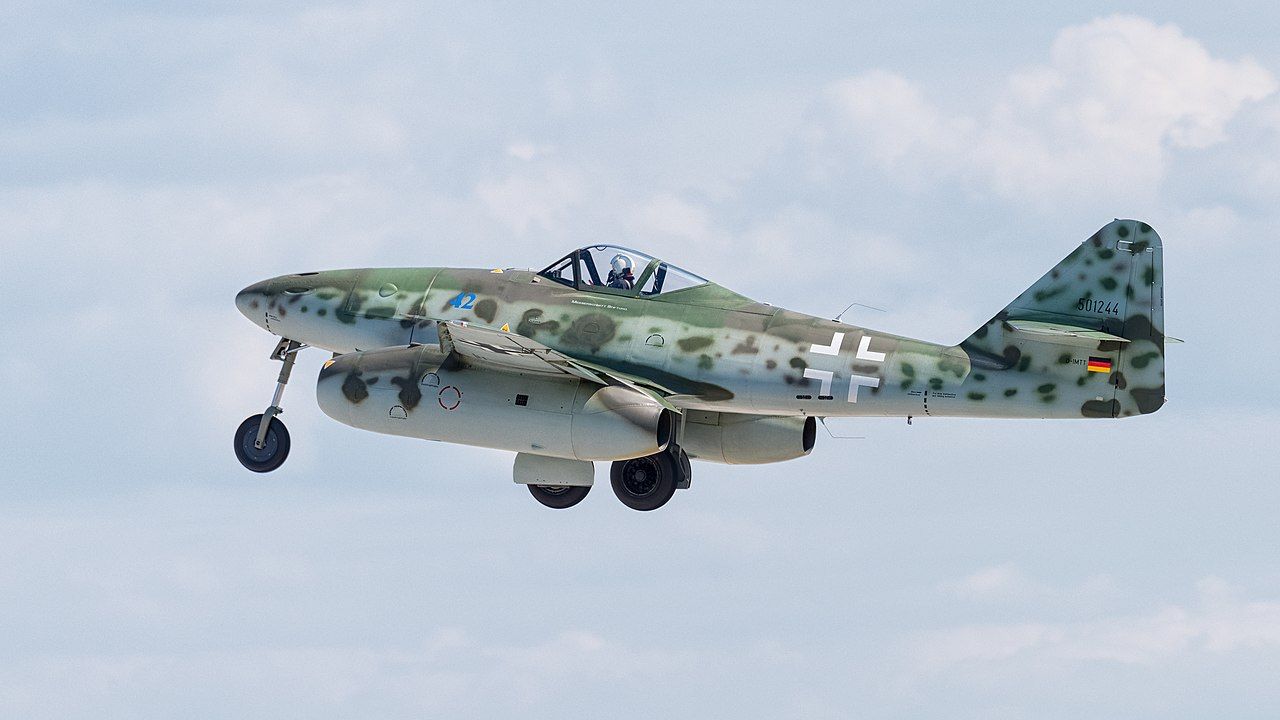
Photo: Julian Herzog | Wikimedia Commons
The high-endurance aircraft was powered by two Junkers Jumo 004B axial flow turbojet engines, each generating approximately 1,980 lbf (8.8 kN) of takeoff thrust. With a service ceiling of 37,500 ft (11,500 m), the aircraft featured a range of 570 NM (650 miles, 1,050 km). More than 1,400 units of the Me 262 jets were built, most of which were used by Luftwaffe air forces.
5.Focke-Wulf Fw 190
Classification: Single-engine fighter aircraft
- Crew: One
- Length: 8.95 m (29 ft 4 in)
- Wingspan: 10.506 m (34 ft 6 in)
- Height: 3.15 m (10 ft 4 in)
- Max takeoff weight: 4,900 kg (10,803 lb)
- Fuel capacity: 639 L (141 imp gal; 169 US gal)
- Maximum speed: 652 km/h (405 mph, 352 knots) at 5,920 m (19,420 ft)
The Focke-Wulf Fw 190 is a single-engine fighter designed and developed by Focke-Wulf in the mid-1930s. The aircraft performed its first flight in June 1939 and was introduced in August 1941. Soon after it entered into service over France, the Fw 190 proved superior to other aircraft in almost all aspects and became the frontline fighter of the Royal Air Force (RAF) of the United Kingdom.
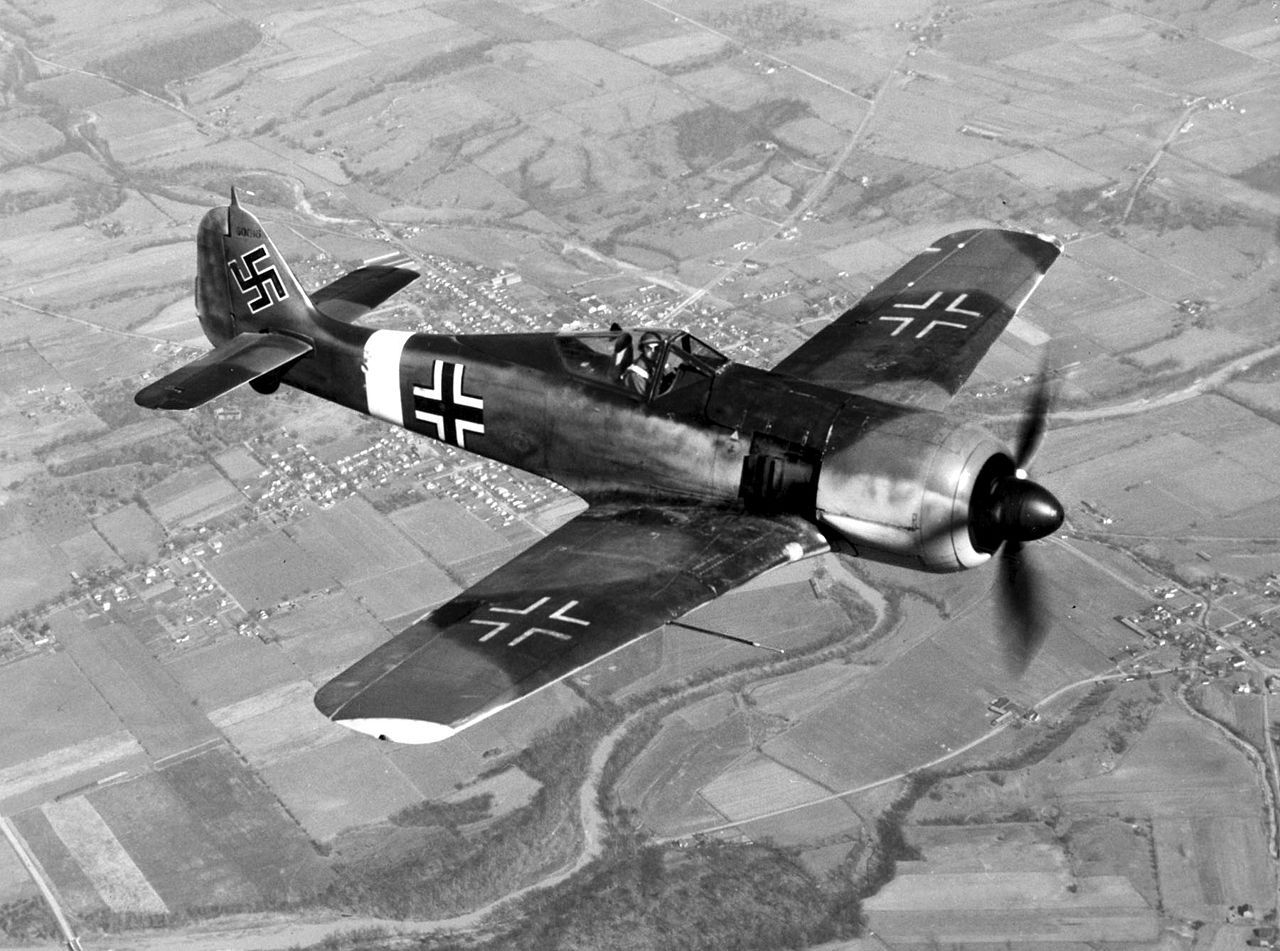
Photo: USAAF | Wikimedia Commons
The Fw 190s pilots claimed many kills while flying during World War II. The Fw 190s featured more power than the Bf 109 and greater agility at low altitudes. The aircraft was powered by a single BMW 801D-2 14-cylinder air-cooled radial piston engine, generating 1,677 horsepower (1,250 kW) of takeoff power. The aircraft featured a combat range of 270 NM (310 miles, 500 km). Over 20,000 units were produced and delivered between 1941 and 1945.