
The Lavochkin La-5 was one of the most impressive Soviet fighters during the Second World War. The aircraft replaced the earlier LaGG-3 with newer engines and more outstanding warfare capabilities. The lighter airframe of the LaGG-3 powered by more robust engines was a misfit to the Soviets.
Designed and developed by Lavochkin, the aircraft performed its first flight in 1942 with the Soviet Air Force. As highlighted by Military Factory, the manufacturer built 9,920 examples of the La-5 aircraft.
The Lavochkin La-5
With the underpowered capabilities of the LaGG-1 and LaGG-3, Lavochkin was tasked with significantly improving the aircraft. In 1942, the company replaced the inline engines of the LaGG-3 with newer and stronger Shvetsov Ash-82 radial engines.
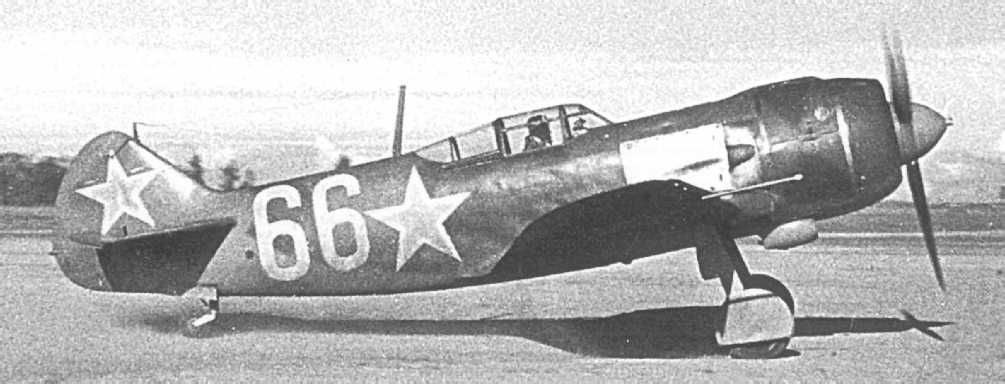
This 14-cylinder, air-cooled engine generated 1,900 (1,400 kW) output power at 2,600 rpm for take-off, with a boost rated at 1.64 atm (49 inHg). A three-bladed constant-speed propellor enabled the Maximum Take-off Weight (MTOW) of 7,500 lb (3,400 kg).
The Lavochkin La-5 featured a cut-down fuselage with a low-mounted wing set forward of the cockpit. Its forward fuselage featured a propellor hub with the cockpit placed much further from the propellor, resulting in a better view for the pilot. The type could fly at a maximum speed of 350 knots (400 mph, 650 km/h) at a 36,000 ft (11,000 m) service ceiling.
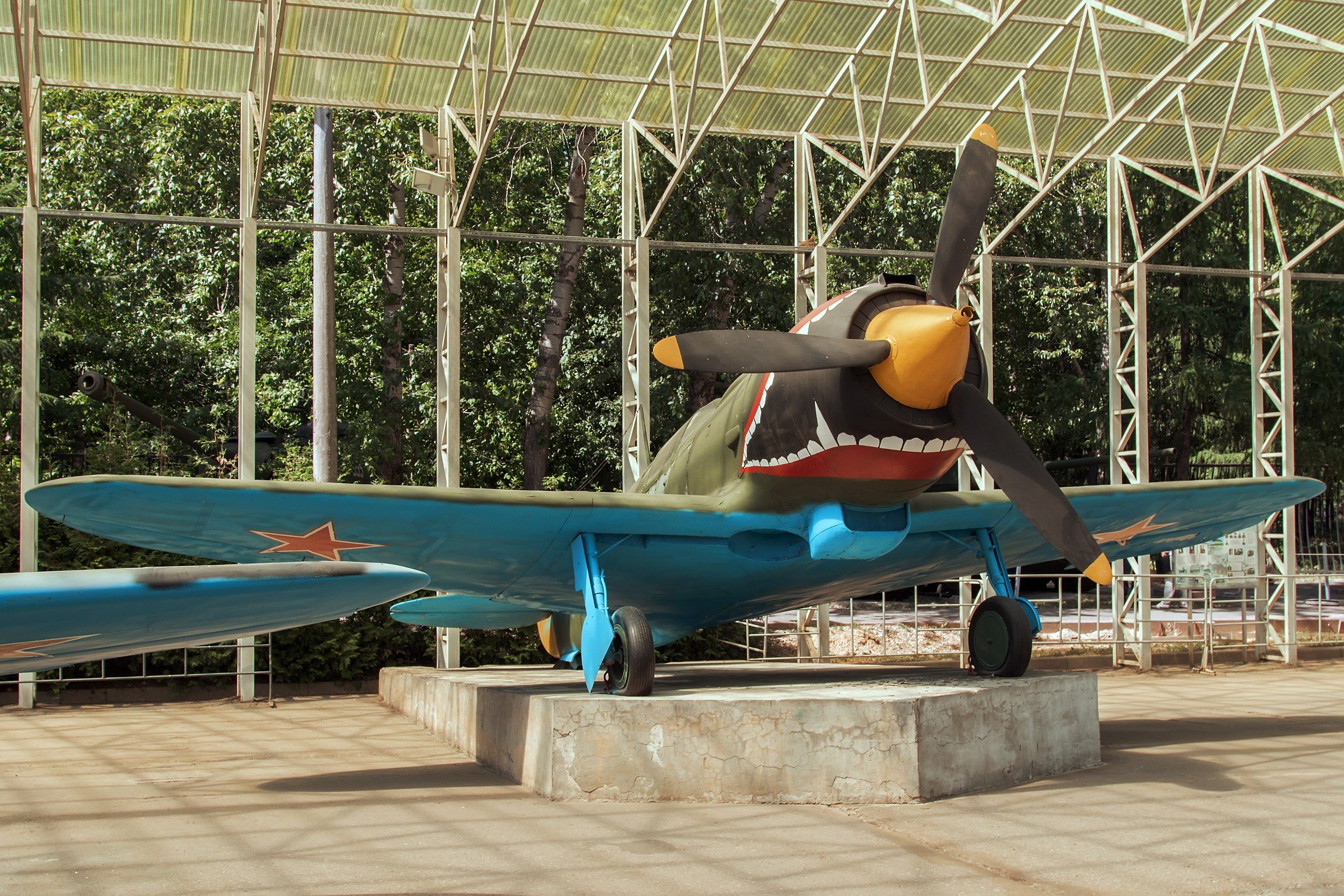
With a fuel capacity of 760 lbs (345 kg), the aircraft could fly a range of 415 NM (475 miles, 765 km). It was armed with two 20 mm ShVAK cannon guns and two bombs of up to 220 lb (100 kg) each. In terms of operation, the rate of climb, maneuverability, and high-speed performance made it one of the most capable warplanes for the Soviets during World War II.
The Lavochkin La-5 roles
The single-pilot, single-engine monoplane was used in air-to-air combat missions during the Second World War. The aircraft could engage enemy aircraft through the use of guns and missiles. Lavochkin’s La-5 could also be equipped with aerial rockets, which provided another example of air combat.
With an exceptional rate of climb of 16.7 m/s (3,290 ft/min), the aircraft was used as an interceptor during war missions. Its high speed, high performance, and endurance made it capable of achieving remarkable results during enemy missions. The Lavochkin La-5 was highly stable, and the control surfaces provided effective maneuverability at high speeds.
The type was developed to be operated in close proximity to the ground to enable air-to-ground ordnance. Pilots needed to make constant adjustments to achieve optimal performance during flights; for example, pilots needed to simultaneously move as many as six levers to generate rapid accelerations under certain conditions.
The Lavochkin La-5 was designed to be used as a training aircraft; a dedicated trainer could use it for student pilots. Trainees would learn on the aircraft and hone their skills before missions. Its robust airframe tended to be forgiving towards minor structural and design deviations.
What are your thoughts on the design and performance of the Lavochkin La-5? Share your opinion in the comments section.