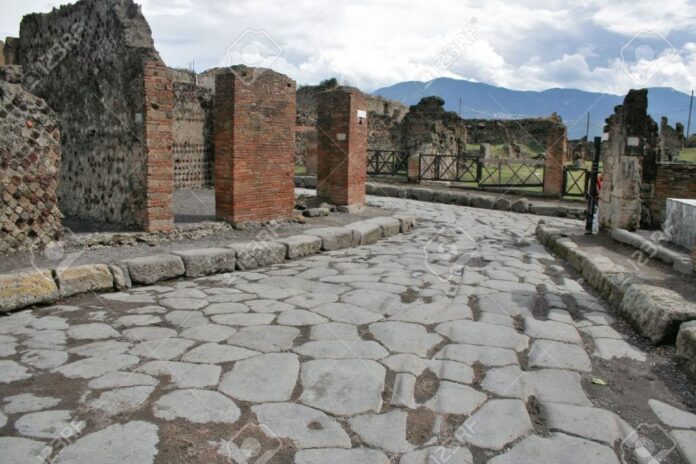
It’s been nearly 2,000 years since two Roman cities were destroyed by a volcanic eruption, and archaeologists and researchers are still working to uncover information about Herculaneum and Pompeii – including what the Roman inhabitants ate, how they lived, how they interacted with other cultures, and how they died. Explore the questions below to discover what Civilizations in Contact researchers have uncovered, and follow the links to learn even more.
What is Pompeii? What happened to Pompeii and Herculaneum in 79 AD?
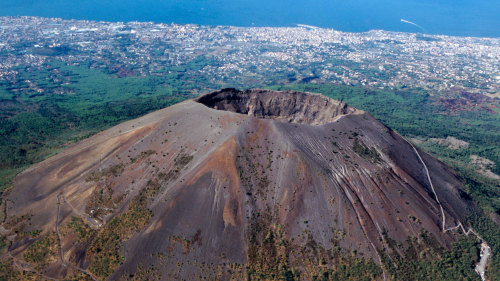
Mount Vesuvius
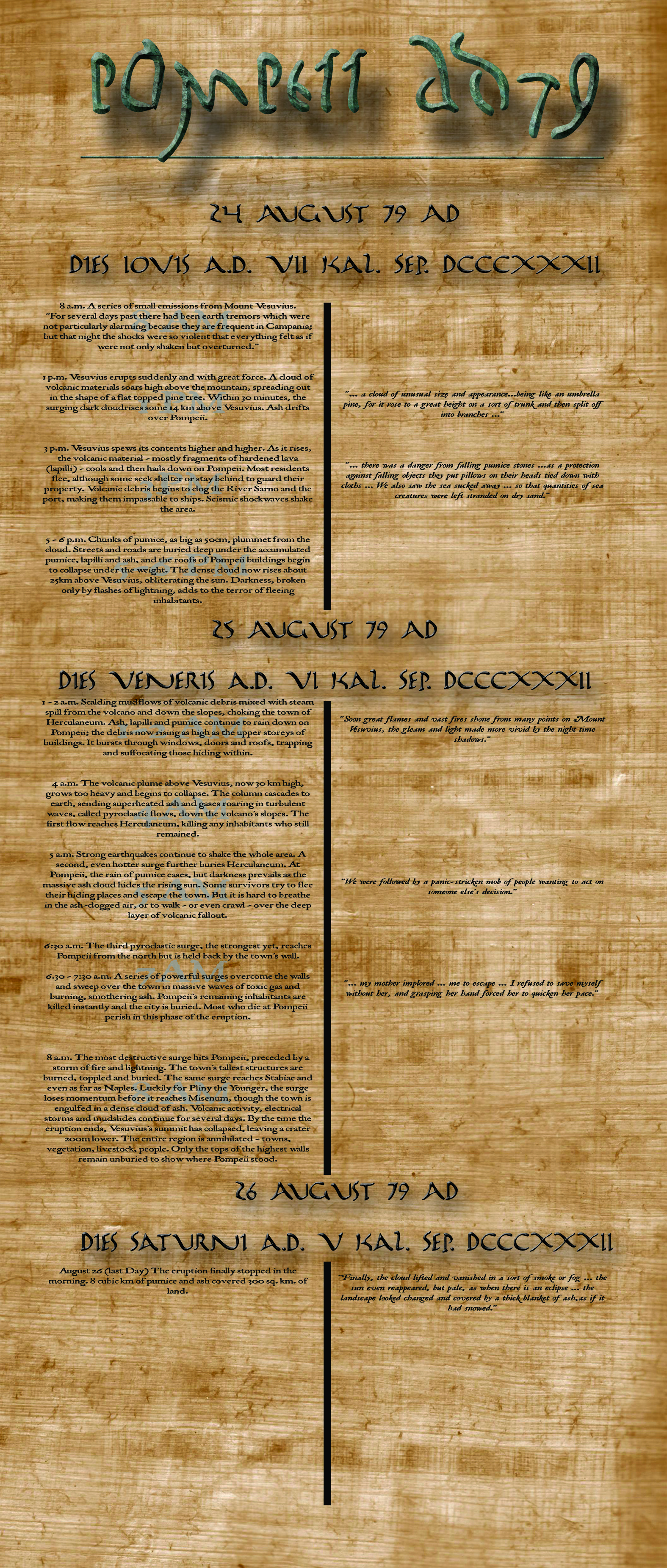
The Roman cities of Pompeii and Herculaneum were nestled near the beautiful Bay of Naples in southern Italy and were overlooked by the volcano Mount Vesuvius. Earth tremors were common in the area but were not associated with the threat of an eruption since the volcano had been dormant for hundreds of years. When it came, the eruption did not produce molten lava, but rather a gigantic and more deadly cloud of volcanic ash nearly 19 miles (30 km) high. Pompeii was directly in the ash cloud’s path and was gradually submerged under a heavy rain of ash that made structures collapse under its weight. Nearby Herculaneum was struck by earthquakes but, because of the wind direction, escaped an early fall of ash. Both cities were destroyed and buried when the volcanic cloud eventually collapsed. The collapse caused several fatal pyroclastic surges, which were, in effect, avalanches of superhot ash and gas that rushed down the slopes of Vesuvius. About 13 to 16 feet (4 to 5 m) of volcanic debris covered Pompeii. Herculaneum was even more submerged, with some areas reaching a depth of 75 feet (23 m).
The extreme temperatures of the pyroclastic surges killed any remaining inhabitants of both cities instantly. In Pompeii volcanic ash hardened around corpses, preserving the forms of their bodies and, in some cases, their clothes. In Herculaneum the higher temperature of the surges, which travelled at about 68 mph (109 kph), caused instant ignition, splitting skulls and boiling brains alive. The temperatures there also preserved (through carbonisation) wood and food that did not normally survive in Pompeii.
After the eruption the Roman poet Statius noted, “In the future, when crops grow again and this devastated wilderness blooms once more, will people believe towns, people and estates are all buried beneath the soil?” The cities, however, were never forgotten locally. Archaeologists have discovered evidence of looters’ tunnels dating from after the eruption and into the Middle Ages. In some cases skeletons – possibly looters killed by tunnels collapsing onto them – dating from after the eruption have been found. Looters evidently cleared some houses of their contents, and the valuable marble cladding and bronze statues from buildings in the forum came to adorn local churches and the piazza of a nearby village. Not all of the items were necessarily removed by looters, though – researchers believe residents who escaped the eruption may have come back for items, and an official salvage operation may even have taken place.
How do we know what happened?
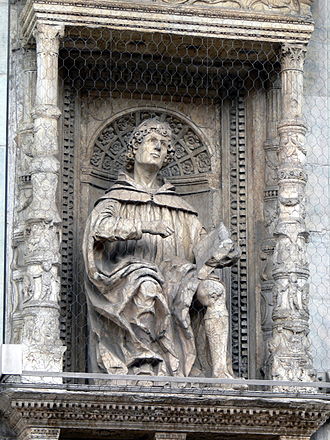
Statue of Pliny the Younger on the façade of Cathedral of S. Maria Maggiore in Como. / Wikimedia Commons
Archaeological excavations of Pompeii and Herculaneum have been cross-referenced with the original letters of a young eyewitness, Pliny the Younger, who wrote accounts later in life to his friend, the historian Tacitus.
Can we be sure on what date Vesuvius erupted?
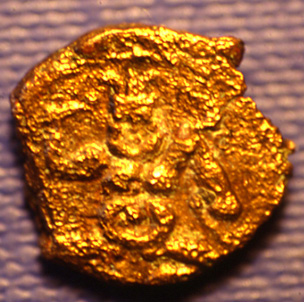
A locally struck bronze coin found during excavations at Pompeii / British Museum
The letters of Pliny the Younger to the historian Tacitus – the only written accounts of the eruption – give the dates as 24 and 25 August 79 AD, but there are various problems with this date.
- Different mediaeval copies of Pliny’s original letters give a number of different dates for the eruption. Roman dates and numerals can easily be miscopied.
- There are a large number of autumnal fruits among the remains that were usually harvested only in September or October. These fruits include grapes, pomegranates, walnuts, sweet chestnuts, carobs and olives.
- Plaster casts show evidence of heavier woollen clothing being worn than would have been customary in the heat of August, particularly indoors.
- Many braziers, which were more likely to be used for heating during the autumn months, have been found indoors.
- A Roman coin has been discovered which specialists date to September 79 AD. It was found at a site where later looters could not have dropped it.
It seems likely that the volcano erupted later than August.
How do we know Pompeii was already an old city by 79 AD?
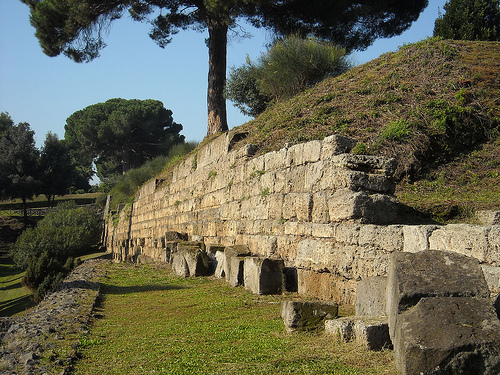
Boundary walls (4th-3rd century BC) out of Nuceria gate at Pompeii
Visitors to Pompeii often come away with the impression that its ruins are evidence of identical Roman architecture, indistinguishable by date or style. Pompeii, however, was settled long before the Romans arrived. In one excavated house a Roman inhabitant of Pompeii deliberately preserved an ancient column erected on the site by Etruscans who were a major power in Italy during the 6th and 5th century BC before the rise of Rome itself. The hospitable and fertile local climate of Campania encouraged Greek settlement from the 7th century BC – long before the arrival of the Romans – and they lived alongside native inhabitants, speakers of a language called Oscan.
By the 3rd century BC, Pompeii, like other towns in Campania, had been forced into becoming allies of Rome as the city gradually took control of Italy. These allies were allowed to govern themselves, although they had to provide manpower to Roman armies and allow their foreign policy to be controlled by Rome. Pompeii first expanded as a town in this period of prosperity during the 3rd century. In the 2nd century new buildings were erected (baths, gymnasium, temples, a theatre and a lawcourt), and some of the largest private mansions were also built. Pompeii clearly benefited from expanding trade and its participation in Roman conquests across the Mediterranean.
The inhabitants of Pompeii, however, did not enjoy the privileges of Roman citizenship. In 91 BC a group of Italian allies, including Pompeii, rebelled against Roman rule, probably (and ironically) because their demands for citizenship were not being met. The Romans conquered Pompeii, turning it into a colony, settling thousands of Romans there and forcing Roman local government on the city. This conquest began a process of Romanisation that saw Oscan largely displaced by Latin and Pompeii become fully Roman by 79 AD. The rebels of 91 BC achieved one aim, however. Within 10 years of their defeat, the citizens of Pompeii were granted Roman citizenship. Excavations show that 1st century inhabitants of Pompeii respected their city’s past, preserving and continuing to live in buildings that were by then several hundred years old. Vesuvius buried not only buildings that had only recently been built in 79 AD, but also much older architecture – and along with it art and antique artefacts that Romans still valued.
What was Pompeii like on the eve of its destruction in 79 AD?

Amphora Garden Of Hercules in Pompeii / Wikimedia Commons
Pompeii covered about 163 acres, and it may have had between 12,000 and 15,000 inhabitants by 79 AD. The fertile countryside produced grain, olives, vegetables (Roman author Pliny the Elder, uncle of Pliny the Younger, commented on Pompeian cabbages and onions) and wine (although according to Pliny its quality varied). Wine was definitely exported to Gaul (modern France), and an amphora (pottery jar) from Pompeii has been found in Stanmore, Middlesex. One of Pompeii’s other exports was garum, a pungent fish sauce that may have tasted like that used in modern Thai cooking.
The city suffered major damage from an earthquake in 62 or 63 AD, and there is evidence of abandoned and repaired buildings as a result. This evidence has been used to suggest that Pompeii was in decline in the years afterwards with an allegedly falling population, abandonment by the rich, and some large houses being converted to commercial or industrial use. It is also claimed that civil unrest after Emperor Nero’s assassination in 68 AD, as well as the subsequent civil wars, may have adversely affected Pompeii. Certainly the earthquake disrupted water supplies. However, there is also much evidence of rebuilding and redecoration in the period between 62 and 79 AD and the discovery of masses of rubbish indicates that the population was still large enough to produce it.
Although Pompeii was a relatively small Roman town, it remained closely linked to Rome’s elite, some of whom maintained luxurious villas as “second homes” in the beautiful countryside. It is possible that Emperor Nero and his wife visited Pompeii in 64 AD.
Society was varied. Among the wealthy elite, the priestess Eumachia stands out as a patron prepared to use her wealth for the public good. Her statue, its stone hair still tinged with a hint of red paint, was erected in one of the temples of the forum. In the nearby town of Herculaneum, out of a population of 5,000, it is thought that about 2,000 were slaves (and their families), 1,500 were freed slaves (and their families), and just 250 were freeborn inhabitants. These estimates may indicate that 79 AD was a period of social mobility, with former slaves becoming wealthier and more important in society. Slaves brought to Pompeii from across the Mediterranean and beyond certainly added to the cultural mix of Pompeii and Herculaneum.
How did Romans look after their personal appearance?
Romans were as concerned about their personal appearance as people in any age. Rich women sometimes spent long hours at the hairdressers. Some were notorious for their cruelty towards their long-suffering slaves. Creams for application to the face could be made from broad beans, lupins mixed with wine or lentils, barley, iris bulbs, honey and powdered deer antler. There were even concoctions for whitening and polishing teeth. However, excavated bodies show evidence of a build up of calculus on teeth, probably because Romans used toothpicks rather than toothbrushes, using materials such soda, ground horn or shell or even pumice. As Cambridge scholar Mary Beard puts it, Pompeians would have had “a decided whiff of halitosis”
What were Roman houses like?

House of Paquius Proculus in Pompeii / Wikimedia Commons
Housing varied from vast antique villas to cramped, recently built apartments. The poorest people might have lived in makeshift accommodation wherever they could find it while the truly destitute probably did not survive. Slave accommodation in rich houses may well have been the envy of the free poor.
It was commonplace for the houses of the rich to contain shops that opened out onto the streets. In such dwellings the atrium was a room of some importance. It contained fine mosaics as flooring, expensive wall frescoes, and ornate furniture and fittings. It was likely a public space where the owner met his clients, supporters, or suppliers. Evidence also suggests that these rooms contained storage, were sometimes used for spinning and weaving and often contained a well from which slaves could draw water for the household.
A modern visitor to some of the reconstructed houses of Pompeii and Herculaneum may get the impression that rich Romans lived in large, spacious rooms with minimalist furnishings. This impression is misleading, however, as the inhabitants had a few hours warning of Vesuvius’ eruption and may have hastily arranged for furnishings and valuables to be removed in carts before they left themselves. This may explain why so little evidence of furniture has been excavated, aside from the fact that it may have been destroyed during the eruption.
In parts of Herculaneum the intense heat carbonised wooden furniture, for instance, giving an indication (along with scenes in frescoes) of how people might have used rooms. Tricliniums were generally used for private (and probably formal) dining – family and guests could recline on couches served by their slaves, while children sat on small stools. Cambridge scholar Mary Beard has stated, however, that most food was not consumed in the triclinium but in various locations “on the hoof” across the dwelling.
Downstairs rooms might have been used for members of the family to sleep in (which might mean an extended family under one roof), while upstairs rooms might have housed slaves, lodgers and storage.
Recent evidence has been found in houses of small shrines to domestic gods. There were remains of sacrifices including chicken and pig bones, pinecones, figs, charred cakes, walnuts, eggs, grain and cockerel heads.
How do we know what Romans ate?

A table showing some of he common foods Romans ate / Mandy Barrow, Creative Commons
Films and illustrations in books (usually based on limited evidence from frescoes and satires) often give the impression that all Romans dined at extravagant banquets while reclining on couches and being served exotic dishes, regularly vomiting so that they could consume even more. However, although the diet of Pompeians was able to draw on a range of foods, access to types of food depended on relative wealth. A list of food scratched onto the wall of an atrium in Pompeii shows dull uniform purchases over an eight-day period: bread, oil, leaks, onions, cheese and fish on only one day. A large septic tank excavated in Herculaneum in 2005-06 and known as the Cardo V drain contained carbonised and partly fossilised waste. There was evidence of the consumption of celery, cabbage, beans, lentils, olives, scallops, muscles, cuttlefish, sea urchins, sardines, eels, anchovies, turbot, chicken, sheep and pig. Remains have also been found of seasonings mentioned in the famous cookery book by Apicius: dill, coriander, mint, black peppercorns (imported from India), fruit, nuts, figs, dates, apples, pears and grapes.
How do we know how bakers traded?

Ruins of a bakery in Pompeii show the mills for grinding grain plus one of the brick ovens. / Wikimedia Commons
There are more than 30 identified baking establishments in Pompeii. Some milled their own grain, baked the bread and sold it, while others probably produced loaves from ready-prepared flour. Bread was also sold from temporary street stalls, and it was easy for a Pompeian to purchase it.
A recently excavated bakery combined milling and baking. Shoppers could see into the large room where the dough was mixed and kneaded in large stone bowls and then worked into a shape at a wooden table. The circular loaves were passed through a hatch to the oven. Individual local makers sometimes stamped their work. Some of the carbonised loaves discovered at Herculaneum bear the words “Made by Celer, the slave of Quintus Granius Verus”.
A recently discovered list of food purchases on the wall of a Roman house refers to three different kinds of bread: “bread,” “coarse bread,” and “bread for slaves”
How do you know how potters and lamp makers traded in Pompeii?
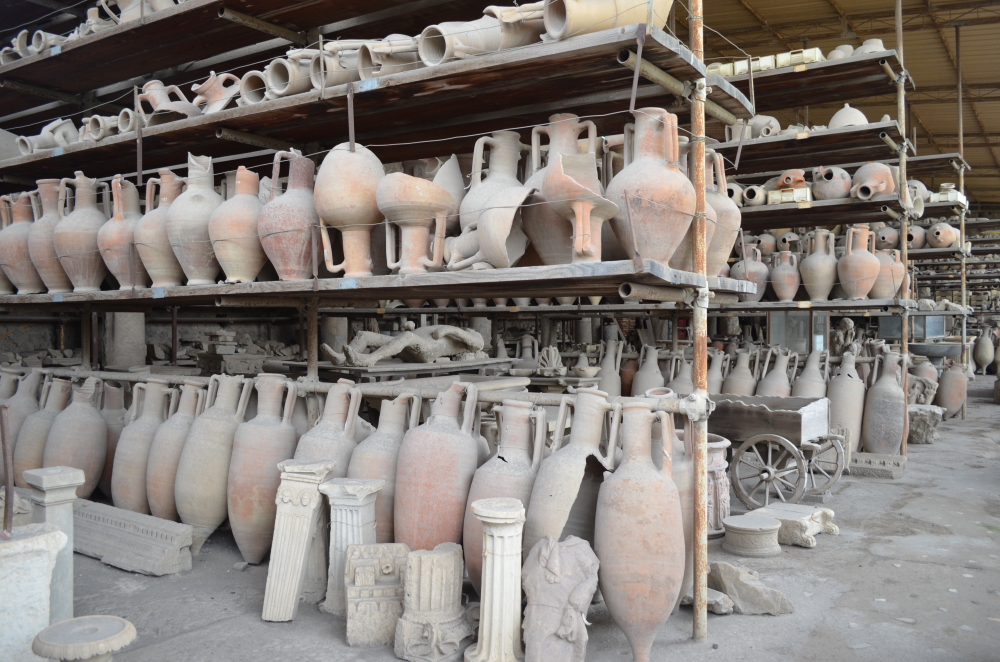
Pottery from Pompeii and Herculaneum / Wikimedia Commons
Pompeians craved light in their largely dark homes. There were thousands of lamps in the city made from pottery or bronze. Some were plain, others ornate; some had single or multiple flames. Some were made to hang, sit on tall stands or rest on the floor or table. They usually burned oil, but recent chemical analysis shows that a mixture of oil and tallow was regularly used in bronze lamps while pure oil was used in unglazed pottery. This may be because the porous clay might have absorbed an unpleasant smell from the tallow. Most of the pottery was produced and sold locally, with one residence, the house of Julius Polybius, containing more than 70 clay lamps and one bronze one.
How diverse was Pompeii and the Roman world?
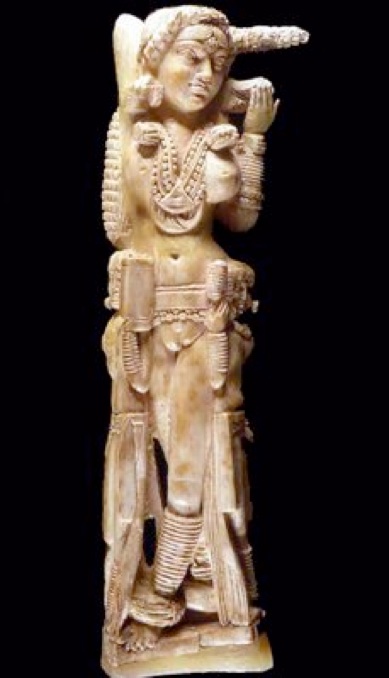
Statuette of the Indian goddess Lakshmi, excavated from a Pompeian house / Wikimedia Commons
Illustrations in textbooks sometimes depict Romans as uniformly white. This impression is misleading, however. The Roman Empire was ethnically and culturally diverse, and it is known, for example, that Syrian auxiliaries served on Hadrian’s Wall in Britain. Like so many other Roman cities, slaves were brought to Pompeii from all over the Empire. The city also hosted a Jewish community. Trade links brought goods from China such as silk, and an ivory statuette of the Indian goddess Lakshmi excavated from a Pompeian house in 1938 is further evidence of Pompeii’s wide-ranging contacts. Recently the bones of a monkey have been identified among other bones kept scattered in a storeroom. The origin of this exotic pet is unknown, but it certainly did not come from Italy.
How were Pompeii and Herculaneum excavated?

Ruins of Herculaneum / Wikimedia Commons
In the aftermath of Vesuvius’s eruption, Herculaneum lay buried and inaccessible beneath 23 metres (75 feet) of volcanic debris, but Pompeii was more fortunate. After the stones, pumice and ash had cooled sufficiently, citizens who had escaped crept back to salvage what they could from the ruins of their homes, still visible among the 4- or 5-metre (13- to16-foot) blanket of debris across the city. Looters probably also tried their luck. It was not difficult to tunnel through the debris, and major landmarks were easily identifiable. A systematic operation, probably under official authority, removed the most desirable materials and valued objects from major public buildings such as the Forum, bathhouses, theatres and temples – particularly statues and marble architectural elements.
Thereafter the destroyed towns were consigned to oblivion. Later earthquakes and volcanic eruptions in this tectonically unstable area contributed substantial quantities of material to the layers of soil and debris that accumulate through time over ancient sites. Thus Pompeii, too, became buried and invisible. A chance discovery in 1594 at Pompeii was misidentified as part of a villa; it was more than a century later that the discovery and investigation of the towns began. In 1710 a man digging a well revealed the remains of Herculaneum’s marble-paved theatre; finds from investigations by a local prince sparked the interest of the region’s rulers, the Bourbon kings of Naples and Sicily, and from 1738 major “excavations” were undertaken at Herculaneum, Pompeii, Stabiae and a number of villas in the area. Using pickaxes and often gunpowder, tunnels were dug down to and then through the buildings, with a workforce including convicts. The purpose of this work was solely to recover works of art for the private royal collections, including frescoes hacked from walls and mosaics gouged out of floors. Apparently material not deemed worthy of these collections was destroyed, to prevent it falling into the hands of lesser people. Distinguished visitors, including the pioneering German archaeologist J. J. Winkelmann, protested at the disgraceful waste, and by the 1760s there was some improvement, including rudimentary recording.
Napoleon’s sister, Caroline, who became Queen of Naples in 1808, took a great interest in Pompeii and oversaw the beginning of an ambitious programme of systematic clearance, using a labour force that at times numbered 1,500. She planned excavations to link areas already investigated. She intended to trace the city walls in order to identify gates and the city’s roads that ran through them, and to clear these roads to reveal the location of buildings which could then be systematically investigated by well placed tunnels. Napoleon’s fall in 1815 meant that Caroline was able to fulfill only part of the first objective, but, happily, later Bourbon kings adopted her aims, though they provided scant funding and manpower to execute them. The resulting discoveries included many skeletons whose situation or posture revealed details of their tragic individual stories. These made Pompeii a popular destination for travellers on the Grand Tour, which allowed them to walk along the exposed streets and follow torchbearing guides along tunnels to see the sights. Exciting objects would apparently be discovered by the excavators before the visitors’ very eyes – and no doubt be covered over after the tourists had left, to be “discovered” again and again.
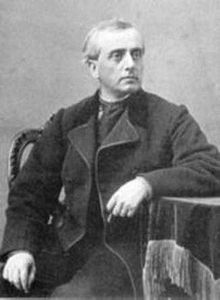
Giuseppe Fiorelli / Wikimedia Commons
In 1863, Giuseppe Fiorelli was appointed to take over the excavations for the new Italian king, Victor Emmanuel. His careful work transformed the investigations at Pompeii, while the school he founded (Scuola di Pompeii) ensured that his methods were passed on to the rising generation of Italian, and even foreign, archaeologists. His innovations were many. Abandoning the previous system of tunnelling out from cleared roads, he first had the excavation area cleared of the spoil heaps (mounds of excavated soil and debris) left from earlier work, and then dug down to expose the buildings from above. By this means he was able to gain a complete three-dimensional picture of the structures and their features. He used this to make informed decisions about the best way to restore and conserve each building, employing materials in keeping with those that were originally used. He also successfully advocated leaving as much in place as possible: mosaics, frescoes and other attractive architectural features that had formerly been removed were now left to recreate a vivid impression of the Roman town as its inhabitants had known it. He added to this picture by taking account of everything that was found: he recovered not just the treasures of the wealthy but also the everyday tools and possessions of the ordinary citizens, down to the poorest. In this he was well ahead not only of most of his contemporaries but also of many later excavators.
He kept careful and detailed records of his work. Anticipating another standard archaeological practice of more recent times, his records included the three-dimensional location of finds, information which he used in interpreting their significance. His whole investigation was systematically organised, unlike the random and patchy excavations of earlier times. To make this possible, he divided the city into nine “regions” (Regiones), to which he assigned Roman numerals. Within each of these regions, he gave a number to each block of buildings, using the Roman term Insula (apartment block), and finally, identified each entrance by a number. Thus a house, with its single entrance from the street, would have a designation such as I-8-5 (5th house in Insula 8 in block I), the house on Via dell’Abbondanza in which the Indian ivory figure was discovered. This system continues to be used today.
However, Fiorelli is now best remembered for the creation of plaster casts of Pompeii’s unfortunate inhabitants. The technique of creating plaster casts from holes left by decayed objects was already in occasional use by the time of Fiorelli, but it was he who had the radical idea of applying it to people and who perfected the technique. Liquid plaster was poured or pumped into the hole and left to set; the surrounding volcanic material was then removed by excavation, exposing the plaster cast.
During the first day of the eruption, Pompeii had been subjected to a rain of ash, lapilli and white pumice, which had accumulated throughout the afternoon and evening at a rate of 15cm/6 inches per hour. Lithics (larger stones – “volcanic bombs”) were also falling by late afternoon. At this stage some of those who died had been overwhelmed or struck by debris in the streets; some had suffocated from inhaling volcanic ash, while others had been killed by falling buildings or house fires started by overturned lamps and braziers. As they lay, they had soon been covered by the continuous downpour of volcanic debris, which had settled around them, hugging their shape and hardening through time into a rigid crust whose inner surface followed every detail of their bodies, clothing and other associated things. This crust, however, did not exclude air, so in time the soft tissue and other organic materials such as clothing had decayed, leaving only the bones and artefacts of inorganic materials (such as metal jewellery) within a void that still retained the victim’s form. Earlier excavators had dug into these and exposed the bones and objects; it was Fiorelli’s inspiration to use these voids instead as moulds to create plaster casts of the original people. He was excoriated by some of his contemporaries for what could be taken as a blasphemous or disrespectful act – but most were fascinated by the results, and moved by the human suffering with which they were now, quite literally, brought face to face. In contrast, Herculaneum was overwhelmed by the first surge and pyroclastic flow, at around 1 a.m. on the second day of the eruption. The extreme heat (around 400-450 degrees C) not only killed people instantly, but also vapourised their flesh, leaving only skeletons. It also carbonised objects of wood, leather and other organic materials such as food, but because these were immediately sealed by ash, they did not ignite. Thus they have survived in their carbonised form. Pompeii also experienced surges and pyroclastic flows on the second day, but these were less hot (250-300 degrees C). The bodies of those killed by the heat often survived, to be buried by ash and eventually made into casts. Clenched fists bear witness to the heat, which contracted their tendons.
Fiorelli’s casting technique continues to be used, recovering the form not only of people, but also, poignantly, of a dog who could not escape his chain as the ashes fell. Wooden doors, shutters and other architectural elements have also been recovered in this way, and even tree roots, which bear witness to the gardens of Pompeii. Later excavators maintained Fiorelli’s high standards of work for the most part, although poor funding often hampered or undermined these efforts. The substandard restorations executed by Amedeo Maiuri from the 1920s to the 1960s are a prime example.
How different was Herculaneum from Pompeii?
Archaeological finds support the claim that, out of the five cities destroyed by the eruption of Vesuvius (Herculaneum, Pompeii, Stabiae, Oplontis and Villa Boscoreale, a hunting reserve), Herculaneum was probably the wealthiest. Pompeii was buried by just 4 meters of mostly volcanic debris, whereas Herculaneum was buried in 20-25 metres of volcanic ash. This resulted in Herculaneum remaining untouched until its discovery in 1709 by Prince D’Elbeuf, who started digging in the area of the theatre. After Pompeii’s discovery, however, no one excavated in Herculaneum for about a century. This was because Pompeii was easier to excavate. Excavations resumed in Herculaneum in the early 20th century, but even today nearly 80 percent of the site remains unexplored. Unlike Pompeii, Herculaneum is one of the few ancient towns in which the upper floors of the houses were preserved. (Another town in which 3-storey buildings survived – again, because of the eruption of the nearby volcano – is the much earlier town of Akrotiri on the island of Santorini, Greece, which dates to 1620 BC.) Today, two modern cities lie on top of the unexcavated part of Herculaneum: Portici and Ercolano: the latter’s previous name (Resina) was changed in 1969 to recall the ancient town.
According to mythology, the monster Cacus, son of Vulcan, stole Hercules’ cattle. When Hercules managed to find the cavern where Cacus had hidden the cattle, Cacus resisted and Hercules killed him. To commemorate his victory, Hercules founded Herculaneum at the same place. The cult of Hercules was the most popular in the town, though Apollo and Venus were also worshipped. The Oscan tribe of southern Italy established the town of Herculaneum at the end of the 6th century BC, but later the Samnites tribe took over the town. The name was probably given by Greek traders. In 89 BC Herculaneum became a Roman municipium, a self-governing town.
When the 79 AD eruption of Vesuvius begun, the volcanic material produced mainly affected Pompeii, Stabiae, Oplontis and Villa Boscoreale because of the southeast wind that was blowing at the time. Situated on the western side of the volcano, Herculaneum received only minor quantities of ash during the first phase of the eruption, a fact that gave the city’s inhabitants time to leave. Therefore, for a long time it was believed that the people of Herculaneum – numbering just 5,000 compared to the 15,000 inhabitants of Pompeii – had managed to escape the town. However, in 1981 numerous skeletons were discovered near the seashore. So far about 400 skeletons have been unearthed in 12 arched chambers used as boat houses near the shore of Herculaneum. Scientific examination of 80 of these human remains revealed that the structure of these chambers, although providing shelter, did not prevent their deaths, which occurred from fulminant shock, causing the evaporation of their bodies. Their skeletons suffered thermally induced contraction about a second after their death. The temperature of the sudden heat wave was about 480 °C. A recent study states that “exposure to at least 250 °C surges even at a distance of 10 kilometres from the vent was sufficient to cause the instant death of all residents, even if they were sheltered within buildings”. Archaeological excavations have shown that a rapid succession of six flows and surges [different layers of hot ash] buried the city’s buildings, but at the same time preserved most of the structures from collapse. Since 1997, the archaeological site of Herculaneum – along with the archaeological sites of Pompeii and a third destroyed city, Torre Annunziata – is a UNESCO World Heritage Site.
Villa of the Papyri

Villa of the Papyri in Herculaneum / Wikimedia Commons
The most famous excavated villa at Herculaneum is the “Villa of the Papyri”, which took its name from the approximately 1,800 papyri found in the only library surviving intact from antiquity.
The villa was accidently rediscovered in 1738 during the opening of a well, and for several years people tunnelled through the villa to remove works of art. The tunnellers threw away carbonised blocks of earth, thought to be charcoal. Only after the discovery of the library in 1752 was it realised that they were actually discarding the remains of books. Using a computerised technique, the ink was made legible and hundreds of lost works of Greek philosophy – including half of Epicurus’ entire opus, which had been missing for 2,300 years, and some Roman poetry – were retrieved and could be read for the first time. In the past, several attempts to unroll numerous scrolls caused numerous ones to be damaged. An alternative technique, using X-rays, was tried in 2009, but the carbon-based inks that the Roman writers used made the text invisible to the scans. Today, the majority of the scrolls that have been discovered are stored at the National Library in Naples. In the 1990s excavators determined that, during the eruption, slaves working in the villa had been trying to carry crates of books to safety. Meanwhile, other first-time discoveries continue on the site: in 2006 the first complete painted statue ever found, the bust of an Amazon warrior, was unearthed from near the Basilica.
In 1970, Jean Paul Getty, who was the wealthiest person in the world at the time, decided to build a museum in Malibu, California, modeled after the Villa of the Papyri. Due to the J.P. Getty endowment, it soon became the wealthiest private museum in the world. In 2006 the museum spent $275 million to renovate the villa in order to house the antiquities collection alone, while the rest of the collections were kept at the Getty Centre. Soon after that, more than 41 antiquity masterpieces that had been exhibited at the Getty were proven to have been looted and smuggled from Italy and Greece, and were repatriated to their countries of origin. Today, hundreds of antiquities in Getty’s copy of the “Villa dei Papiri” (the Getty Villa) are lacking a clear, legal collecting history, and remain under close investigation by foreign governments.