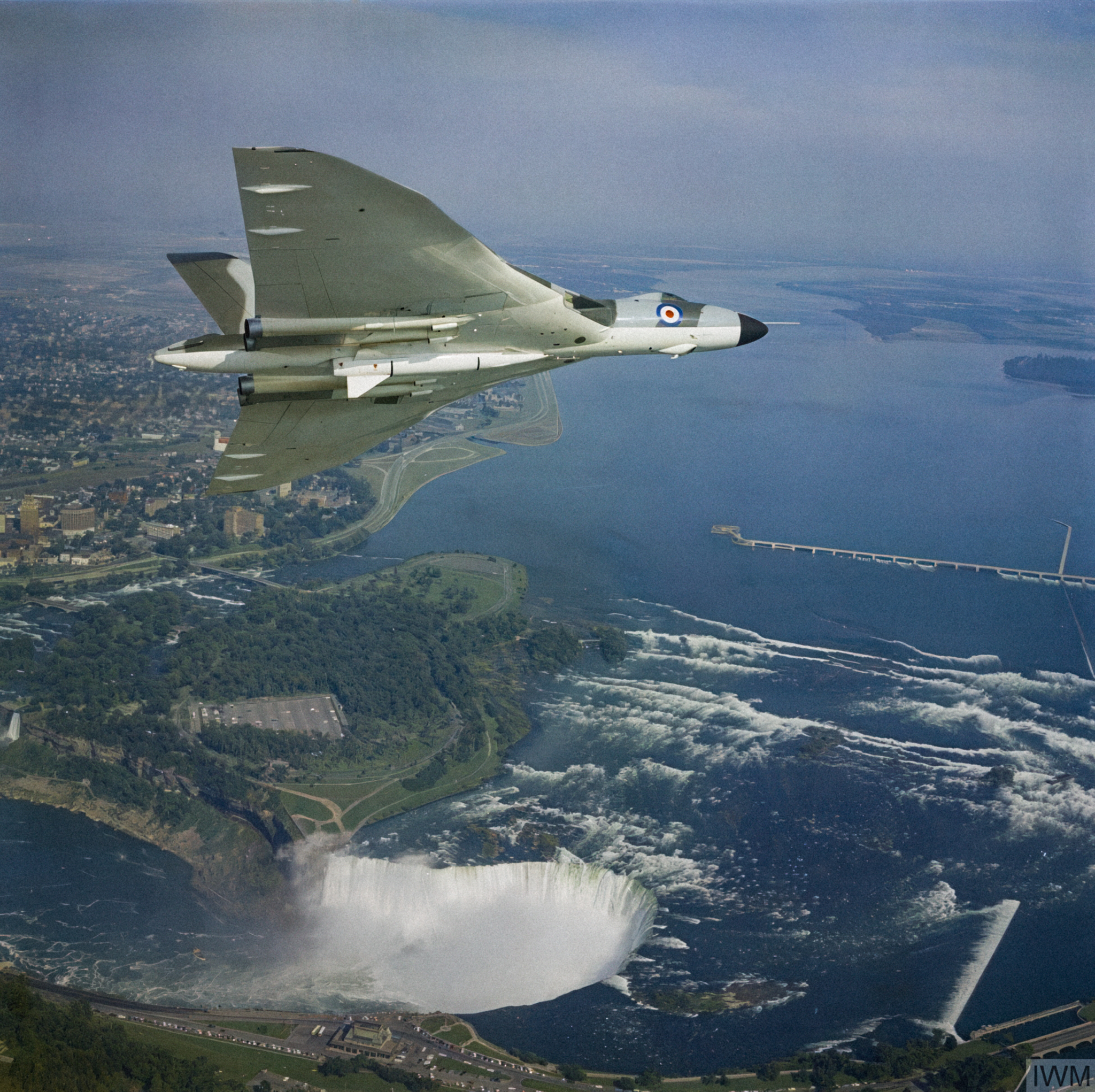

Avro’s Vulcan was one of the most technically advanced bombers of its time and an extremely notable aircraft during the Cold War. The unique aircraft was a high-altitude strategic bomber with a delta wing, allowing the aircraft to reach a cruise speed of nearly 500 kn and a maximum speed of Mach 0.96. The Vulcan could reach a ceiling of 55,000 feet and had a range of over 2,500 nautical miles.
Over 130 examples of the type were built by Avro over nearly ten years for the United Kingdom’s Royal Air Force (RAF). Avro produced the Vulcan in two variations, the B.1 and B.2. The Vulcan featured a unique design requiring several years of flight testing to fine-tune.
Range of service
The Avro Vulcan was initially designed for the UK military as a medium-range bomber capable of carrying one 10,000-pound bomb to a target 1,500 nautical miles away. This contract was linked with the British atomic weapon program created in 1947. The Avro Vulcan design process began shortly after. The aircraft first flew successfully in 1952, and the RAF took delivery of its first Vulcan in September 1956.
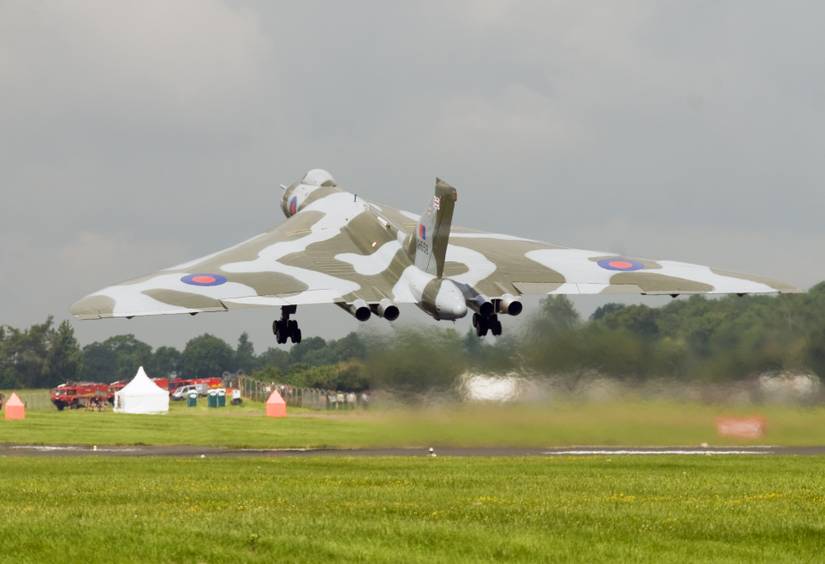
After the RAF took delivery of the aircraft, the Vulcan would go through nearly 30 years of service. It participated in several different roles throughout its life. The Vulcan would go on to carry Britain’s first nuclear weapon and operate in a nuclear deterrent role.
It also operated in a more conventional bomber role and carried various armaments during training missions. Avro’s Vulcan only saw combat near the end of the aircraft’s service in 1982. The aircraft operated as a conventional bomber during the Falklands War and was used to drop bombs on various targets as a part of the Black Buck raids.
The bomber was also used in a surveillance role and performed maritime radar reconnaissance around the British Isles in 1973. Six Vulcans were also converted to aerial refuelers for a short period of time until the RAF took delivery of its next-generation tankers.
Last flight of the Vulcan
Although the Vulcan was retired from service in 1984, the aircraft would continue to fly for over 20 more years. Specifically, one aircraft, the Vulcan XH558, stood out. Between 1985 and 1992, the aircraft performed with the RAF’s Vulcan Display Flight (VDF) at various airshows. However, the VDF was cut from the budget in 1992, and the Vulcan was planned to be disposed of.
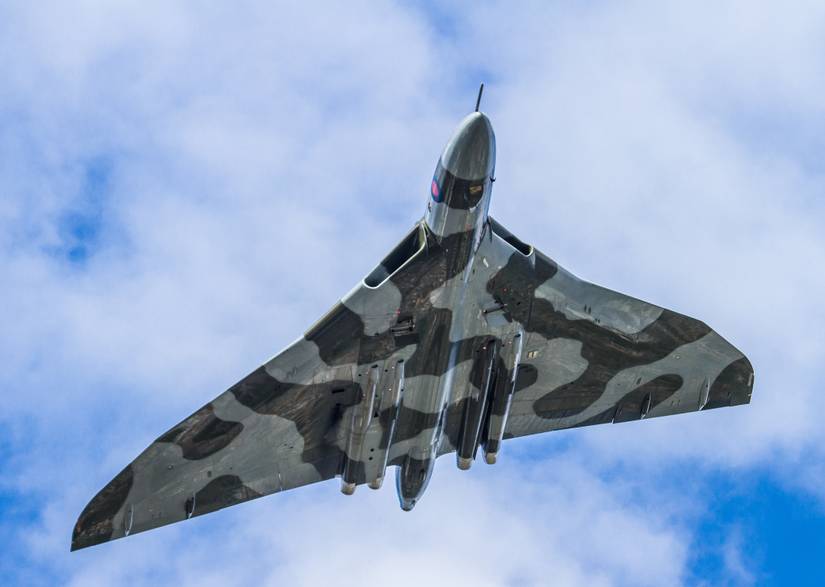
However, in 1993, XH558 was saved from being scrapped and was purchased by the Walton family. Surprisingly, in 1997, the Walton family and Dr. Robert Pleming began to explore the possibility of seeing the aircraft fly again. After ten years of work by various engineering teams, XH558 was deemed airworthy again and was granted a Permit to Fly (PTF) by the Civil Aviation Authority (CAA).
This example would successfully fly for an additional eight years before completing its last flight in 2015. It was ultimately retired less than a decade ago for engineering reasons. That said, the aircraft had already received major structural modifications that allowed it to fly as long as it did. Necessary tooling to make repairs was scarce and difficult to find, which means the aircraft could not be restored as easily. Additionally, spare parts were dwindling, including a lack of new engines. Upkeep of the aircraft became too difficult and costly to fly, leading to its eventual retirement in 2015.