
Featuring its iconic huge, variable engine intakes and swing wings, the B-1A was the original B-1 design, and its top speed was over Mach 2.2. There were only four prototypes constructed, and no production units were ever made to this specification. A modified version of the first B-1, the venerable B-1B, or “Bone,” has a Mach 1.25 top speed and a smaller radar signature. It is designed to penetrate at a low level, and there were 100 B-1Bs made that still serve the United States Air Force today.
The Rockwell B-1 Lancer is renowned for its speed, large payload (which beats even the B-52), and versatility. Rockwell created the original B-1A as a long-range strategic bomber for low-level entry into Soviet target areas. Late in 1974, the B-1A prototype took to the skies. However, the project was canceled in June 1977 due to the development of stealth technology and the development of new radar, which made low-level penetration easier to defend against.
Head To Head
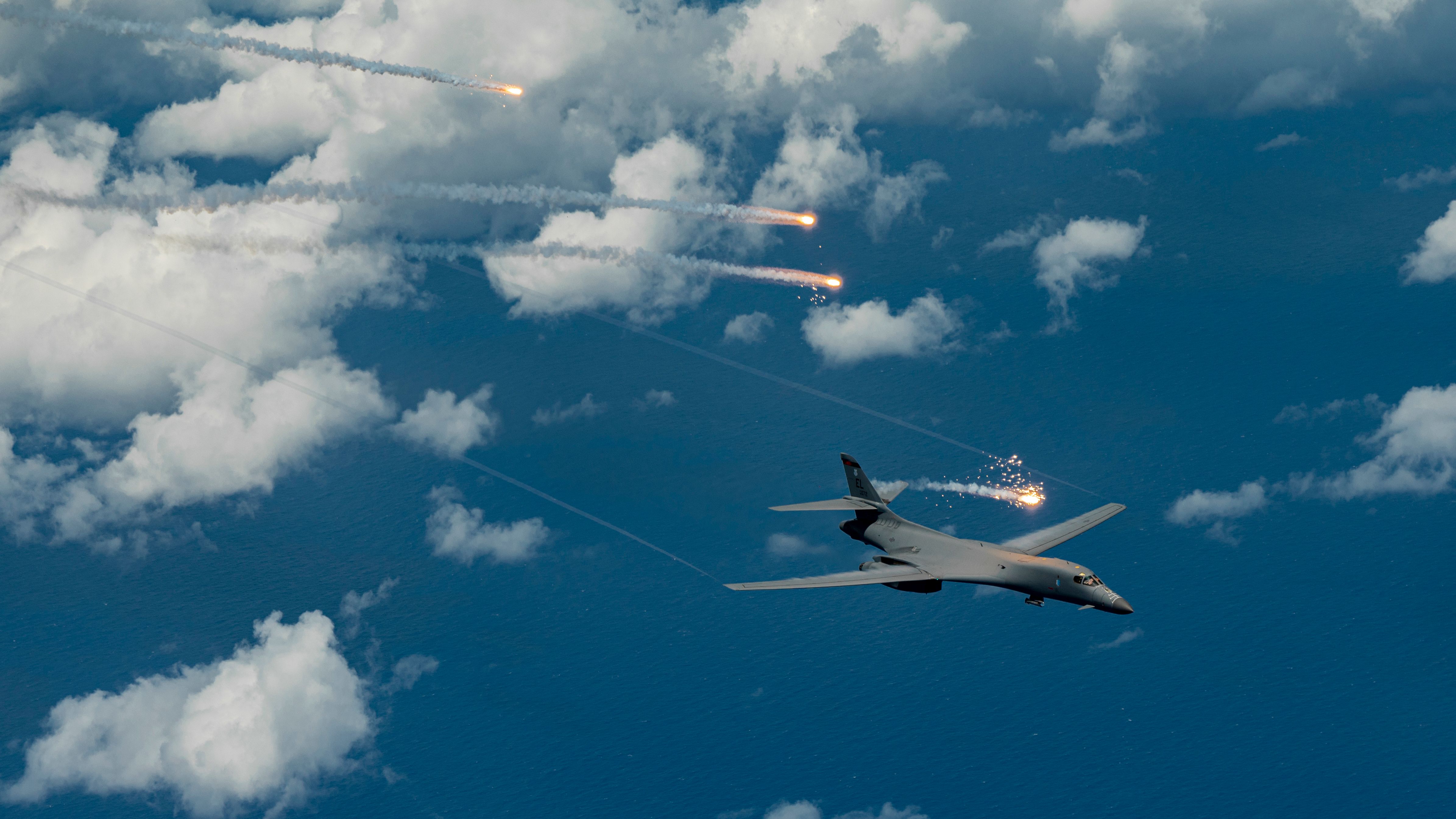
Both high- and low-altitude performance were offered by the swing wing, which was incorporated into the Rockwell design. Originally, the B-1 was intended to fly at Mach 2+ at high altitude and at high subsonic speed with supersonic dash capability at low altitude. The weapons load for SRAMs, conventional bombs, and nuclear bombs was to be more than the B-52.
The range was intended to be comparable to the B-52 , but it had a significantly shorter takeoff ground roll and a lower total gross weight. Given that the B-52’s long takeoff ground roll and heavy gross weight limit its basing flexibility, this would have allowed for much more flexibility. It was intended for computer processors to control and integrate the avionics systems.
In 1998, during Desert Fox, the B-1B made its combat debut over Iraq. In September 2020, the most extensive fleet upgrade to date was finished. The Integrated Battle Station (IBS) program, which consists of three parts, includes a Central Integrated Test System (CITS) for simplified troubleshooting in real time, an all-digital glass cockpit, and a Fully Integrated Data Link (FIDL) to improve targeting/LOS/BLOS C2.
Performance by the numbers: Bone versus Bone
| Specification | B-1A prototype | B-1B production |
| Builder: | Rockwell International, North American Aircraft | Boeing, North America (formerly Rockwell International, North American Aircraft); Offensive avionics, Boeing Military Airplane; Defensive Avionics, EDO Corporation |
| Power Plant: | Four General Electric F-101 GE-100 turbofan engine with afterburner | Four General Electric F101-GE-102 turbofan engine with afterburner |
| Thrust: | 30,000-plus pounds (13,500-plus kilograms) with afterburner, per engine | 30,000-plus pounds with afterburner, per engine |
| Wingspan: | 136.7 feet extended forward78.2 feet swept aft | 137 feet (41.8 meters) extended forward, 79 feet (24.1 meters) swept aft |
| Length: | 150.2 feet | 146 feet (44.5 meters) |
| Height: | 33.6 feet | 34 feet (10.4 meters) |
| Weights: | Normal Operating 389,800 lbs.Maximum Take-Off – 395,000 lbs. | Approximately 190,000 pounds (86,183 kilograms)Maximum Take-Off – 477,000 pounds (216,634 kilograms) |
| Speed: | Max Speed: Mach 1.2 at sea level (900+ mph)Max Speed: Mach 2.3 at 50,000 feet (1,450 mph / 1,259 knots)Cruise speed: 560 mph (487 knots) to 650 mph (1040 Km/H / 560 Kt) | 900-plus mph (Mach 1.2 at sea level) |
| Range: | 6,100 miles unrefueled | Intercontinental |
| Ceiling: | Over 30,000 feet (9,000 meters) | More than 30,000 feet (9,144 meters) |
| Armament: | 115,000 lbs24 AGM-69B SRAMConventional bombs:75,000 lbs internal plus 40,000 lbs external32 SRAM | 75,000 pounds (34,019 kilograms) of: 84 500-pound Mk-82 or 24 2,000-pound Mk-84 general purpose bombs; up to 84 500-pound Mk-62 or 8 2,000-pound Mk-65 Quick Strike naval mines; 30 cluster munitions (CBU-87, -89, -97) or 30 Wind-Corrected Munitions Dispensers (CBU-103, -104, -105); up to 24 2,000-pound GBU-31 or 15 500-pound GBU-38 Joint Direct Attack Munitions; up to 24 AGM-158A Joint Air-to-Surface Standoff Missiles; 15 GBU-54 Laser Joint Direct Attack Munitions |
| Crew: | Four (aircraft commander, pilot, offensive systems officer and defensive systems officer) | Four (aircraft commander, copilot, and two combat systems officers) |
| Inventory: | none4 built, 2 crashed and 2 on display | Active force, 62 (test, 2); ANG, 0; Reserve, 0 |
| Date Deployed: | Cancelled 1977 | October 1986 |
Speed Versus Stealth
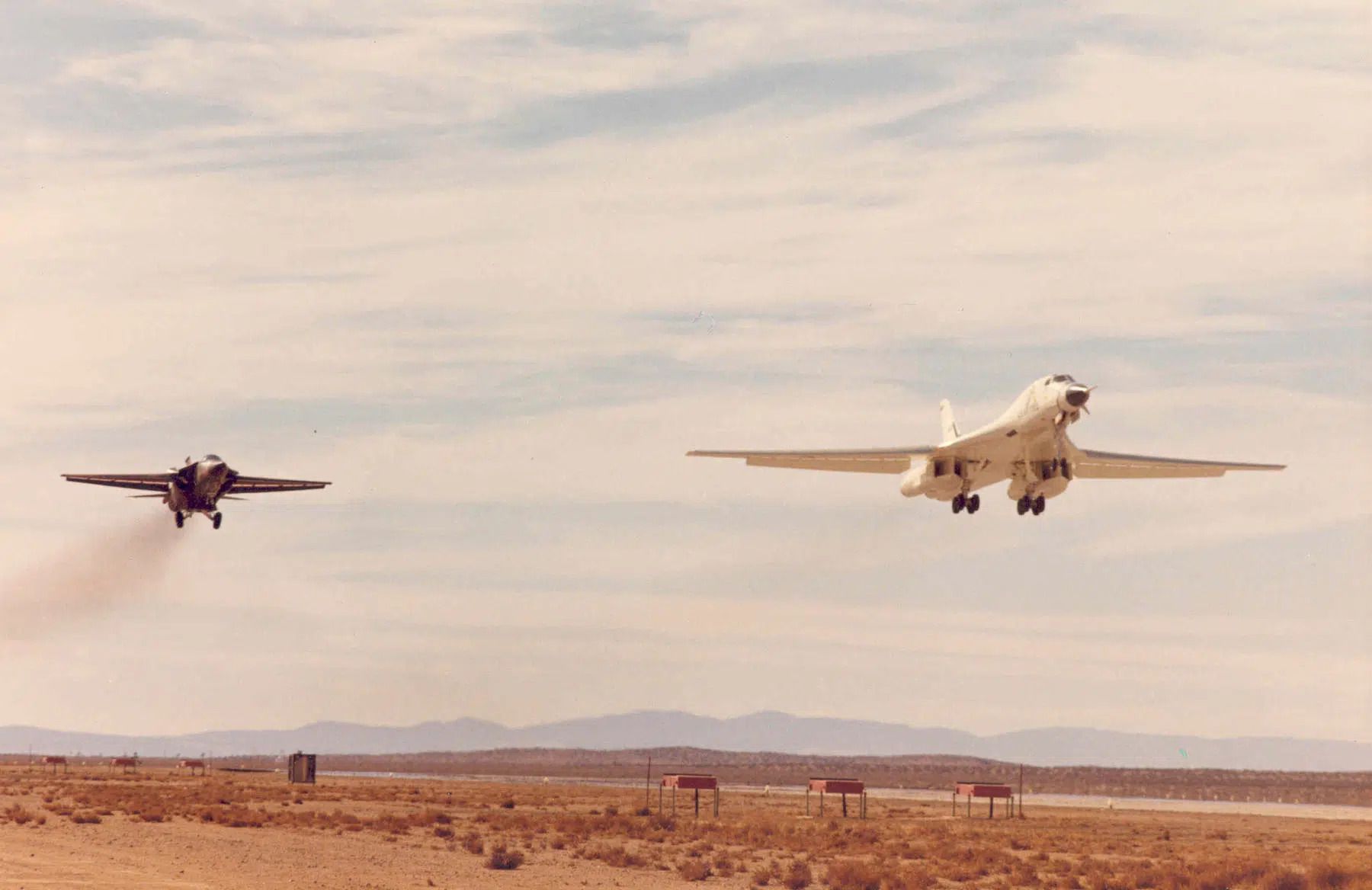
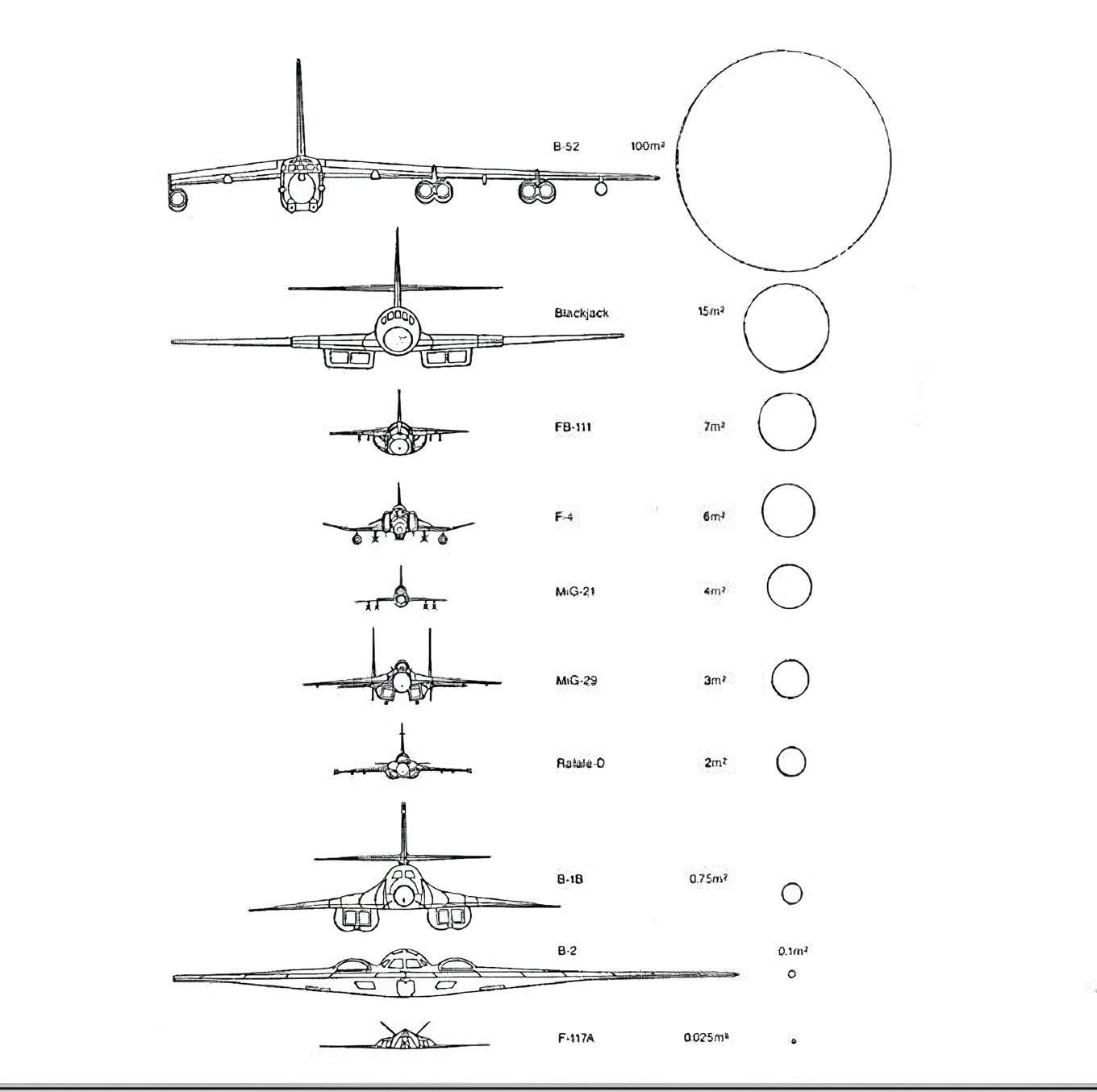
It is true that the B-2 Spirit stealth bomber undermined support for the B-1A as its approach to defeating enemy radar-based air defenses was deemed more capable and reliable than the B-1’s approach. The B-1, however, does have a low radar cross section (RCS) of its own, which was by design from the outset. As a function of its low-level penetration tactics that maximize the potential of its speed and maneuverability, the B-1 was made with a very low forward-facing RCS signature.
The four-ship prototype fleet flew until 1981, to continue flight testing as the fate of the program was decided in the White House. The incoming president, Ronald Reagan, revived the program and chose to develop the B-1 alongside the more secretive B-2. By the time the B-1A program was canceled, the first prototype had made 79 flights totaling 405.3 hours. It was disassembled and taken to Colorado’s Lowry Air Force Base for weapons training.
In 1981, Northrop was awarded a contract for six stealth bombers with an option for 127 more. The Soviet Union’s collapse in the late 1980s and the end of the Cold War led to major cutbacks in B-2 orders, with only 21 ever produced. Reagan’s decision to build two bombers supported advancements in computers, software, composite materials, and precision-guided weapons that have provided the US Air Force’s unmatched long-range combat capabilities.
Four Decades Of Service

Compared to the previous iteration of the aircraft, the B-1B represented a substantial change despite the same appearance. With design changes and the addition of radar-absorbing material, the radar cross-section was ten times less than the original B-1A. It’s fair to say the “Bone” was rushed into service, making its first flight in 1984 with the 100th and final B-1B delivered in 1988.
Key.Aero reported that General Timothy Ray, the commander of Global Strike Command, said in April of 2024 that the fleet of B-1Bs was overcommitted to Middle East operations over the previous ten years. This has caused the aircraft to deteriorate more rapidly. In order to allow the fleet to undergo maintenance and upgrades, the Lancer was pulled out of the Middle East for two years.
Rick Greenwell, Boeing’s B-1 Program Director, said in a statement regarding the 2015 upgrade program:
“Boeing’s role in maintaining the readiness of the nation’s bomber fleet is one we take seriously – our mission is to support the safety and effectiveness of our nation’s service members. We look forward to supporting the B-1’s mission for years to come.”
According to the general, about 40% of any USAF platform’s fleet is typically committed to an operation, excluding aircraft in depot maintenance. Yet, over the past ten years, the B-1B has had its fleet mobilized to as high as 70% of the total airframe count.
In 2022, the B-1 Embracing Agile Scheduling Team (BEAST) program was initiated to further improve the aging but capable bomber fleet. BEAST cuts the upgrade process by two years, with the depot time typically lasting 22 days to finish everything. In yet another example of how the Lancer is among the most valuable platforms in the USAF inventory, even its upgrade cycles are getting faster.