
The Boeing B-17 Flying Fortress was an iconic symbol of American aviation during World War II. It has a storied history as a legendary bomber, revered for its robust design and strategic role in the war effort. It is a quad-engine heavy bomber designed and developed by Boeing in the 1930s. Designed primarily for the United States Army Air Force (USAAF), global forces used it extensively during the Second World War.
As one of the most produced military bombers, the aircraft performed various other roles, including transport, antisubmarine warfare, drone control, and search-and-rescue missions. Today, the B-17 remains a symbol of strength and resilience.
A force to be reckoned with
- Crew: 10
- Length: 74 ft 4 in (22.66 m)
- Wingspan: 103 ft 9 in (31.62 m)
- Height: 19 ft 1 in (5.82 m)
- Empty weight: 36,135 lb (16,391 kg)
- Gross weight: 54,000 lb (24,500 kg)
- Max takeoff weight: 65,500 lb (29,700 kg)
- Powerplant: 4 × Wright R-1820-97 “Cyclone” turbo-supercharged radial engines
- Power per engine: 1,200 hp (895 kW)
Designed by the Boeing Aircraft Company as a high-flying strategic bomber, the B-17 responded to a 1934 Army Air Corps request for a four-engined bomber. At the time, it was more common to have two engines, so the inception of this heavy bomber signified a turning point in military aviation.
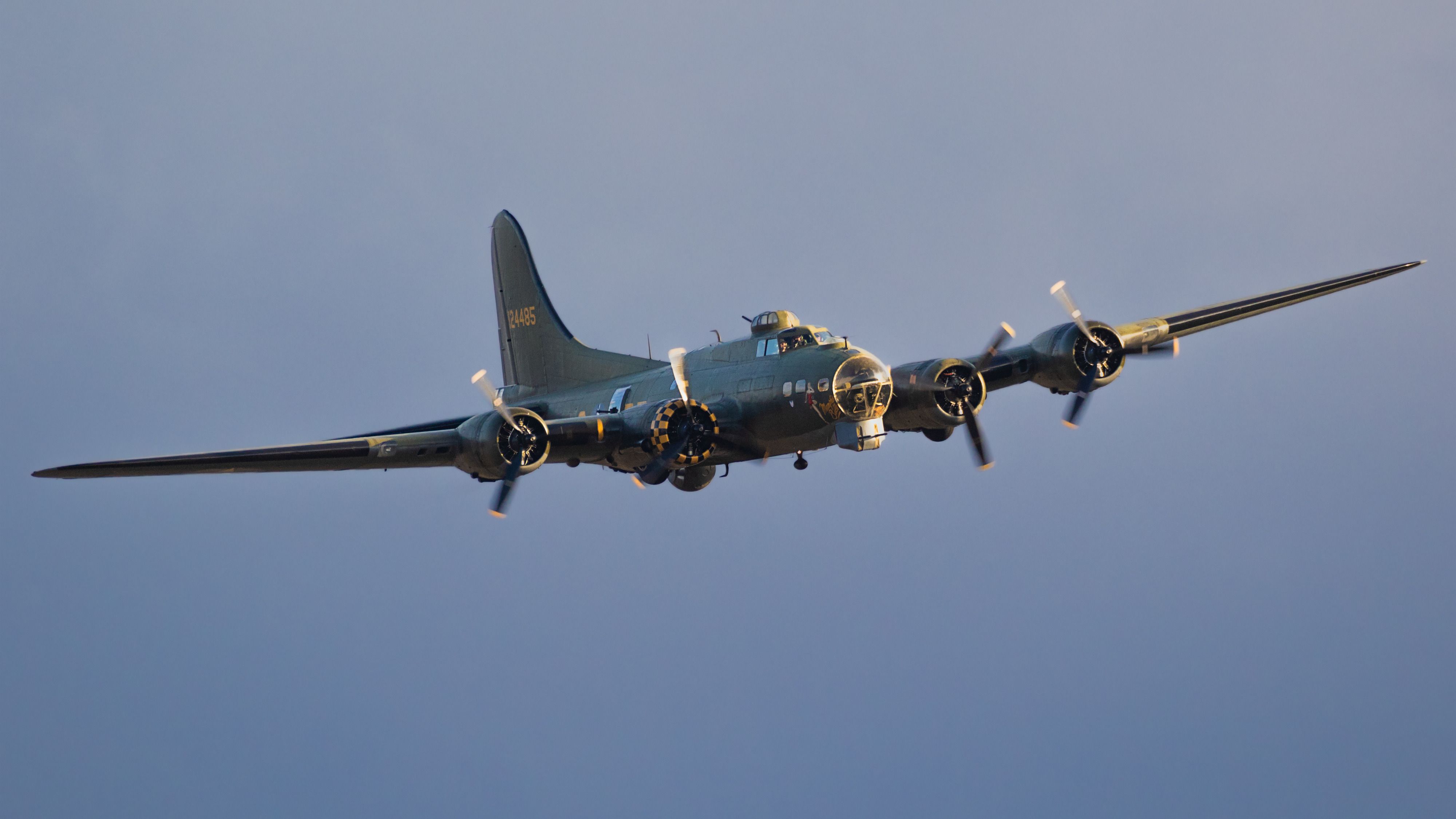
The Flying Fortress boasts a wingspan of 103 feet 9 inches (31.62 m) and a length of 74 feet 4 inches (22.66 m). Its distinctive design features four turbo-supercharged radial engines, each driving a three-bladed propeller. The aircraft’s role in strategic precision bombing missions was emphasized by a capacity for up to 17,196 lbs (7,800 kg) of internal and external bombs.
| Boeing B-17 Flying Fortress crew | Number of crew |
|---|---|
| Pilot | 1 |
| Co-pilot | 1 |
| Navigator | 1 |
| Bombardier/nose gunner | 1 |
| Flight engineer | 1 |
| Radio operator | 1 |
| Waist gunner | 2 |
| Ball turret/tail gunner | 2 |
The B-17’s strategic importance was highlighted by its ability to fly at high altitudes of 25,000 to 35,000 feet (7,500 to 10,500 meters), thanks to its powerful engines. This allowed pilots to evade enemy defenses while delivering precise and powerful strikes, with the Norden bombsight providing high levels of accuracy when offloading bombs.
Attack or be attacked
Guns
- 13 × .50 in (12.7 mm) M2 Browning machine guns in 9 positions
- Two in the Bendix chin turret, two on nose cheeks, two staggered waist guns, two in the upper Sperry turret, two in the Sperry ball turret in the belly, two in the tail, and one firing upwards from the radio compartment behind the bomb bay
Bombs
- Short-range missions: internal load only (<400 mi): 8,000 lb (3,600 kg)
- Long-range missions: internal load only (≈800 mi): 4,500 lb (2,000 kg)
- Max internal and external load: 17,600 lb (7,800 kg)
The B-17’s technical specifications underscore its place as a technological marvel of its time. With a maximum speed of around 287 miles per hour (293 km/h) and a range exceeding 2,000 miles (3,219 km) while carrying 6,000 lbs (2,700 kg) of bomb-load, the B-17 could penetrate deep into enemy territory, striking key targets with precision.
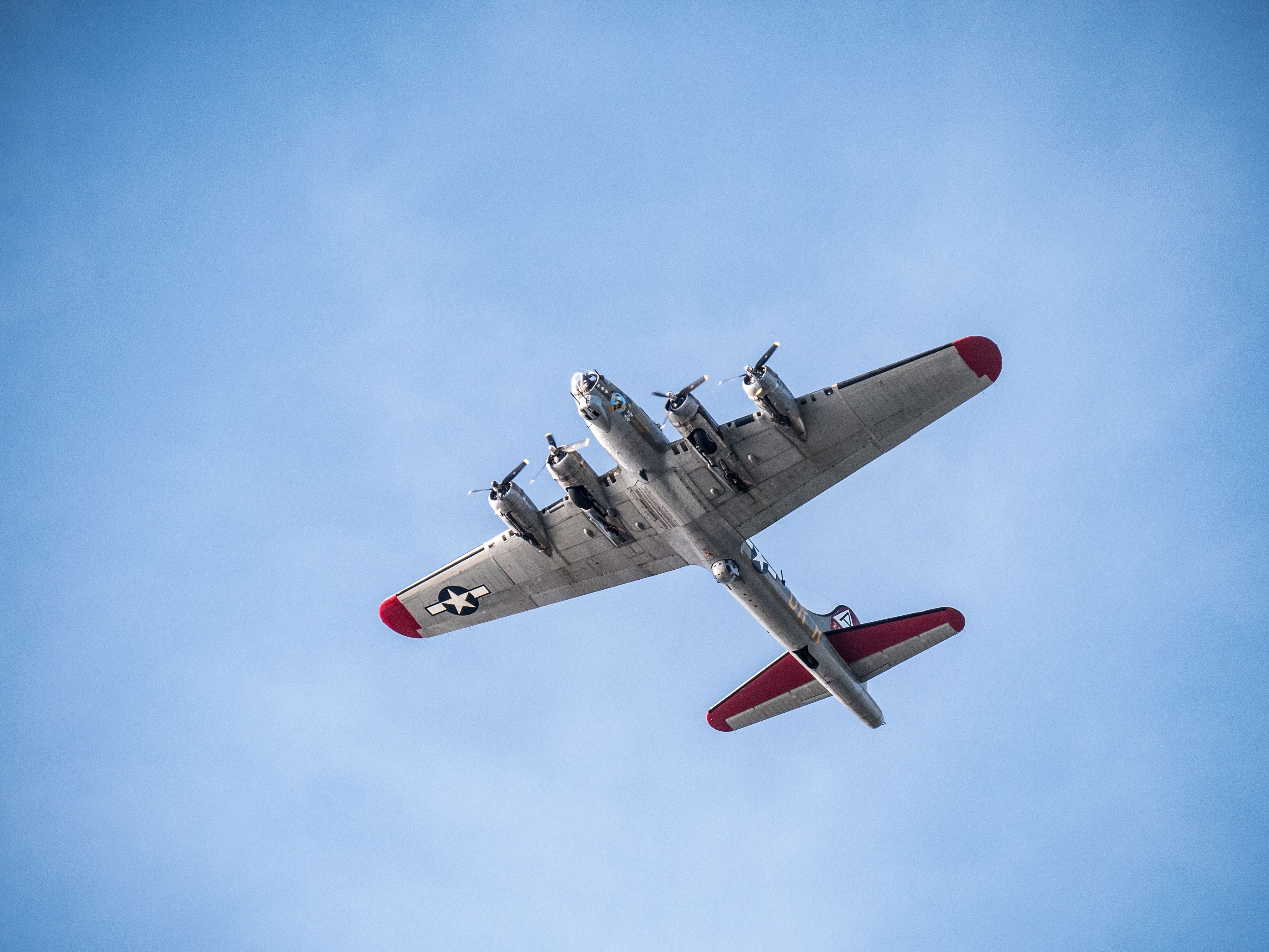
The aircraft’s defensive capabilities were equally impressive. Multiple machine gun positions were strategically placed to repel enemy fighters. Its defensive armament included up to thirteen .50-caliber machine guns, creating a virtual wall of firepower to deter enemy fighters.
As the backbone of the United States Army Air Forces’ daylight bombing campaign, the B-17 undertook perilous missions deep into enemy territory. Typically flying in a formation of nine or 12 aircraft, the Flying Fortress squadron flew in tight defensive formations for mutual protection.
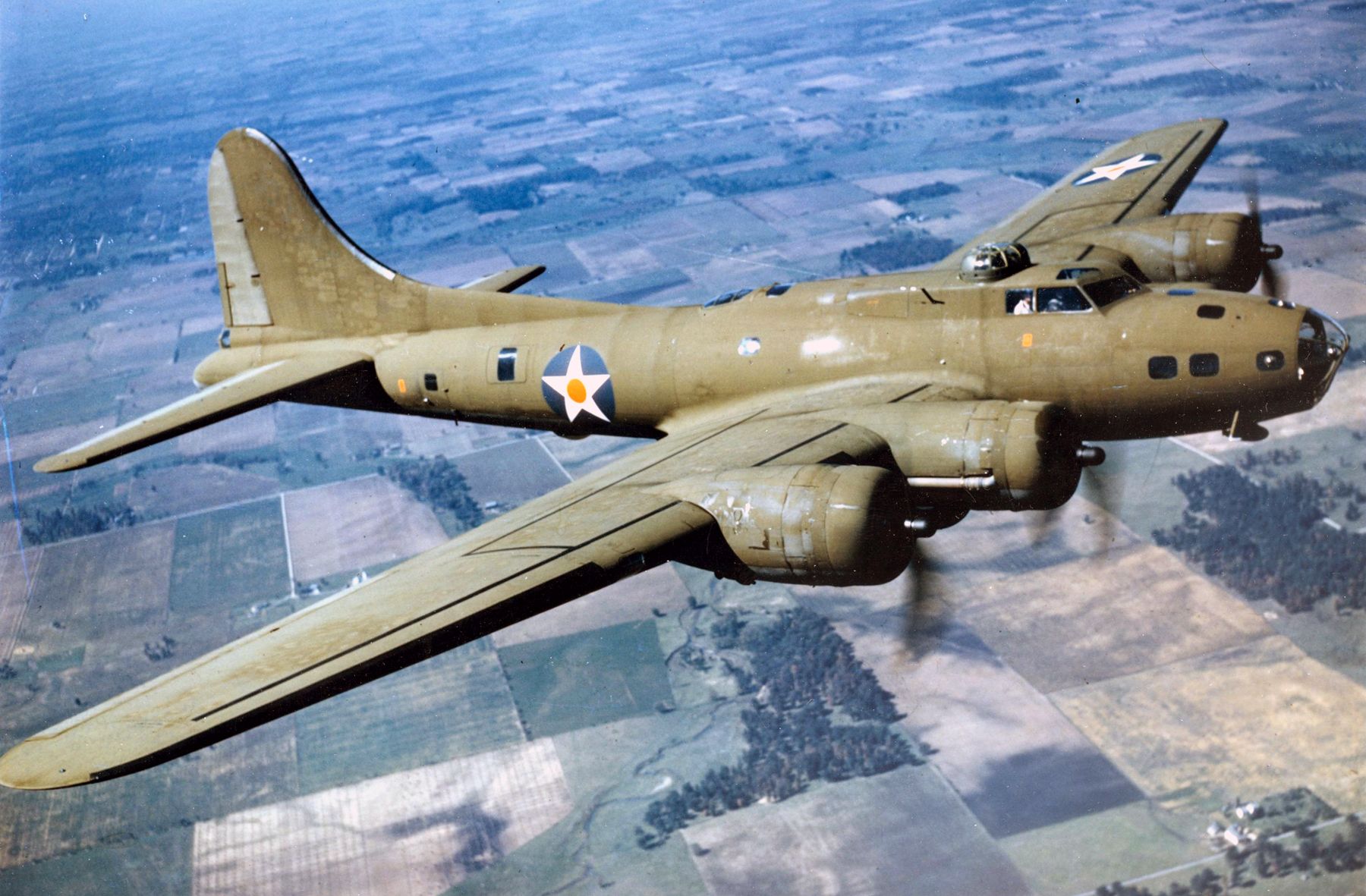
The B-17 underwent various modifications and improvements throughout its time in service, resulting in different models tailored for specific roles. One notable variant, the B-17G – which entered service in the summer of 1943 – introduced a “chin” turret for increased forward firepower, enhancing the aircraft’s defensive capabilities in head-on attacks.
A lasting legacy
- Maximum speed: 287 mph (462 km/h, 249 kts)
- Cruise speed: 182 mph (293 km/h, 158 kts)
- Range: 2,000 miles (3,219 km, 1,738 NM) with 6,000 lb (2,700 kg) bombload
- Ferry range: 3,750 miles (6,040 km, 3,260 NM)
- Service ceiling: 35,600 ft (10,850 m)
- Rate of climb: 900 ft/min (4.6 m/s)
In collaboration with Douglass, Lockheed, and Vega, Boeing manufactured more than 12,730 examples of the B-17 before it was rendered obsolete by the larger and more powerful B-29 Superfortress. After the war, a few modified Flying Fortresses served in search-and-rescue missions.
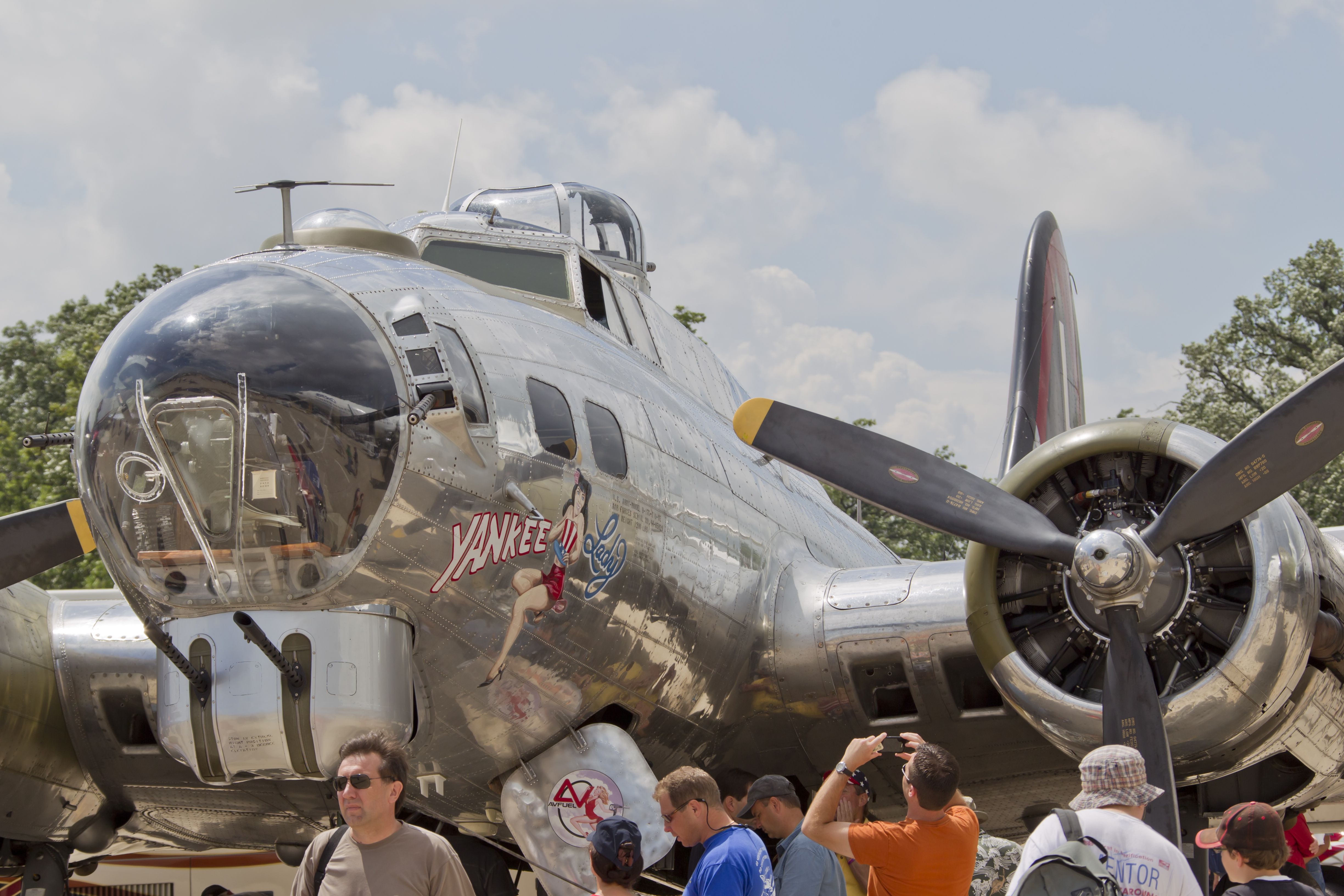
Currently, only six remain operational, but the legacy of the type lives on through carefully preserved examples in museums and airshows, allowing new generations to appreciate the significance of this wartime marvel. It is more than just a historic aircraft; The B-17 Flying Fortress represents a symbol of courage, resilience, and innovation that shaped the course of World War II.