
The Boeing B-17 Flying Fortress first flew in July, 1935. By the end of WWII, nearly 13,000 were built.
For more about this incredible plane, check out WWII icon: A closer look at the legendary B-17 Flying Fortress.
2 of 46 National Museum of the Air Force
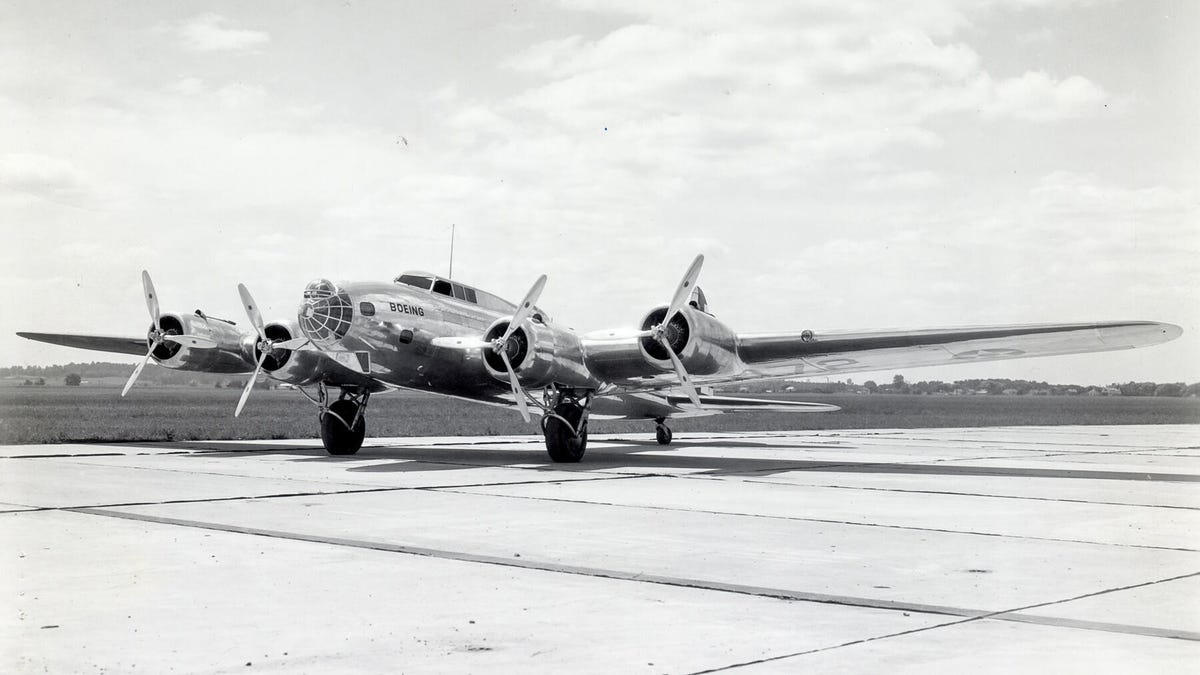
Model 299
Boeing’s Model 299, the precursor to the B-17.
3 of 46 USAF
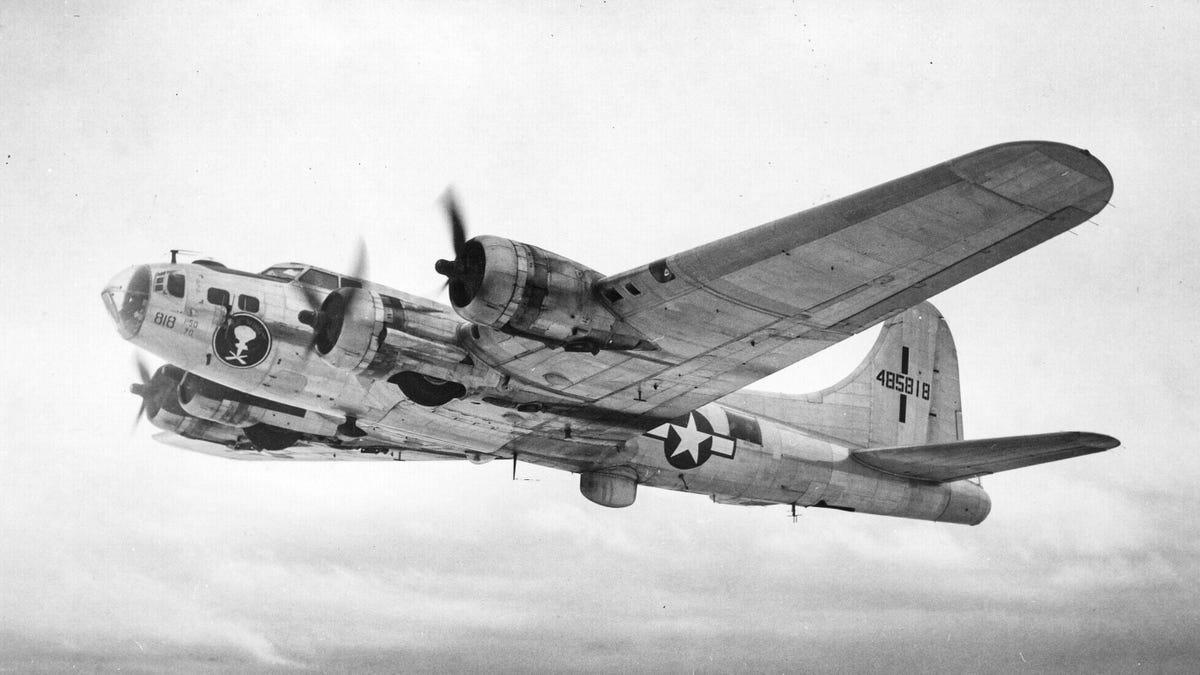
Workhorse
Though best known for flying daylight bombing missions over Europe, the B-17 was used in every theater of the war.
4 of 46 USAF
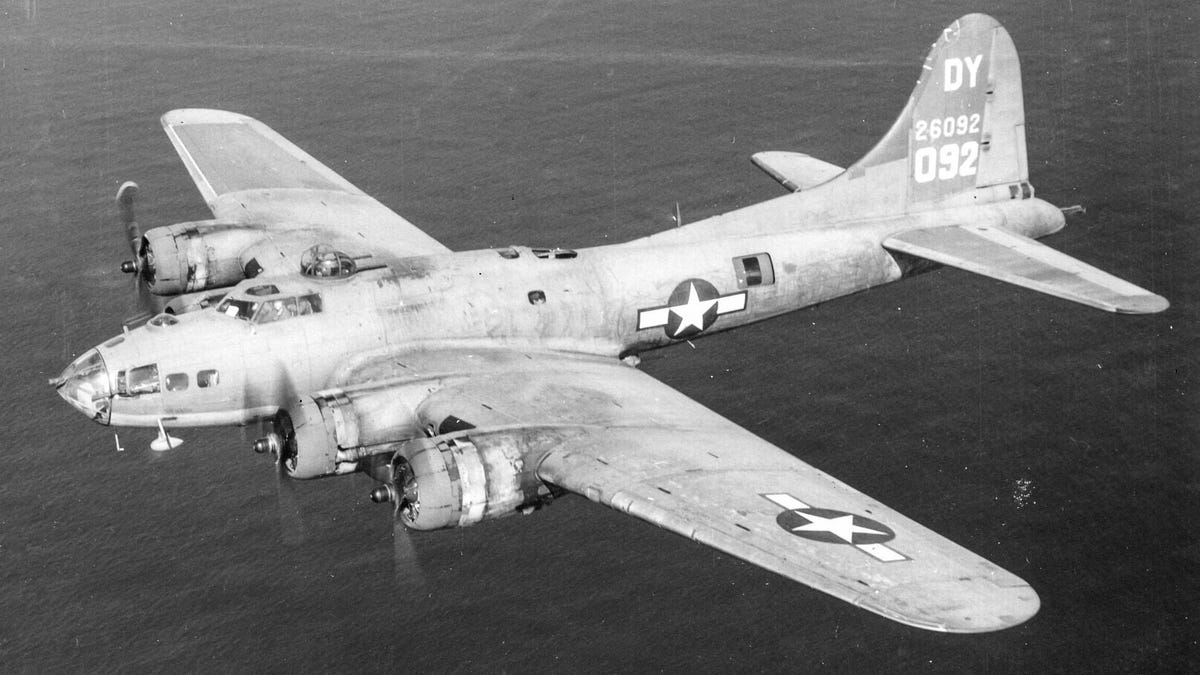
Variants
Like all WWII aircraft, the B-17 was modified and improved during the war. This earlier variant lacks the chin turret of the later G variant.
5 of 46 National Museum of the Air Force
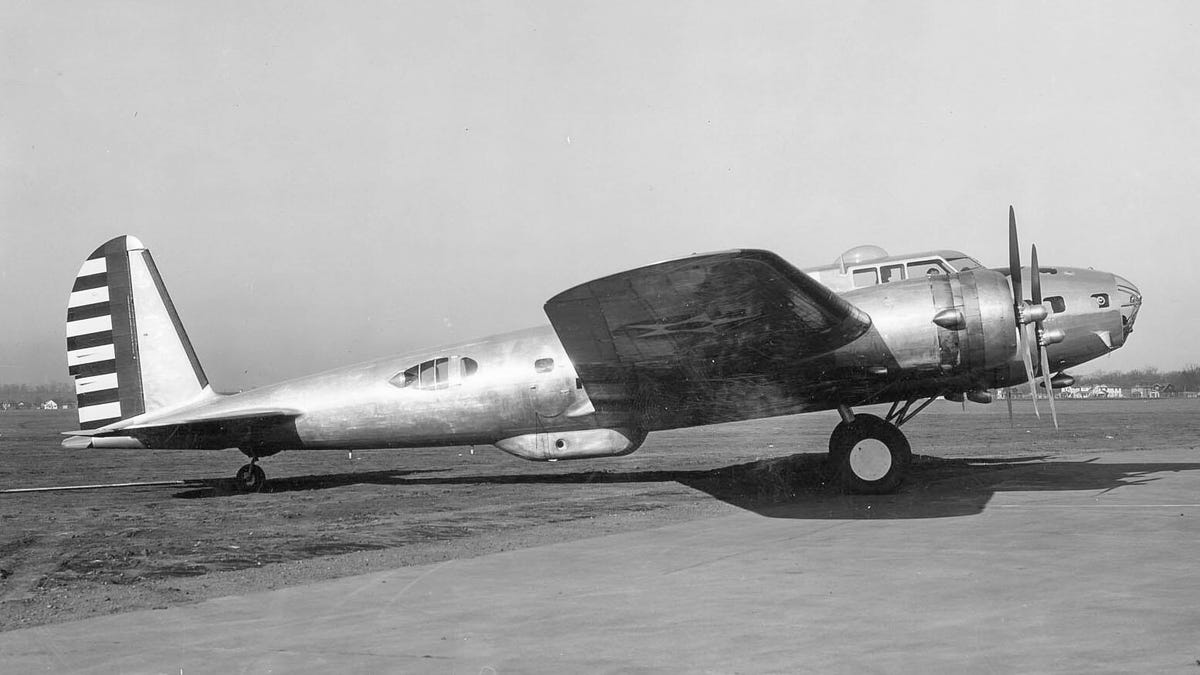
D
This is an early, and rare, D variant. Note the different tail shape and belly gunner structure, the lack of a tail gunner and how there are fewer guns overall.
This specific aircraft, the “Swoose,” saw combat in the Pacific. It’s the oldest surviving B-17 and the only surviving D variant. It’s under restoration at the National Museum of the Air Force in Dayton, Ohio.
6 of 46 National Archives
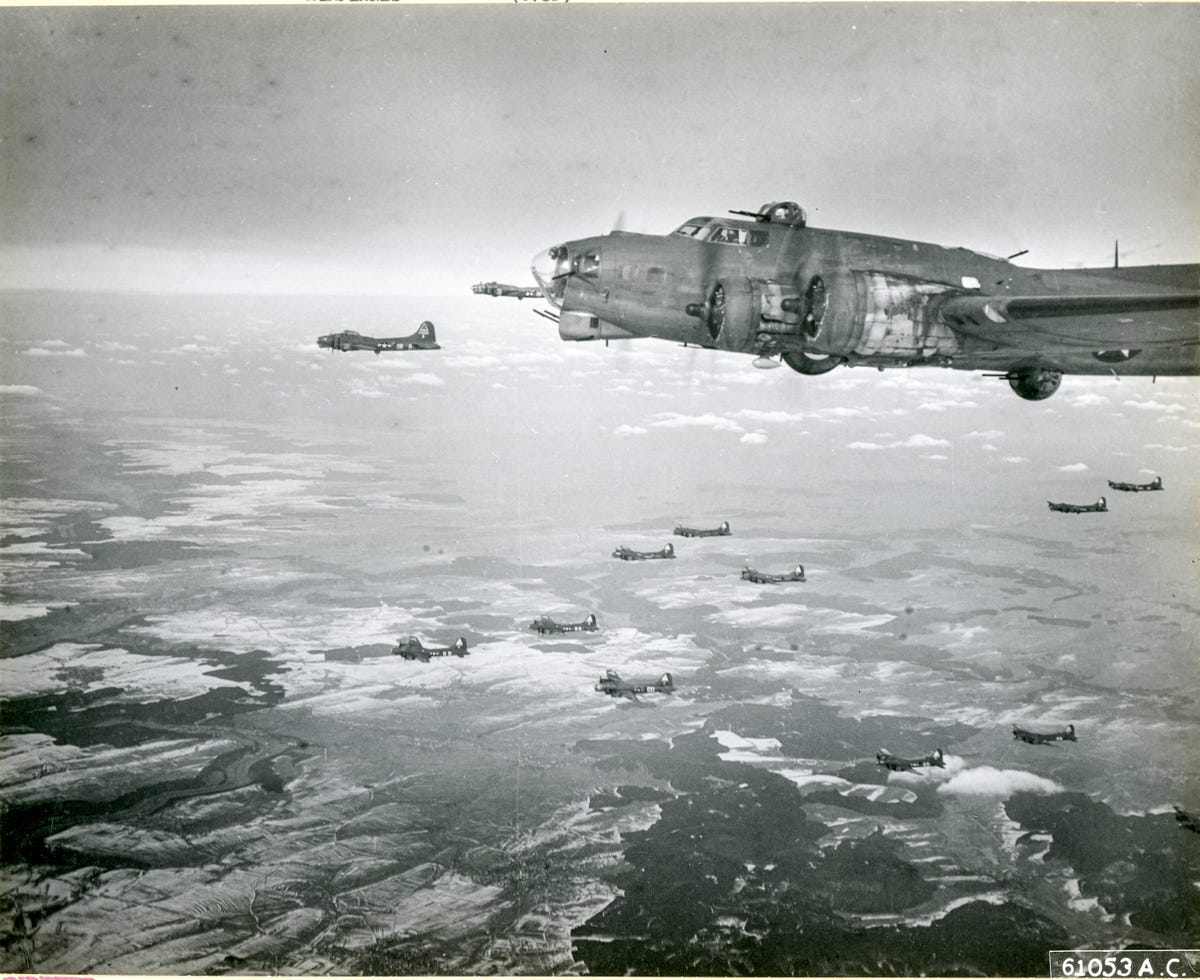
Heavy lifter
Depending on the mission, the B-17 would carry between 4,500 and 8,000 pounds of bombs (2,000 to 3,600kg).
7 of 46 USAF
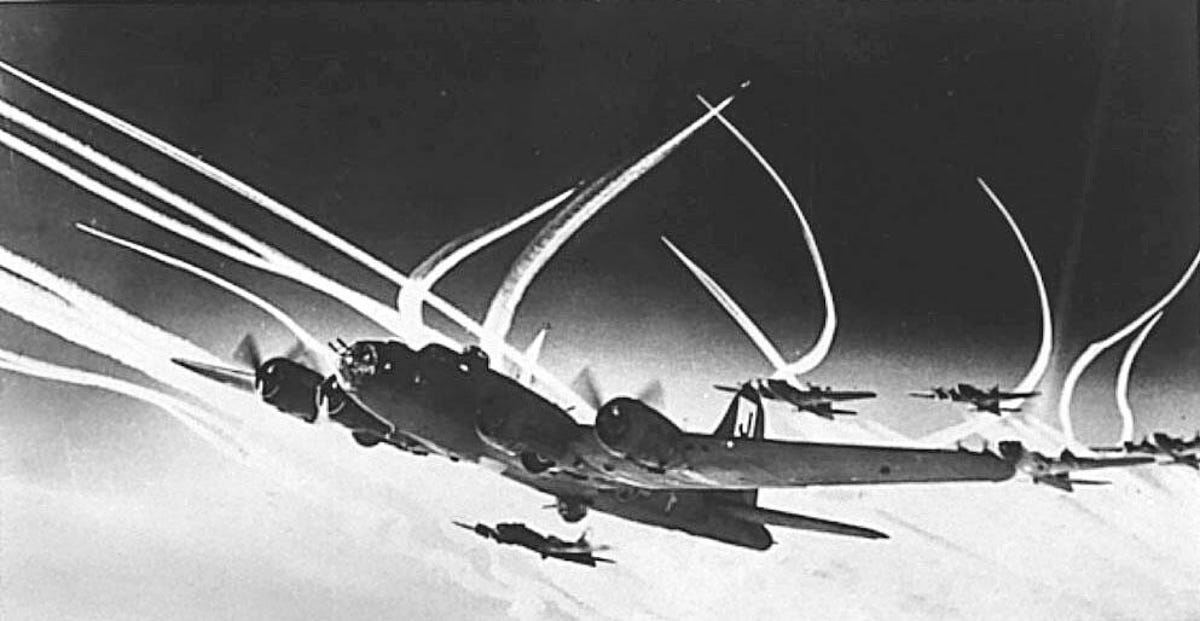
Formation
B-17s flew in tight formations to protect each other from attacking Axis fighters.
8 of 46 USAF
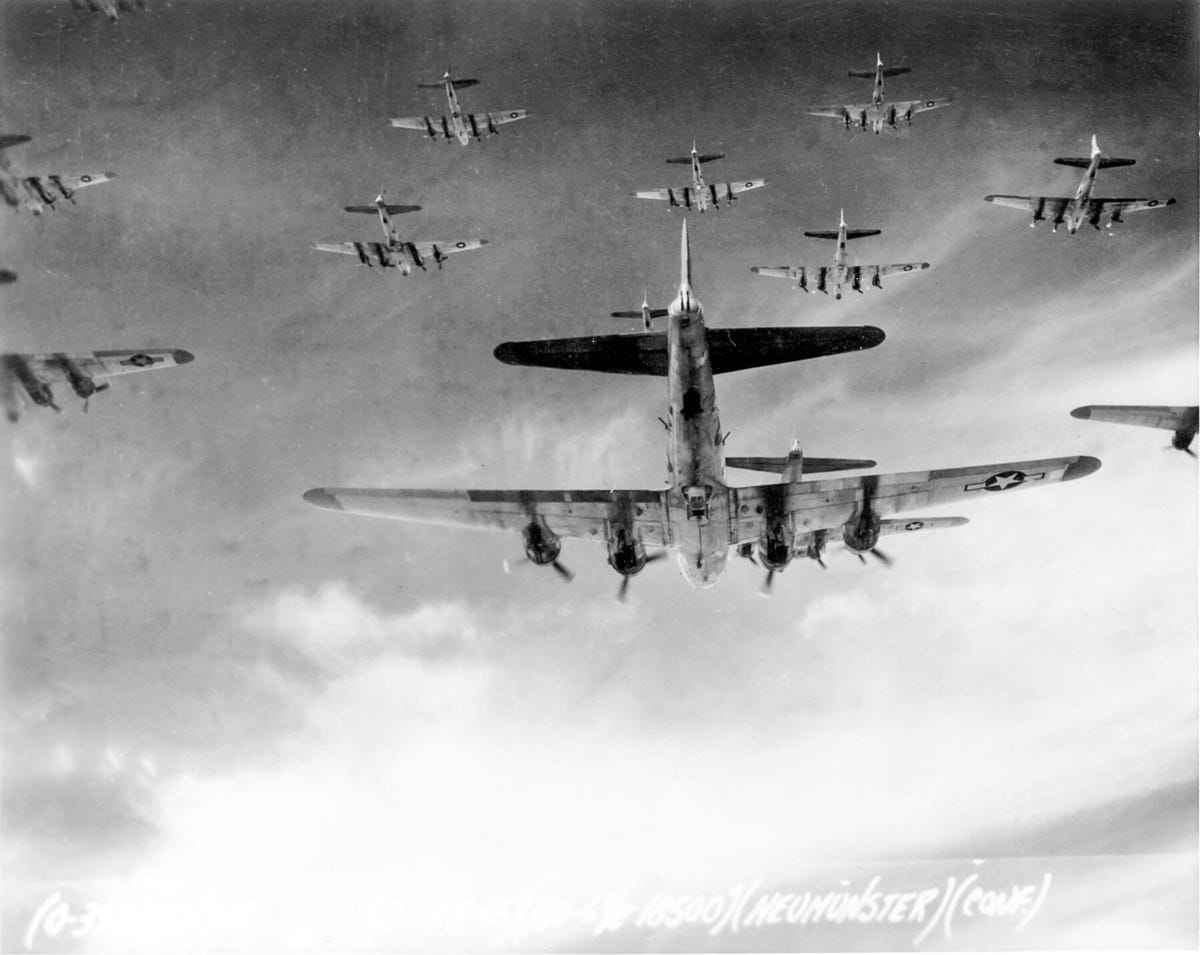
Heading to target
B-17s of the 398th Bombardment Group heading toward Neumunster, Germany, on April 13, 1945.
9 of 46 National Archives
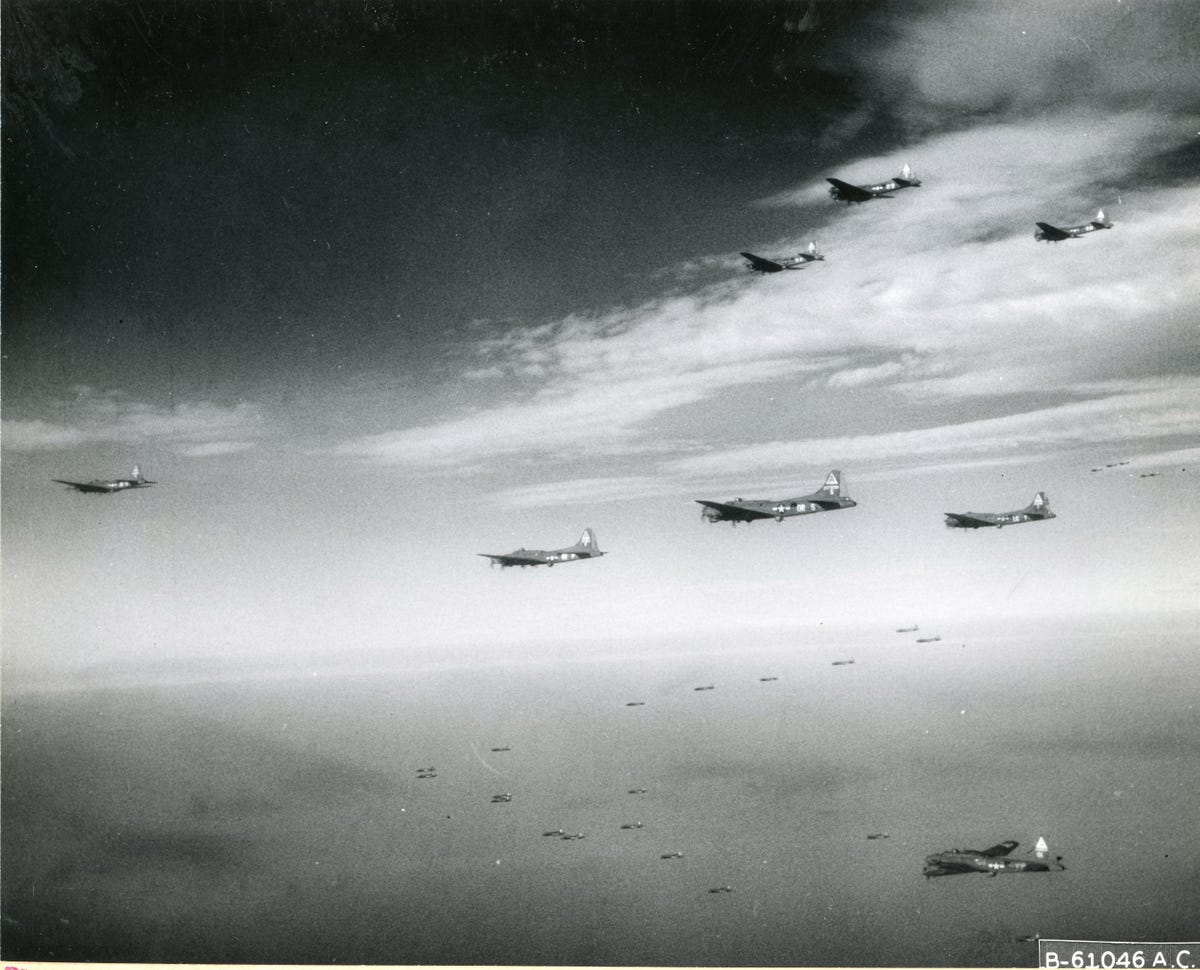
Fast enough
The B-17 had a maximum speed of 287 mph (462 km/h), but its normal cruising speed was around 182 mph (293 km/h).
10 of 46 USAF
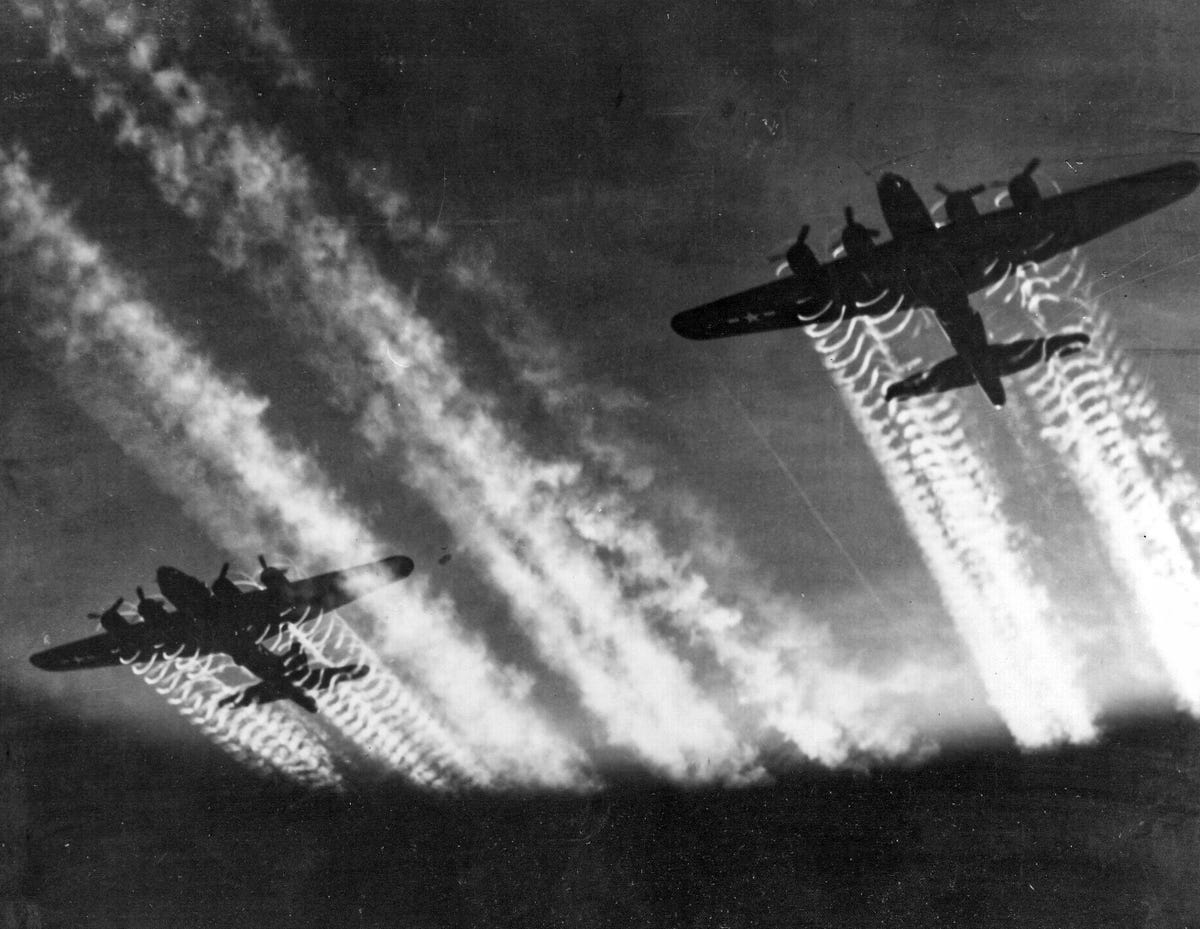
Trails
Vapor trails of B-17s flying in formation.
11 of 46 USAF
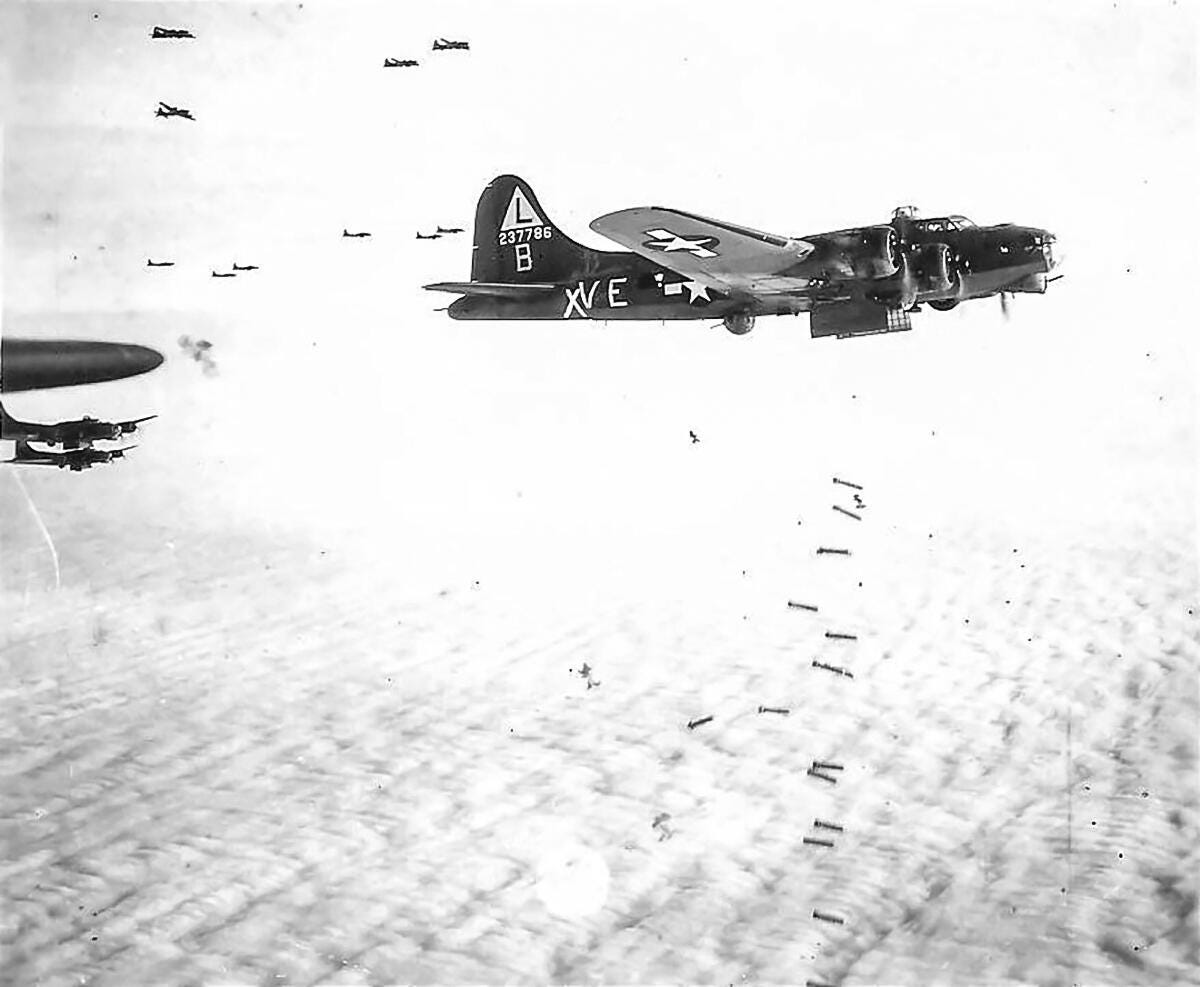
Bombs away
A formation of B-17s dropping bombs over Europe.
12 of 46 National Museum of the Air Force
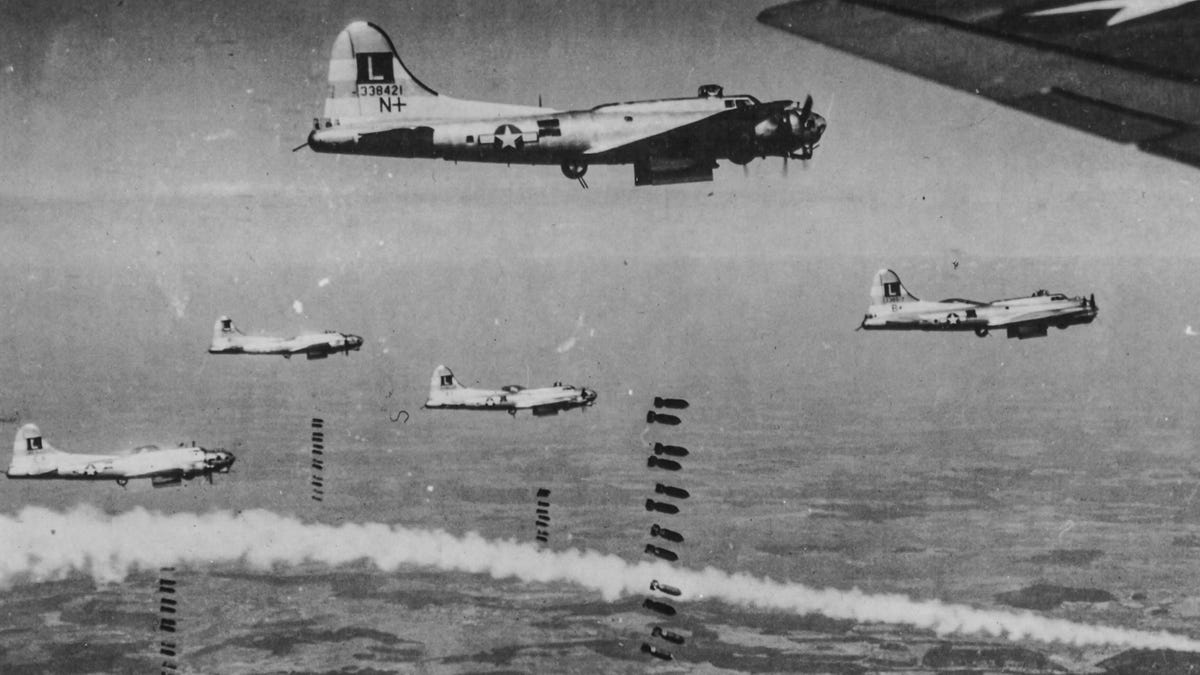
Eighth
B-17s of the Eighth Air Force dropping their payloads over railroad yards in Donauworth, Germany in April, 1945. The smoke is a signal marker from the lead plane to signify it was time for the other aircraft to drop their bombs.
13 of 46 National Museum of the Air Force
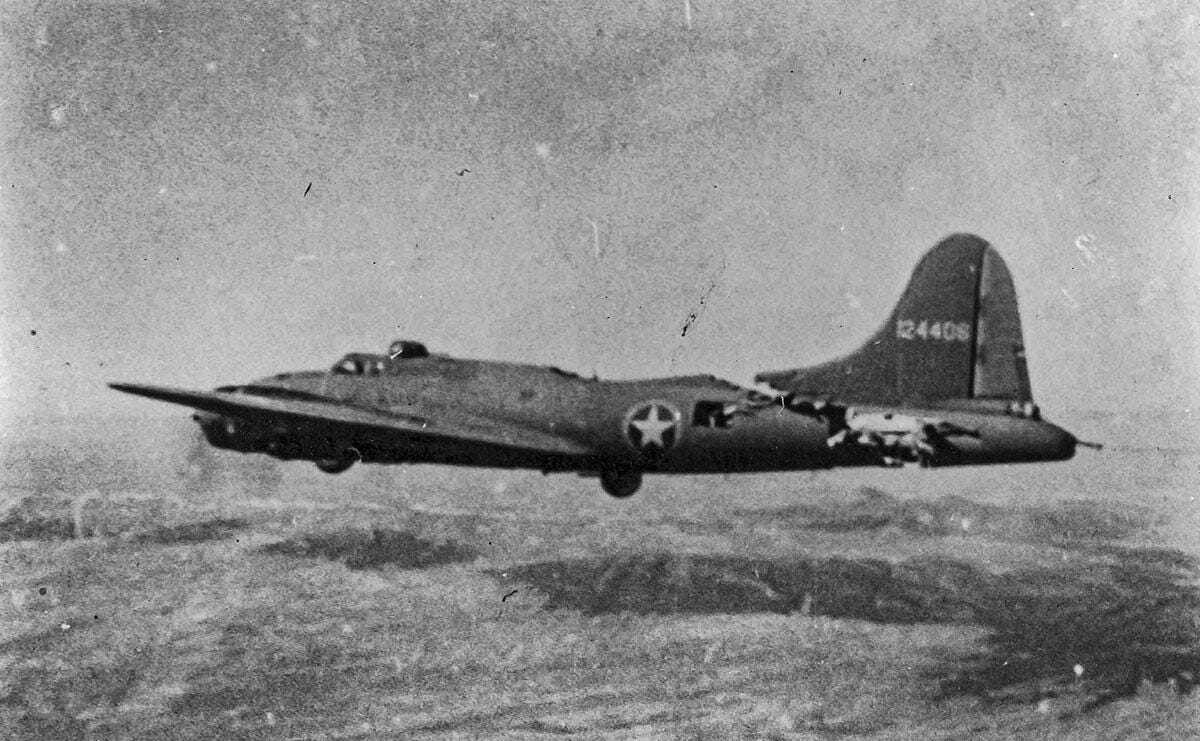
Battle damage
The B-17F “All American III” limping its way back to base in North Africa after a midair collision with a Bf 109. Amazingly, none of the crew were injured.
14 of 46 National Archives
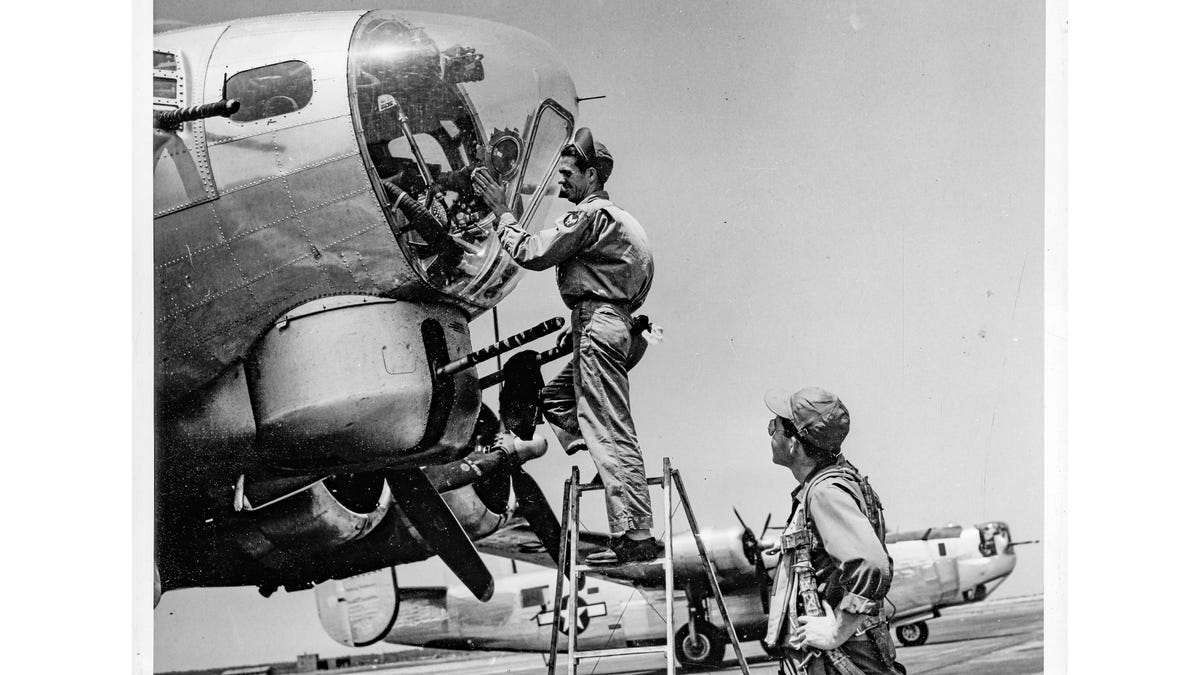
Preflight inspection
From the National Archives: “Lt. M. J. Bleakman, 0-724064, Baltimore, Maryland (right) makes final inspection of B-17 Flying Fortress before piloting Hampton Roads Port of Embarkation Historical Staff over the Port Area.”
15 of 46 National Archives
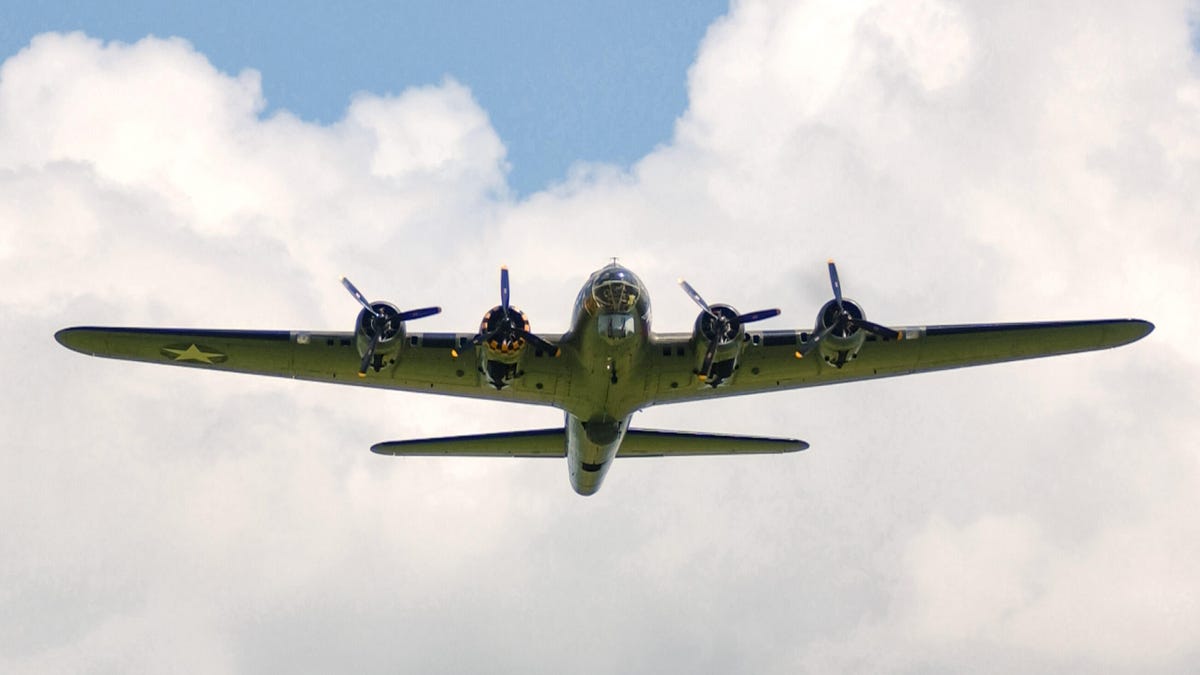
Sally B
The only airworthy B-17 in Europe, the “Sally B,” was used in the filming of the 1990 film Memphis Belle.

16 of 46 National Archives
Long way from home
The Sally B was built in Burbank, California in 1945 and now lives in Duxford, UK.
17 of 46 Geoffrey Morrison
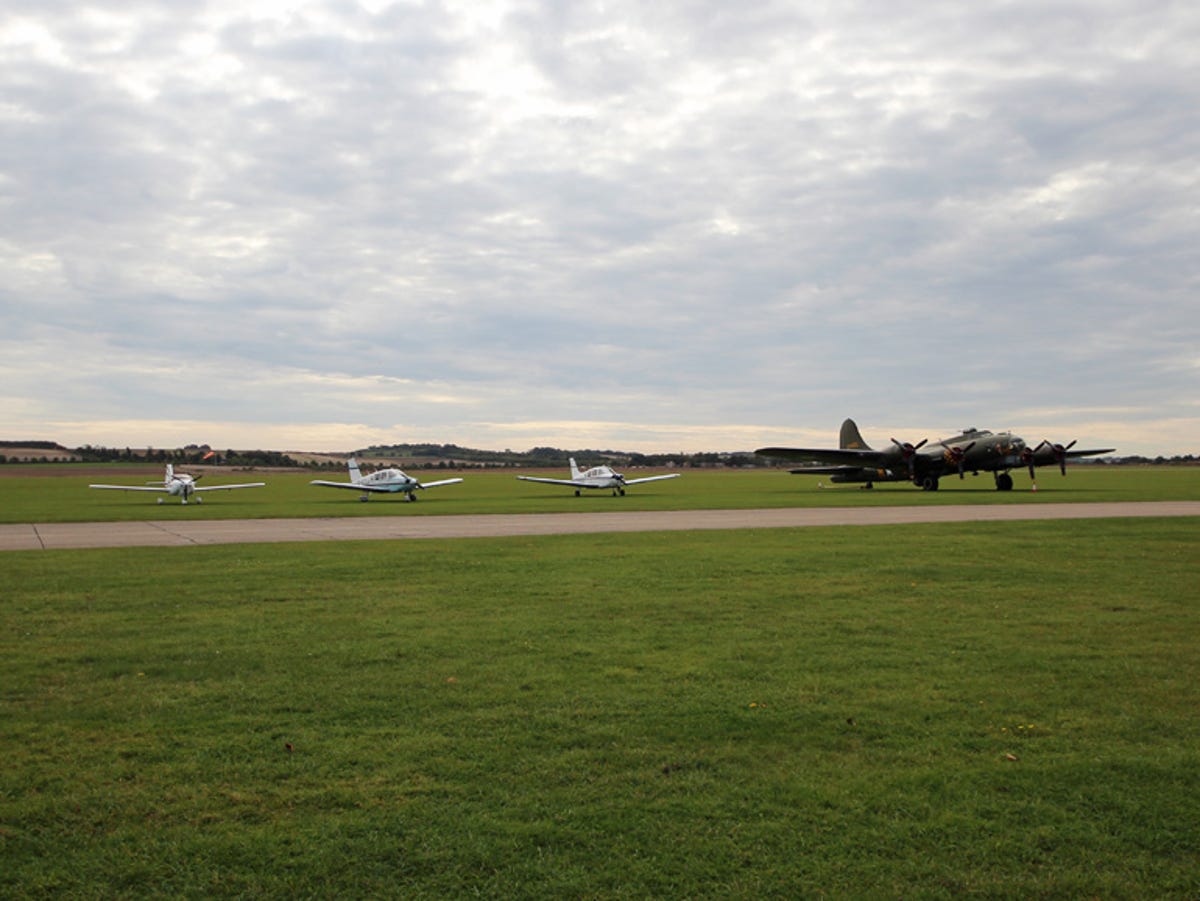
Size
Though not particularly big by today’s standards, the B-17 was one of the larger aircraft of WWII. Seen here is a B-17 beside some modern civilian aircraft at the Imperial War Museum Duxford.
18 of 46 National Archives
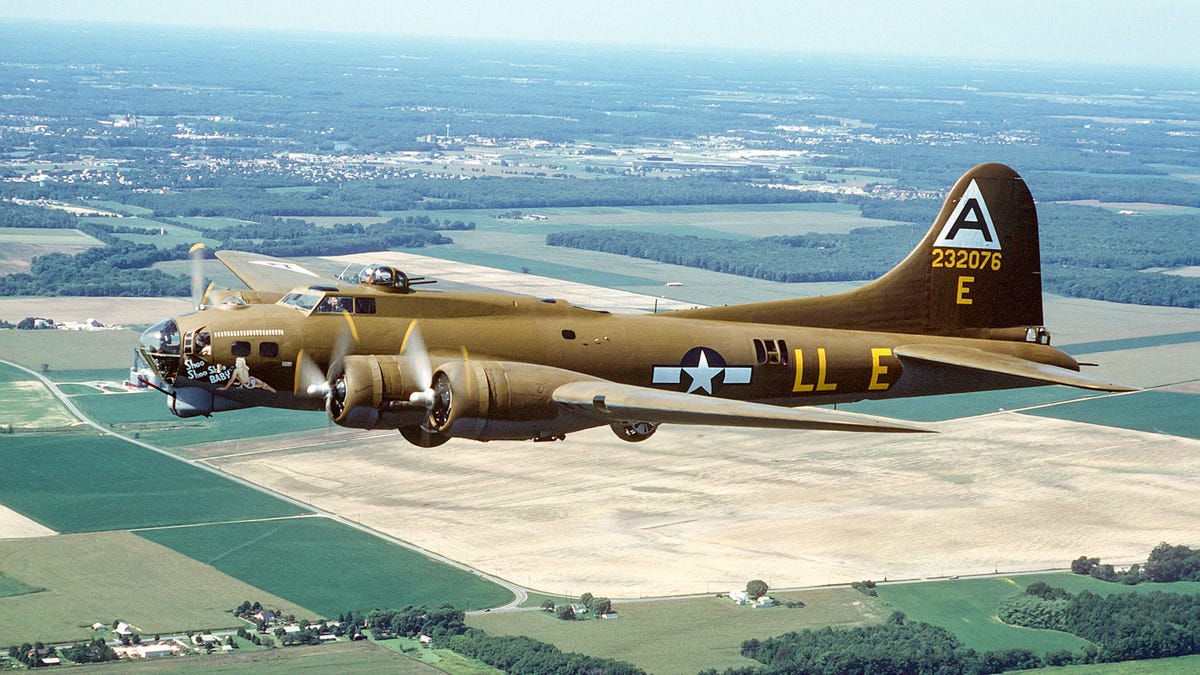
Shoo Shoo
The “Shoo Shoo Shoo Baby” in 1988 after a 10-year restoration to airworthiness.
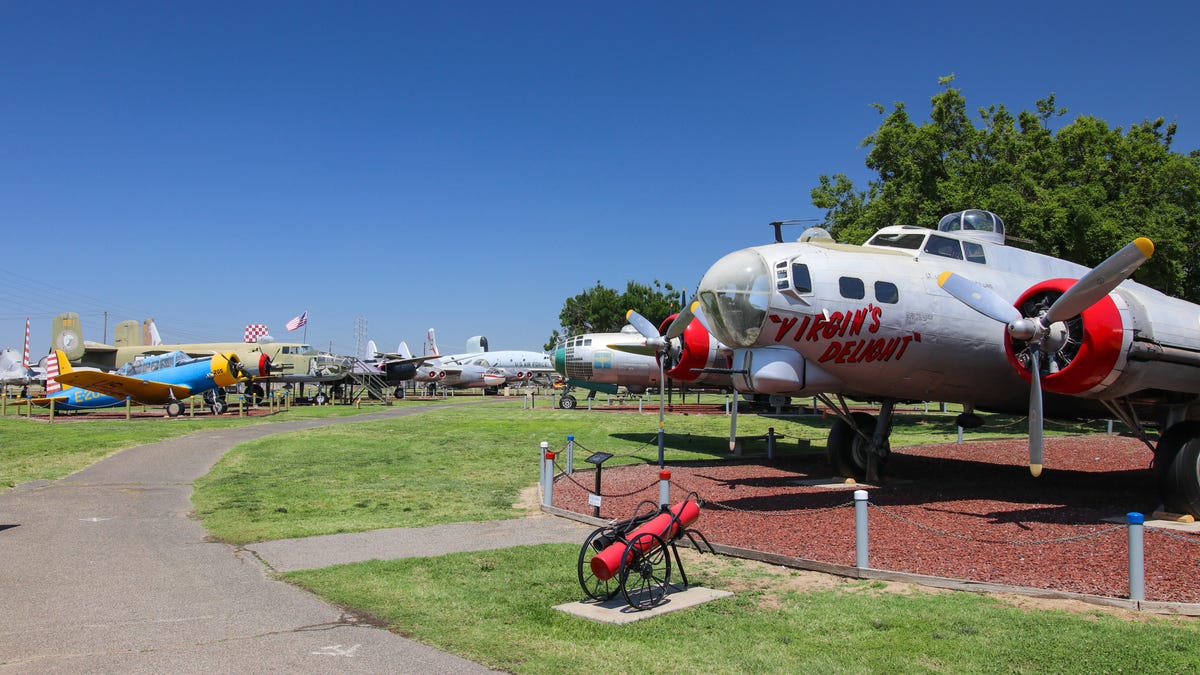
19 of 46
Museums
Because of their size, not many museums can fit large bomber aircraft like the B-17.
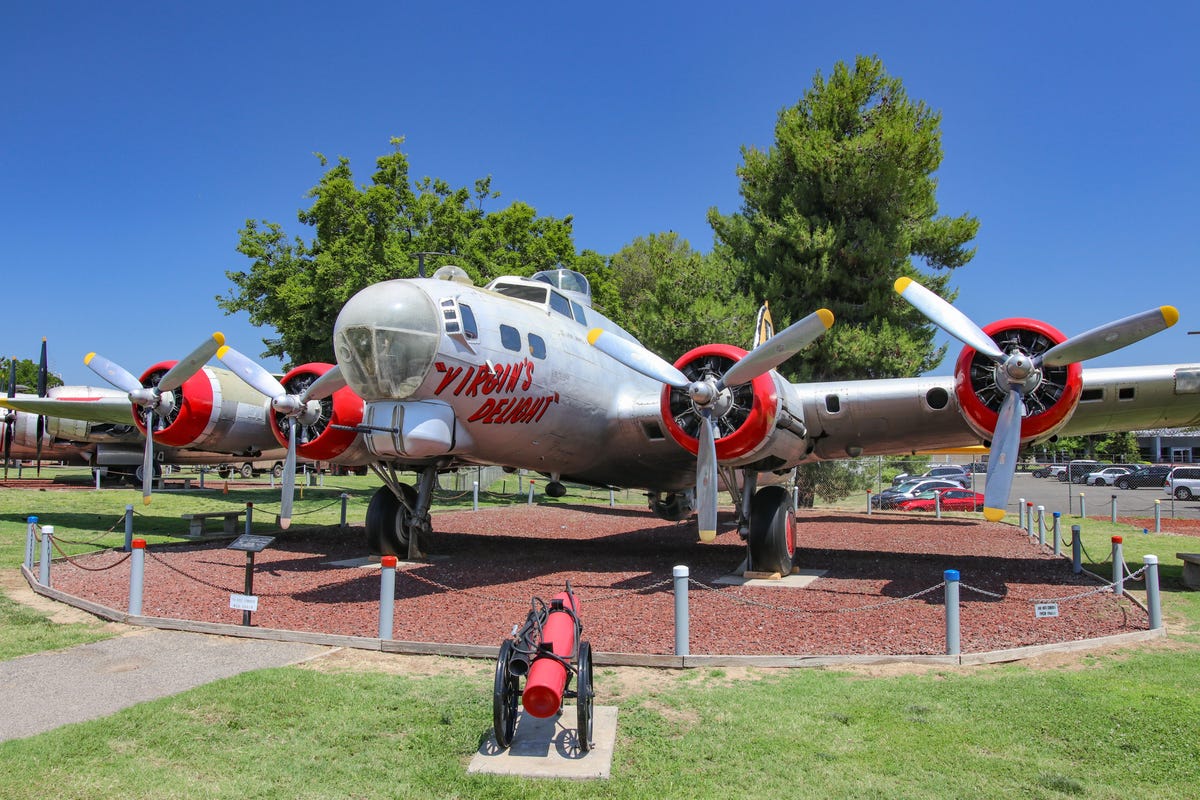
20 of 46 Geoffrey Morrison/CNET
Homage
Many of the B-17s in museums are aircraft that never saw combat. The Castle Air Museum in Atwater, California has one that was used as a training aircraft. It’s painted in remembrance of one shot down over the North Sea.
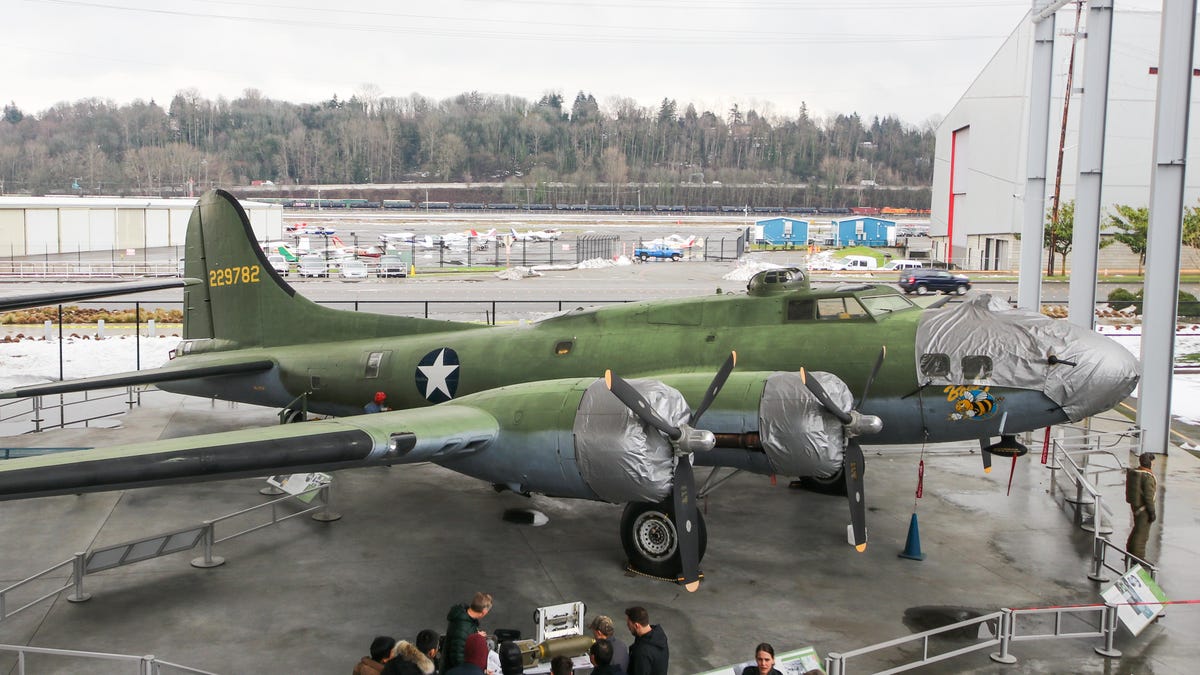
21 of 46 Geoffrey Morrison/CNET
Boeing
Not surprisingly, Boeing’s Museum of Flight in Seattle has an example, a rare F variant. Built nearby, it served as a trainer aircraft and was stationed in Britain at the end of the war. It didn’t see any combat, but was later used as a tanker and even appeared in movies such as 1970’s Tora! Tora! Tora! and Memphis Belle.
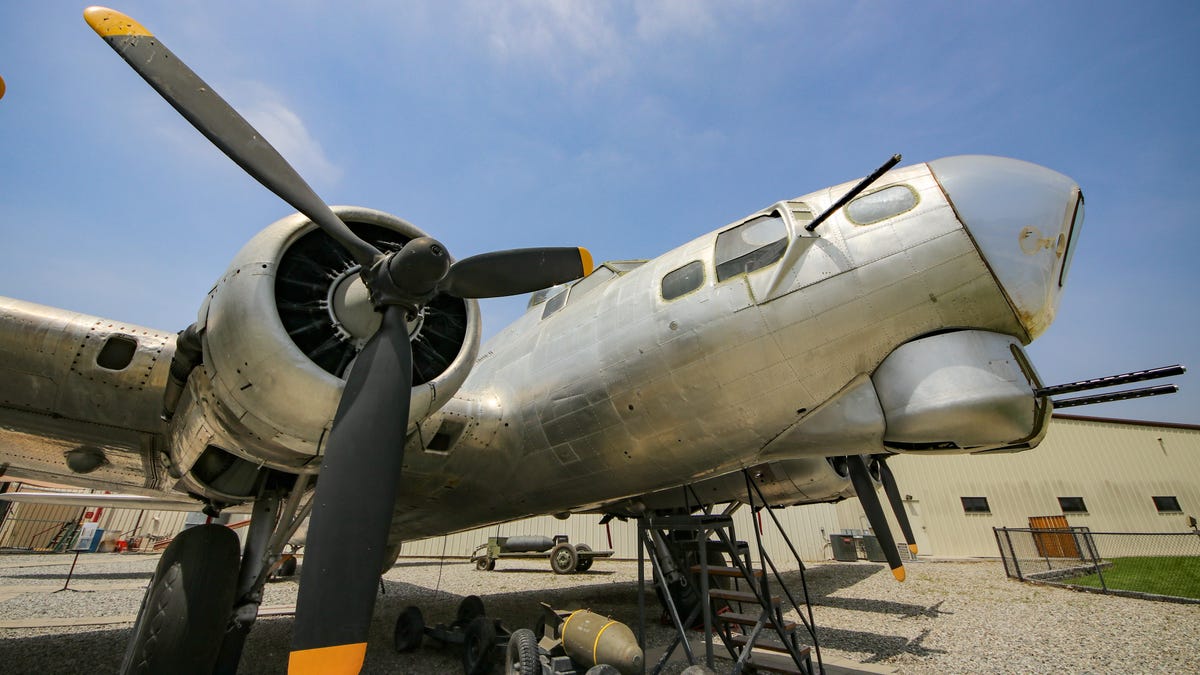
22 of 46 Geoffrey Morrison/CNET
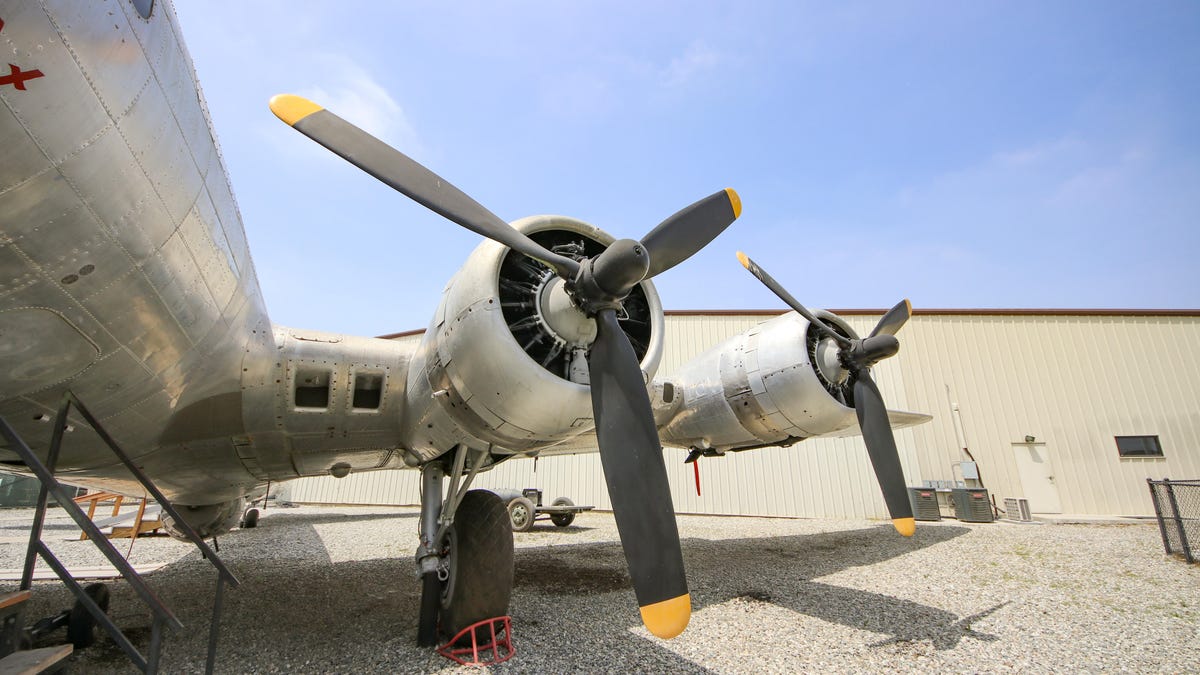
Ongoing restoration
Only a handful of B-17s are still flyable. The Planes of Fame museum in Chino, California is restoring one to airworthy condition.
23 of 46 Geoffrey Morrison/CNET
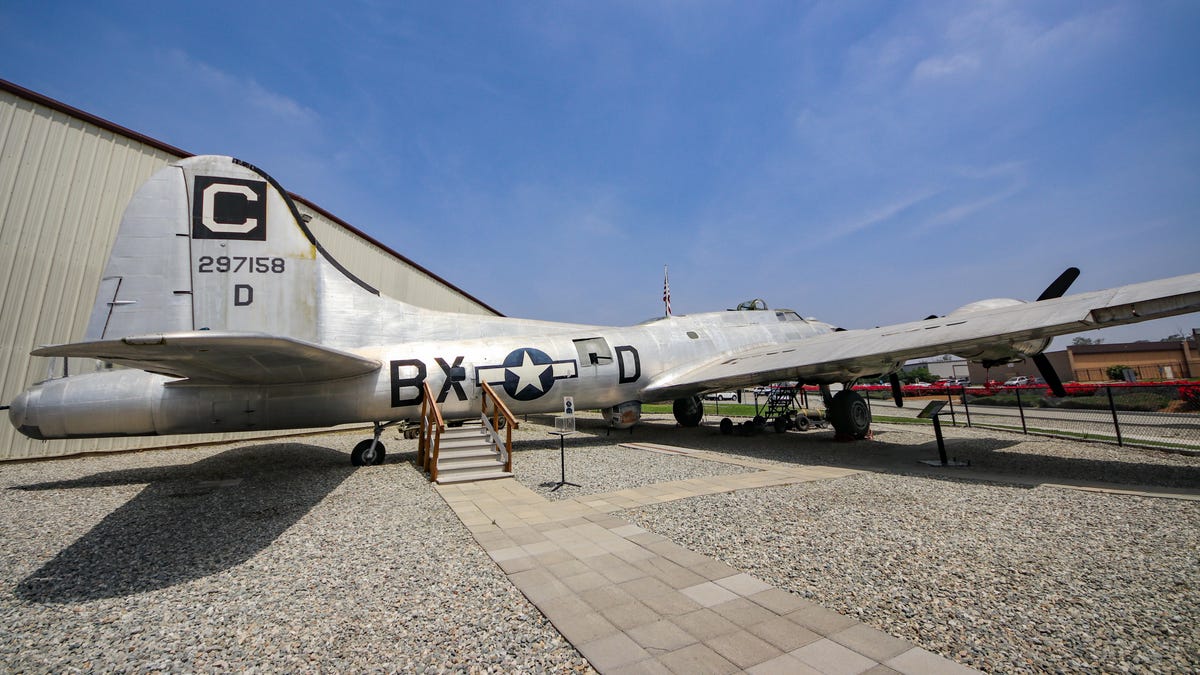
Another trainer
This example was a trainer after WWII.
24 of 46 Geoffrey Morrison/CNET
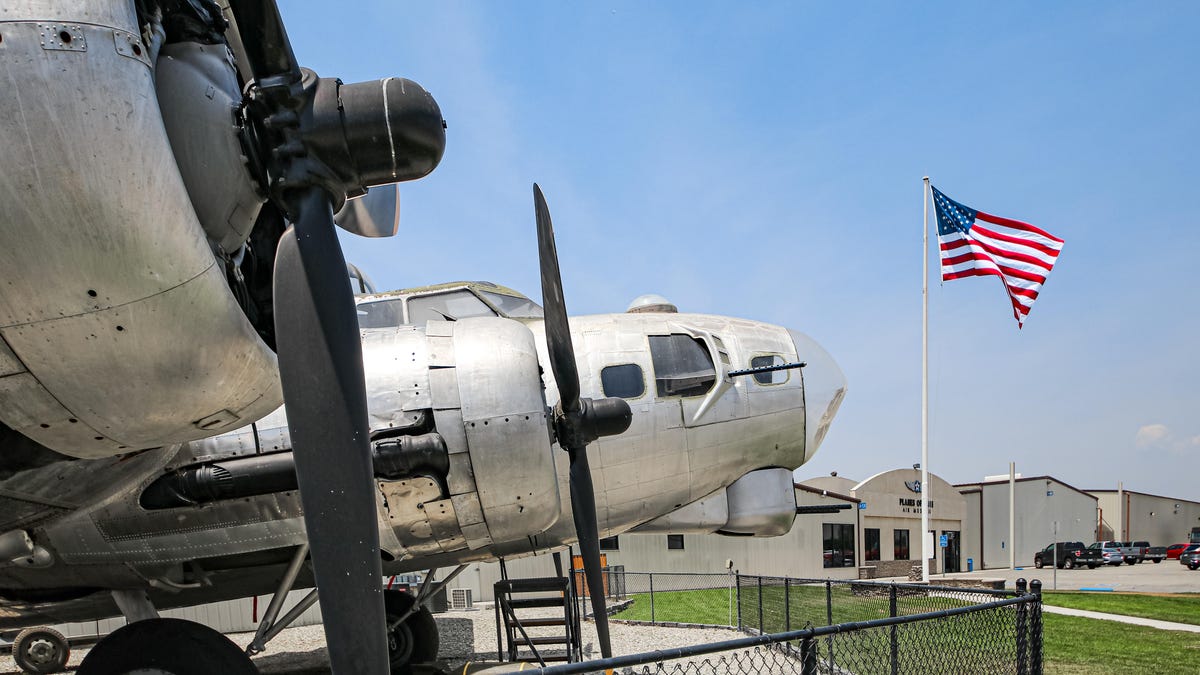
TV star
It appeared in TV show Twelve O’Clock High as the airplane Piccadilly Lilly.
25 of 46 Geoffrey Morrison/CNET
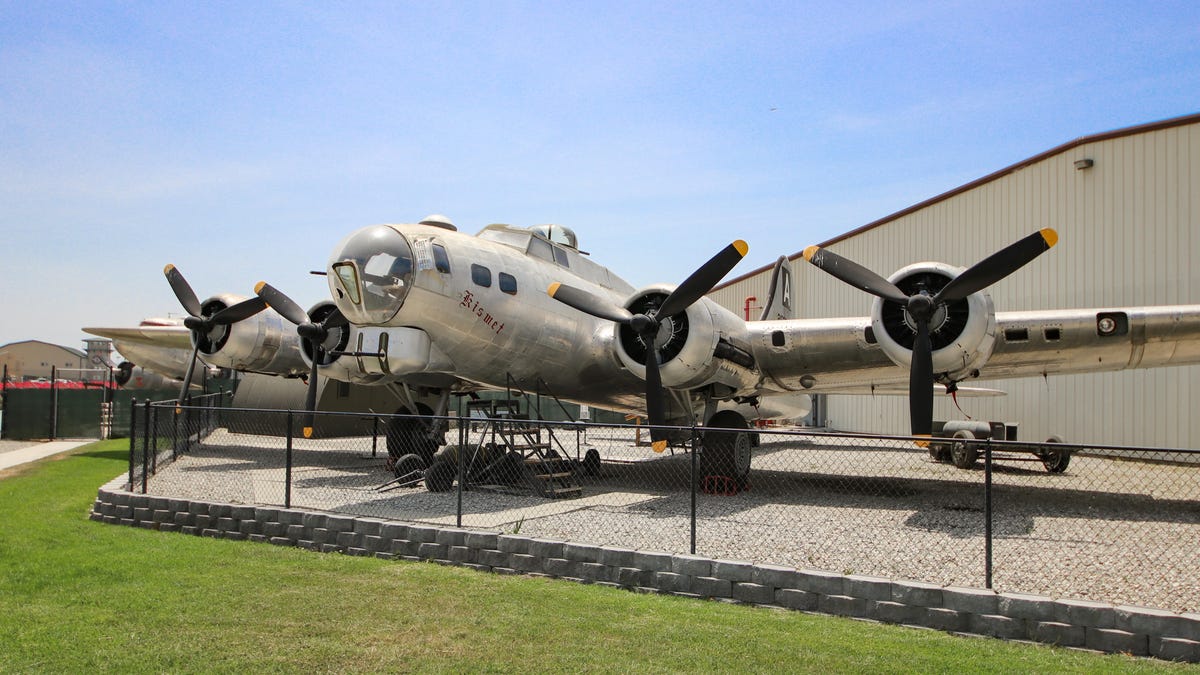
Chin
The distinctive chin turret marks this as the final G variant.
26 of 46 Geoffrey Morrison/CNET
Tourable
It’s very rare to be able to go inside a B-17, but this one is open most weekends.
27 of 46 Geoffrey Morrison/CNET
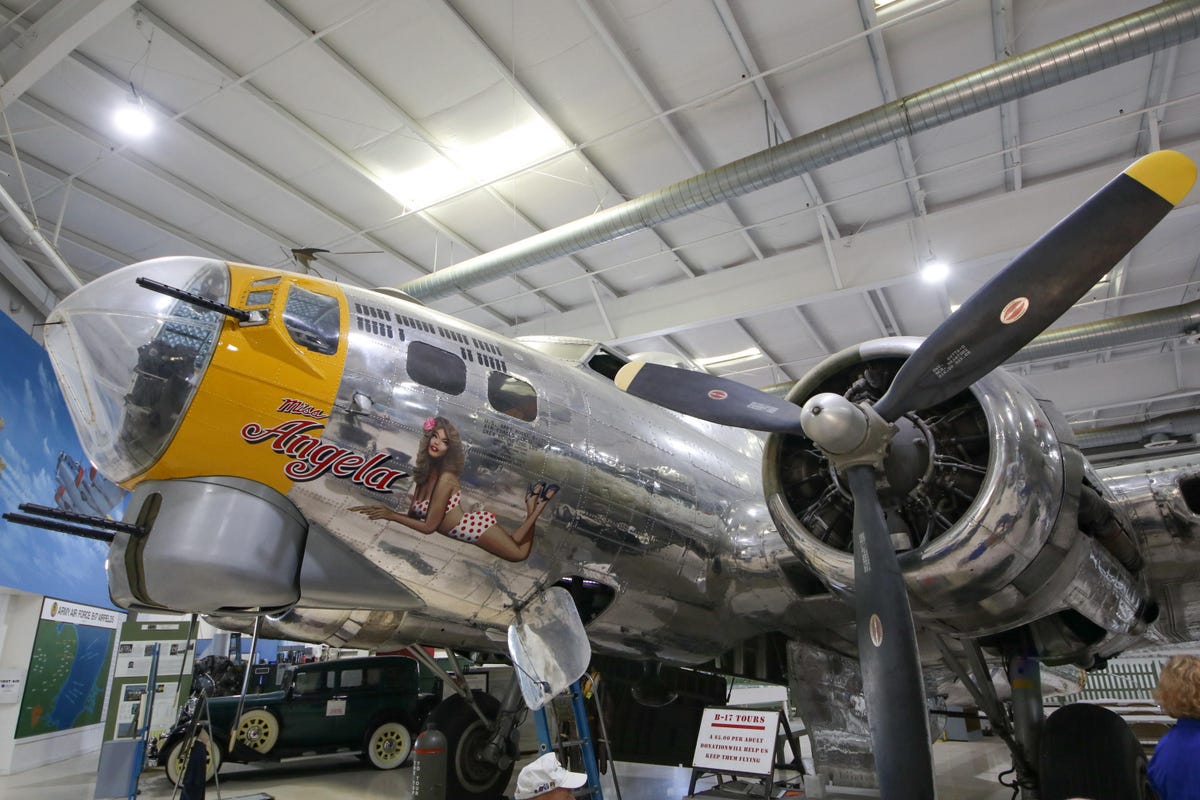
Miss Angela
The pride of the Palm Springs Air Museum is a B-17G named “Miss Angela,” which you can go inside.
28 of 46 Geoffrey Morrison/CNET
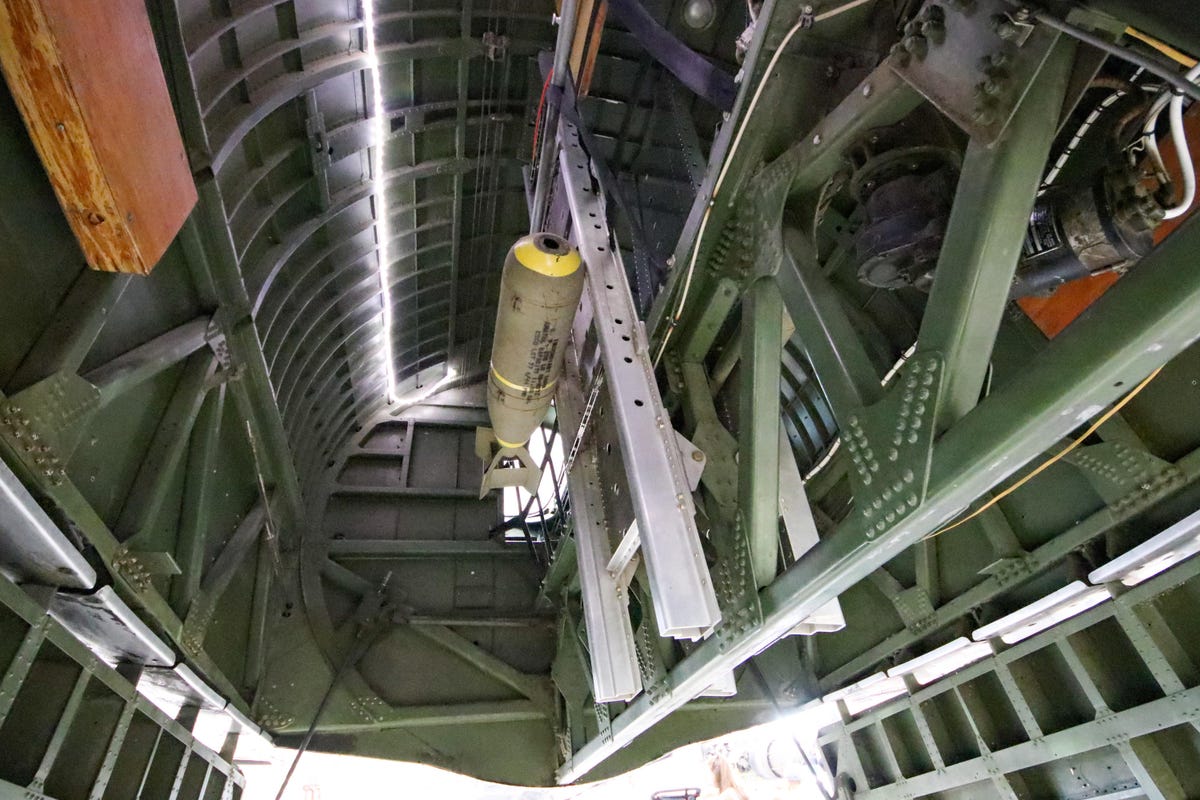
Bomb bay
A look up into the bomb bay.
29 of 46 Geoffrey Morrison/CNET
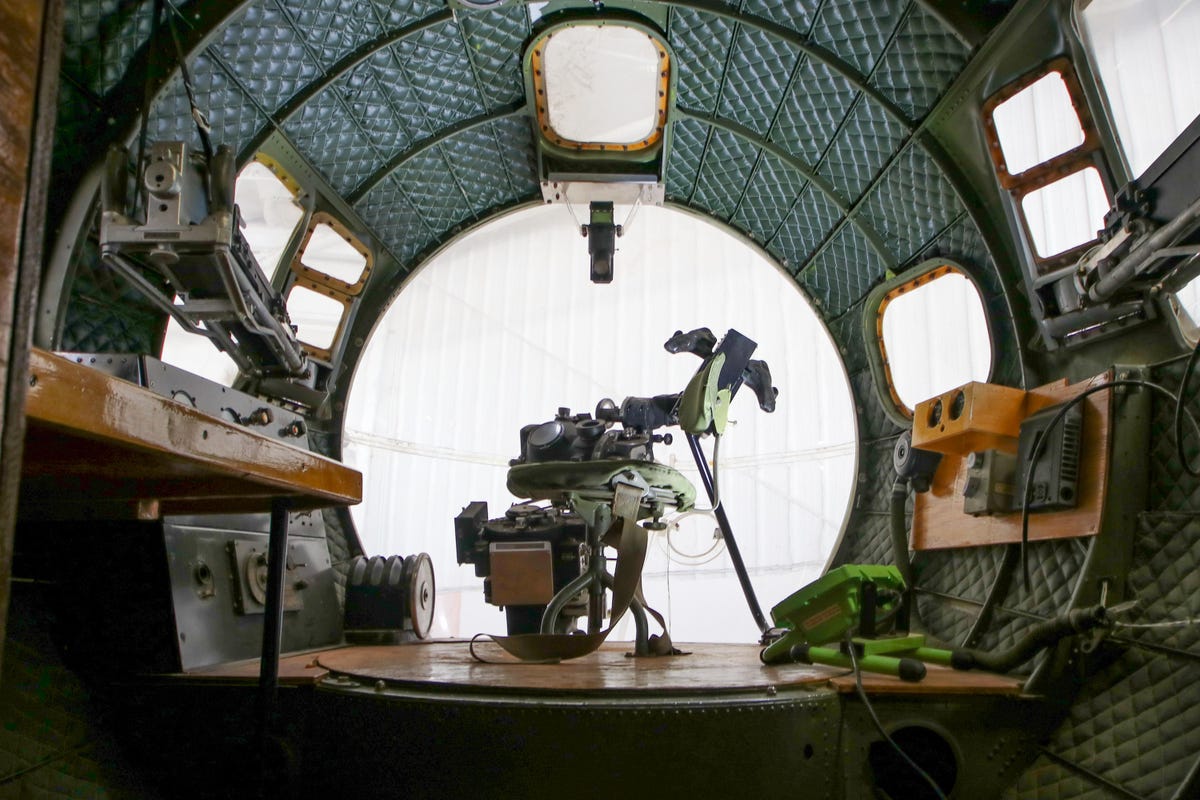
In the nose
After squeezing through the small hatch to get inside, you’ve got a great look at the bombardier station.
30 of 46 Geoffrey Morrison/CNET
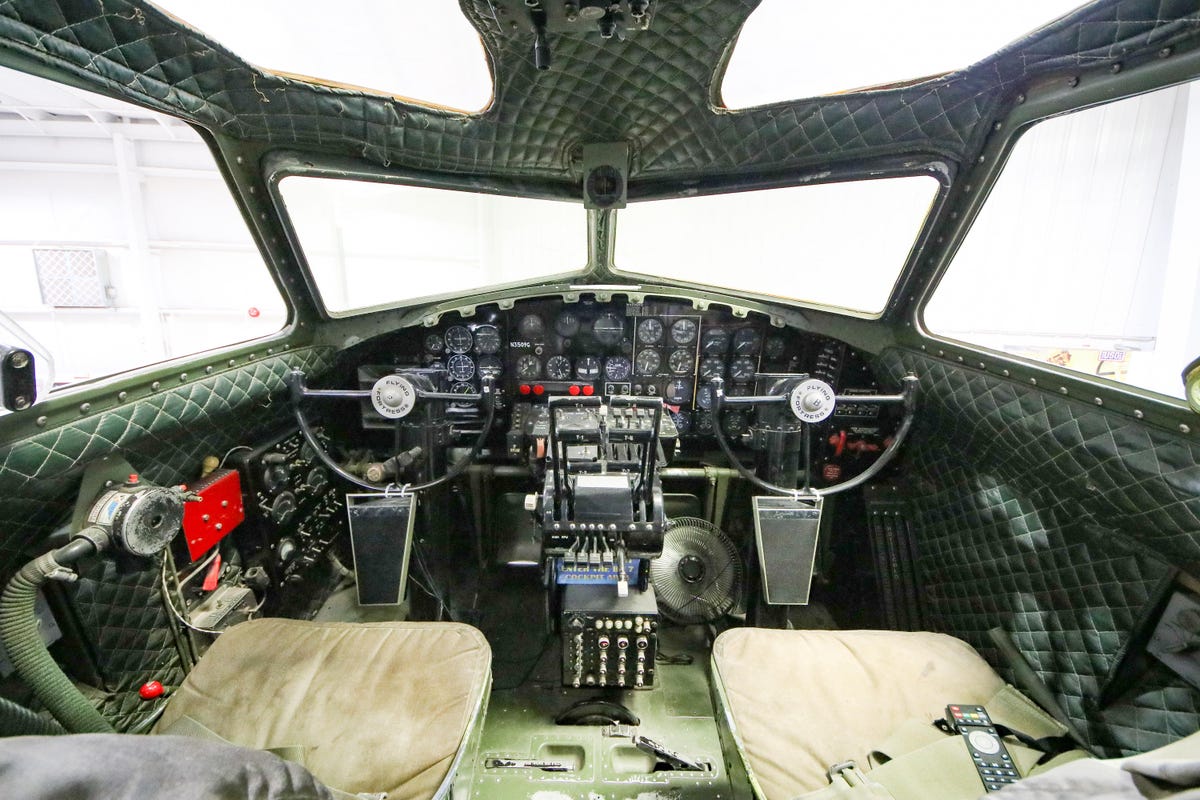
Up into the cockpit
You can watch a 360-degree video of this view right here.
31 of 46 Geoffrey Morrison/CNET
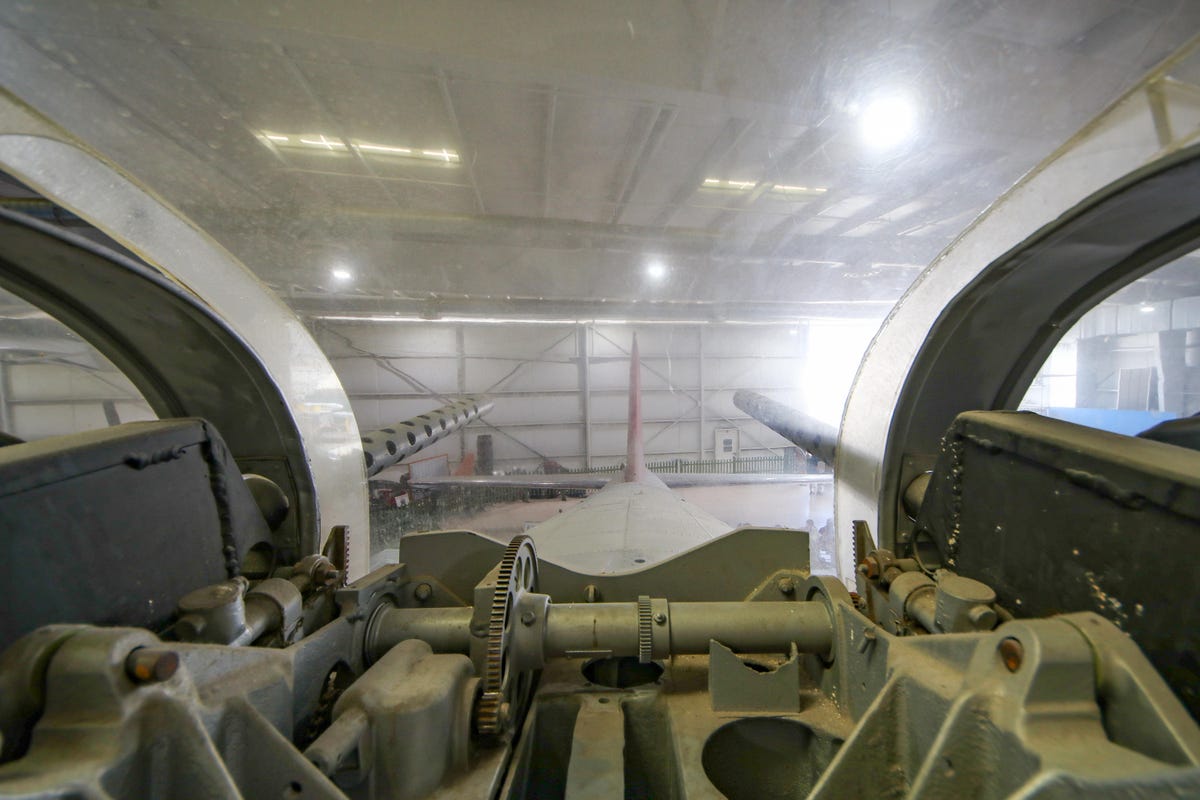
Top turret
The view from the dorsal gun turret, just aft of the cockpit.
32 of 46 Geoffrey Morrison/CNET
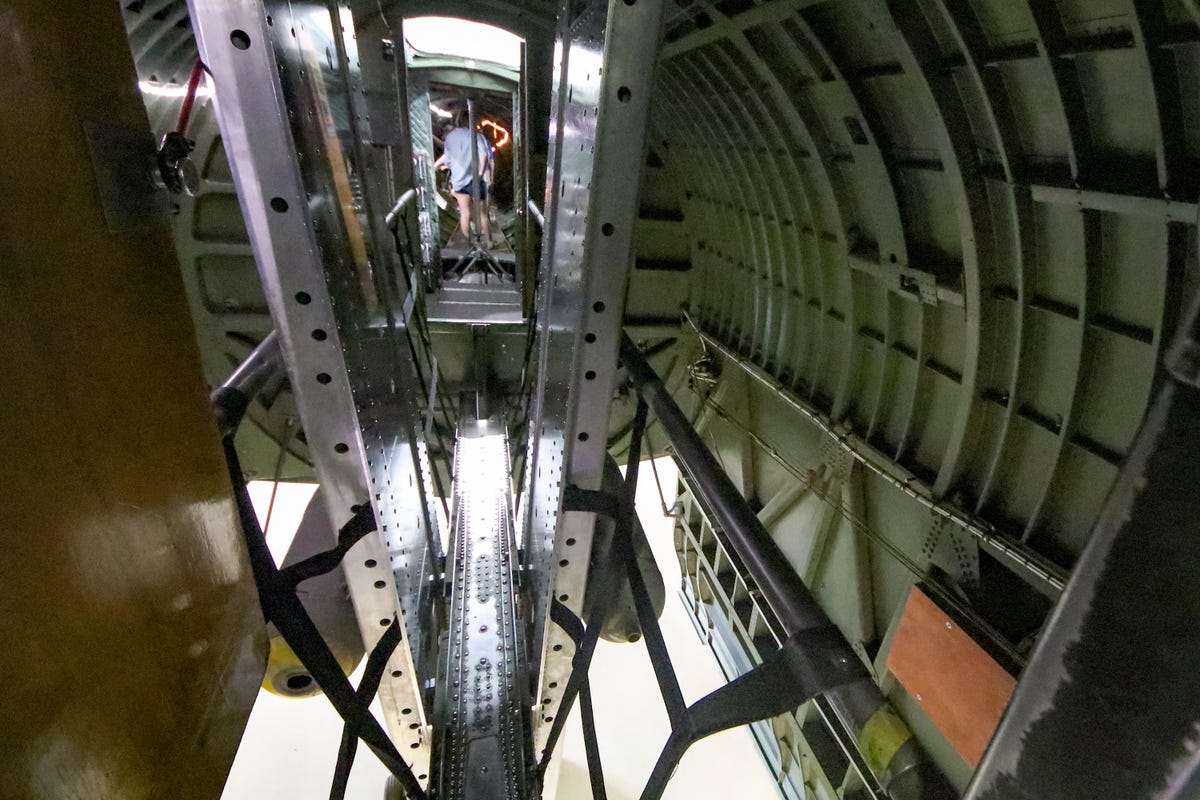
Bomb bay
It’s a tight squeeze through the bomb bay to the rest of the aircraft.
33 of 46 Geoffrey Morrison/CNET
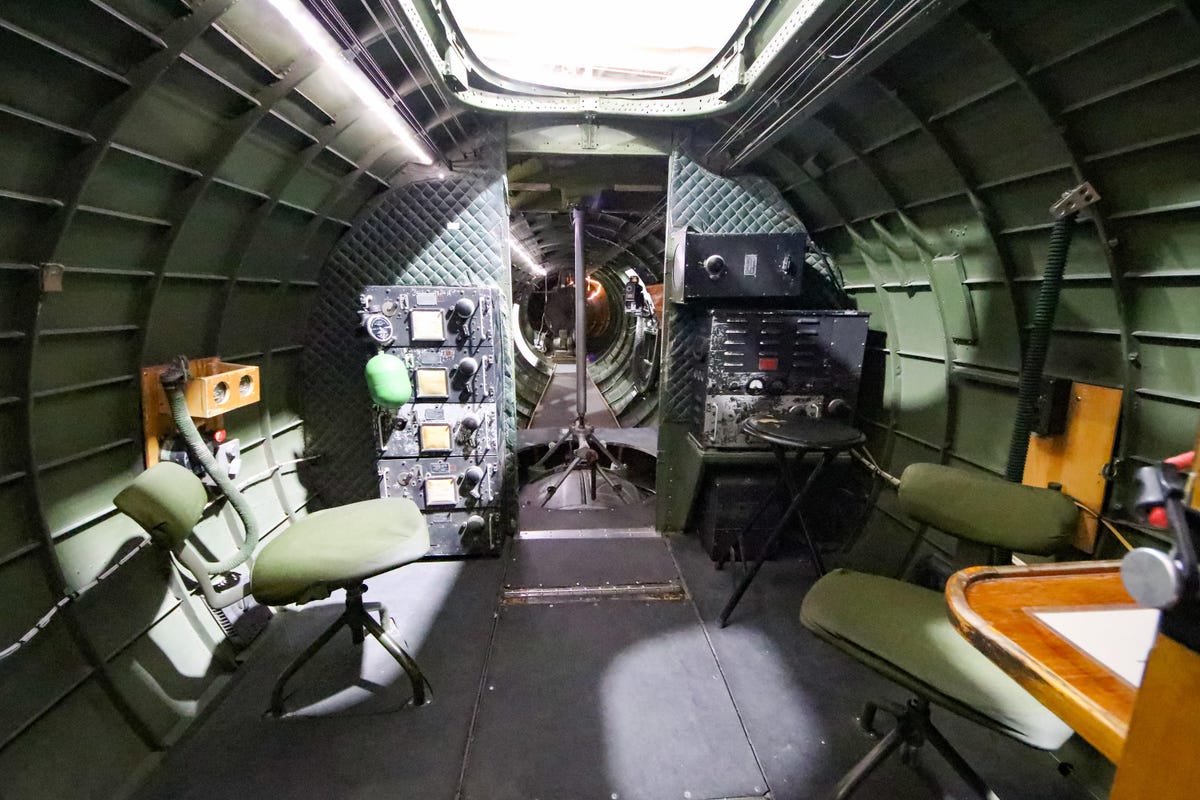
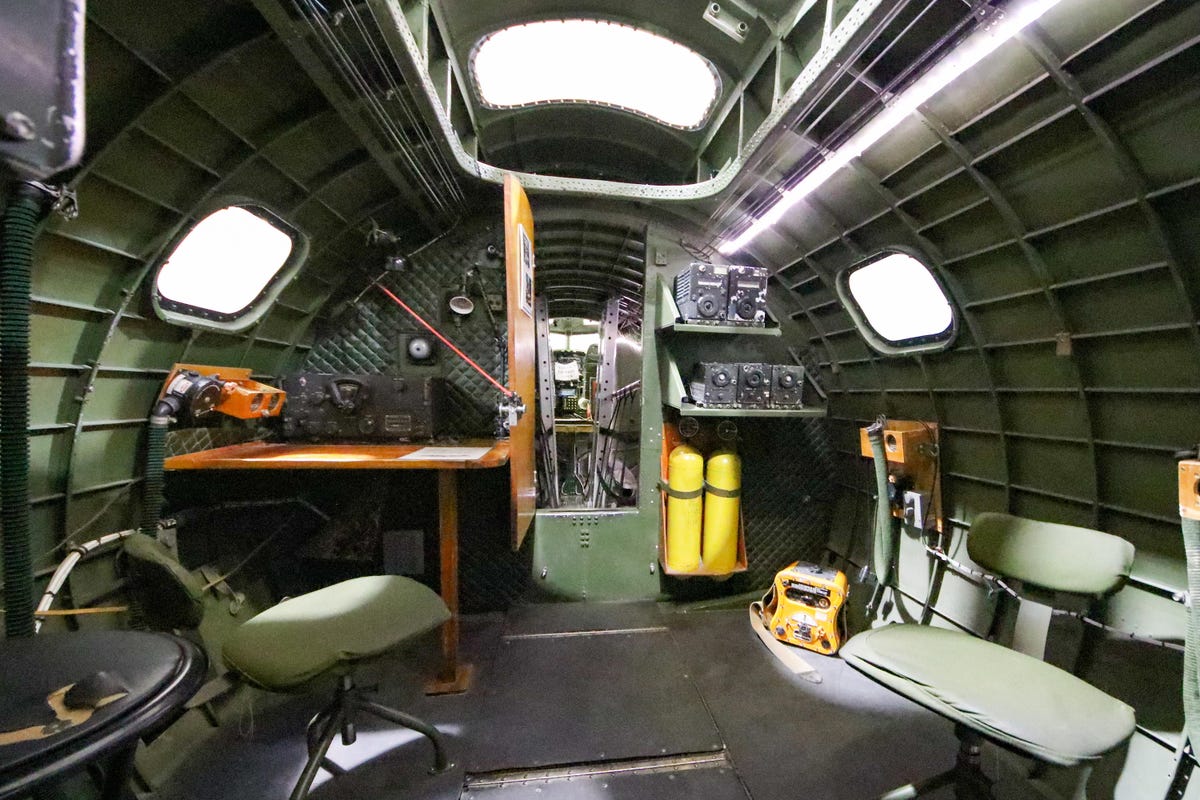
Electronics
There’s a surprising amount of space here, though I imagine it’d seem a lot more cramped with the crew on board in all their gear.
34 of 46 Geoffrey Morrison/CNET
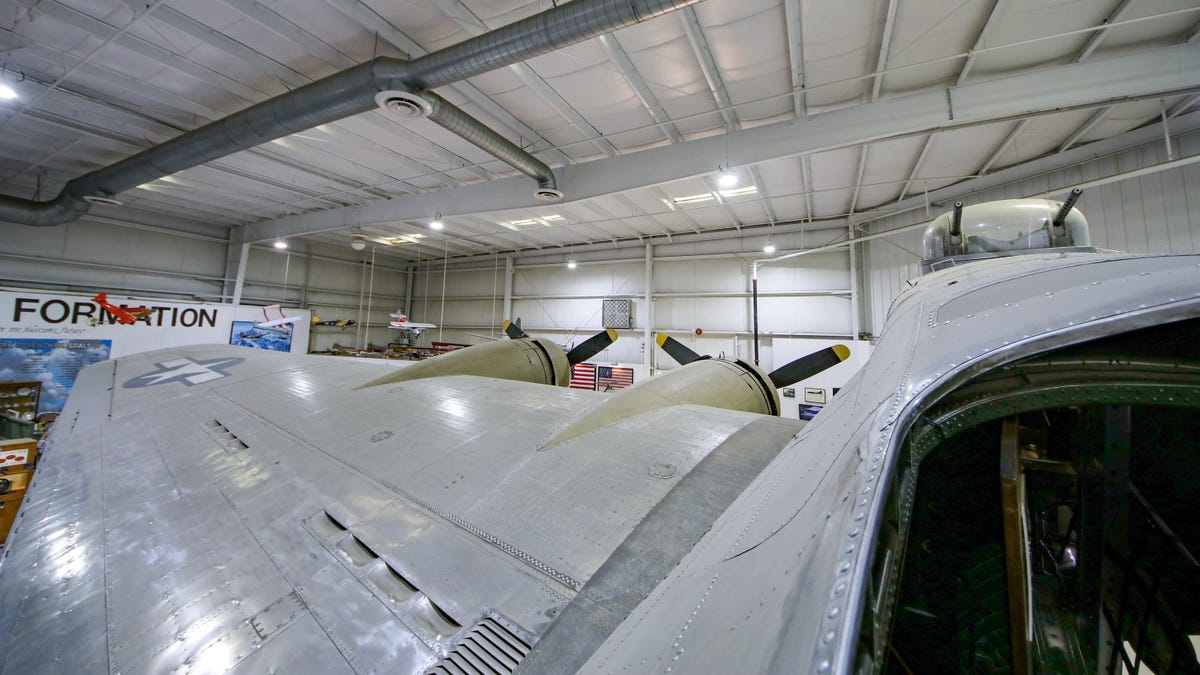
Sunroof
With the “skylight” removed, and if you’re tall enough, you can pop up and take a gander down the wings.
35 of 46 Geoffrey Morrison/CNET
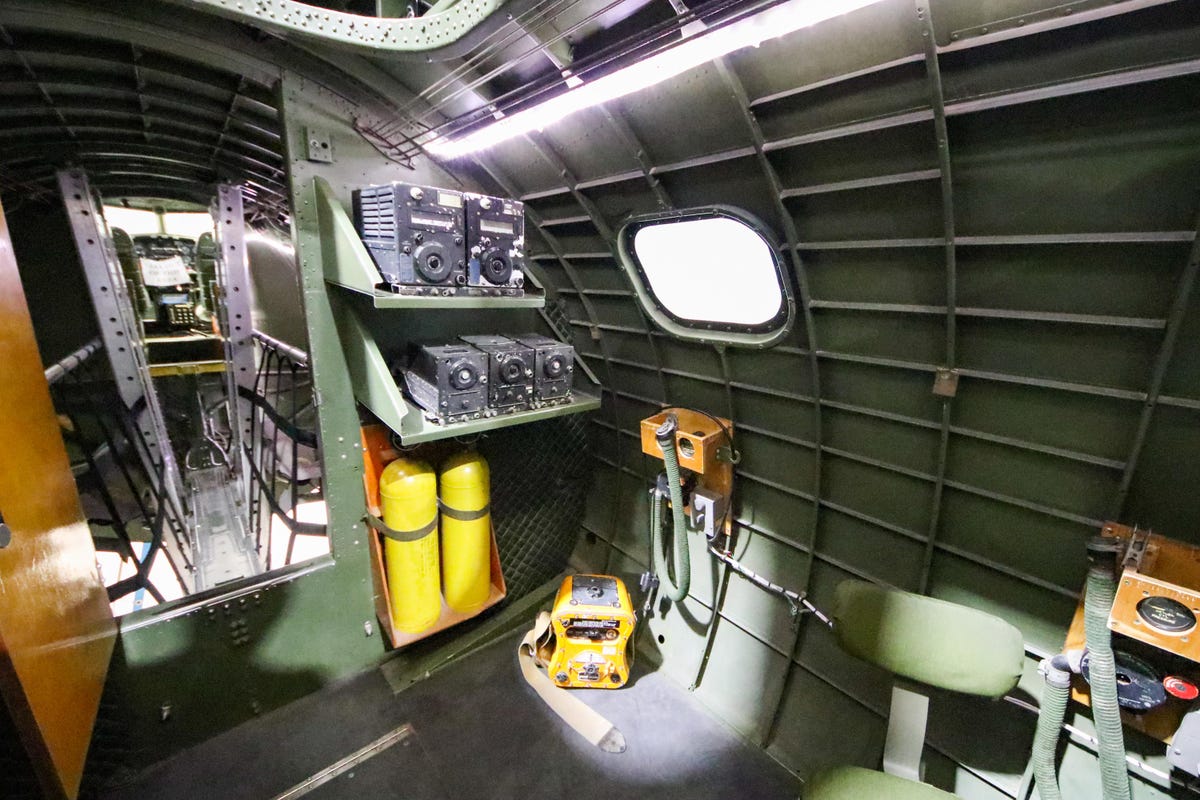
Radio radio
The view forward through the bomb bay toward the cockpit.
36 of 46 Geoffrey Morrison/CNET
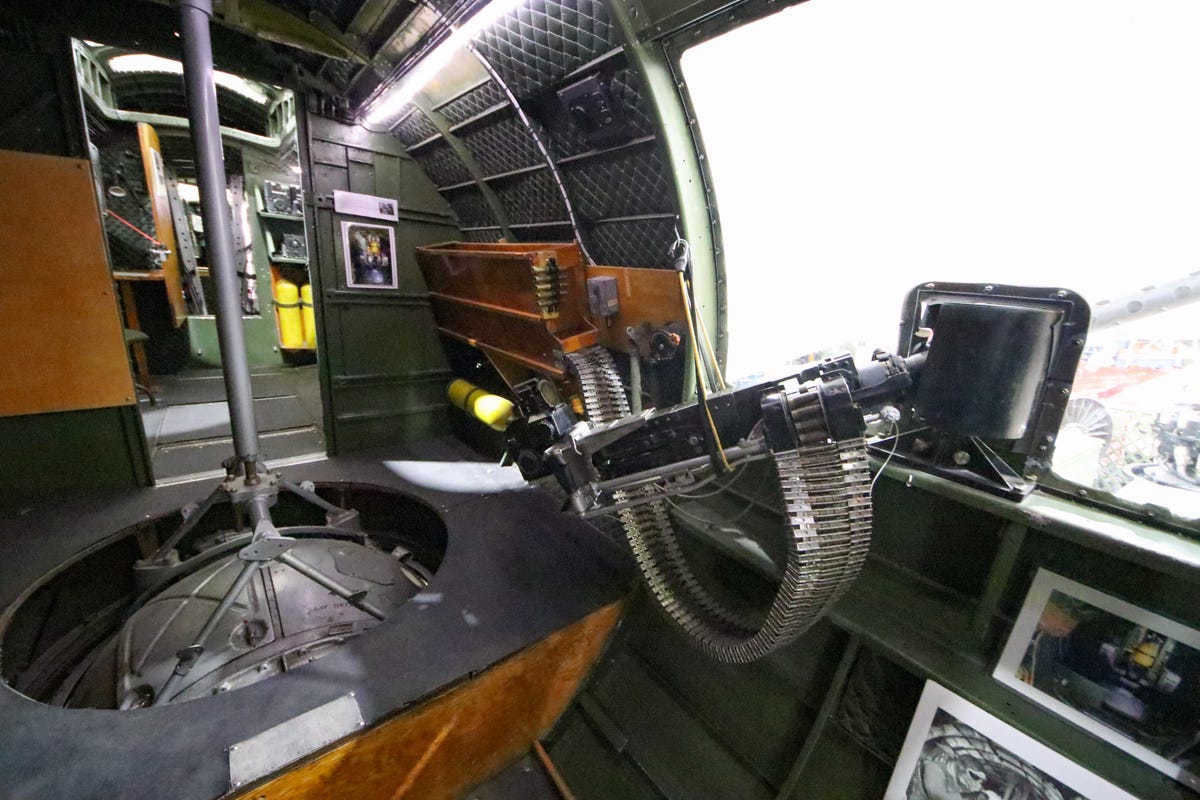
Gear
The Palm Springs Air Museum has done a fantastic job of not only restoring the aircraft, but also including much of the in-period gear and tech.
37 of 46 Geoffrey Morrison/CNET
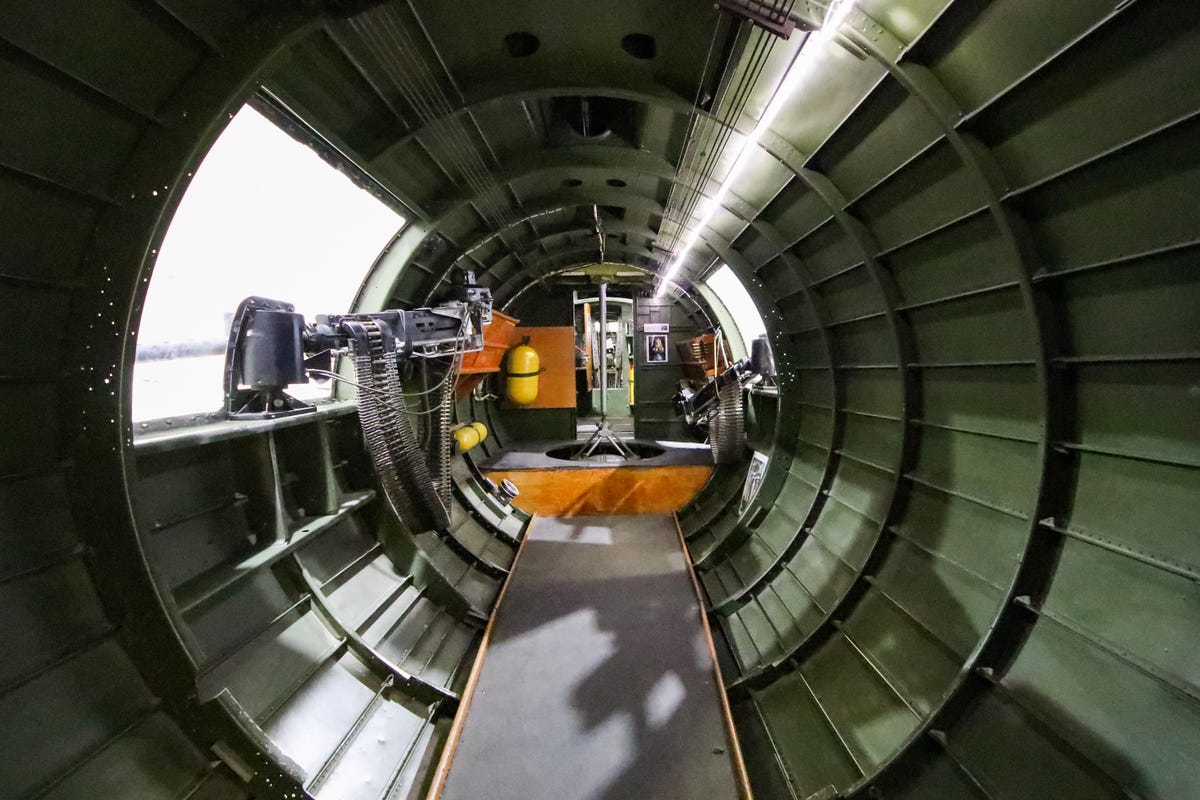
Ball turret
In this view forward, you can see the top of the ball turret and the starboard waist gunner’s position.
38 of 46 Geoffrey Morrison/CNET
Waist gunner
Only some models had plexiglass windows here. I can’t imagine how cold it was.
39 of 46 Geoffrey Morrison/CNET
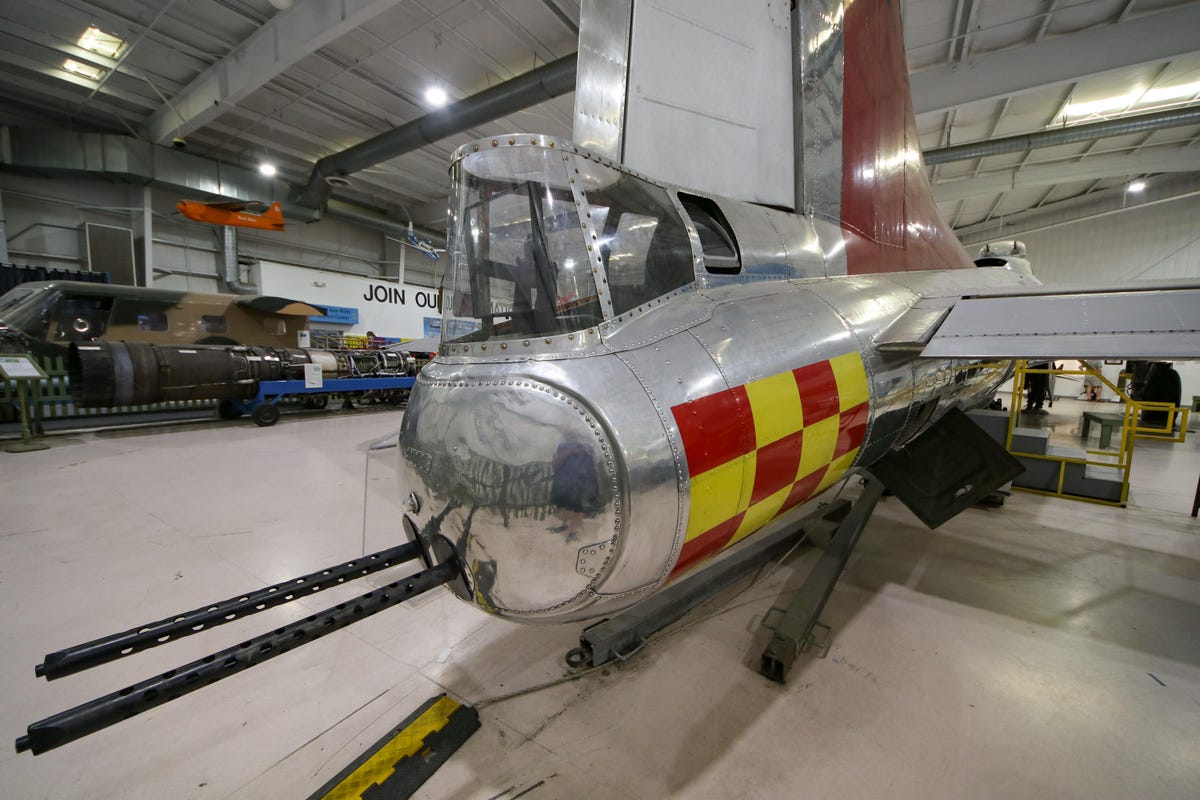
Tail gunner
Vitally important, but what a place to be.
40 of 46 Geoffrey Morrison/CNET
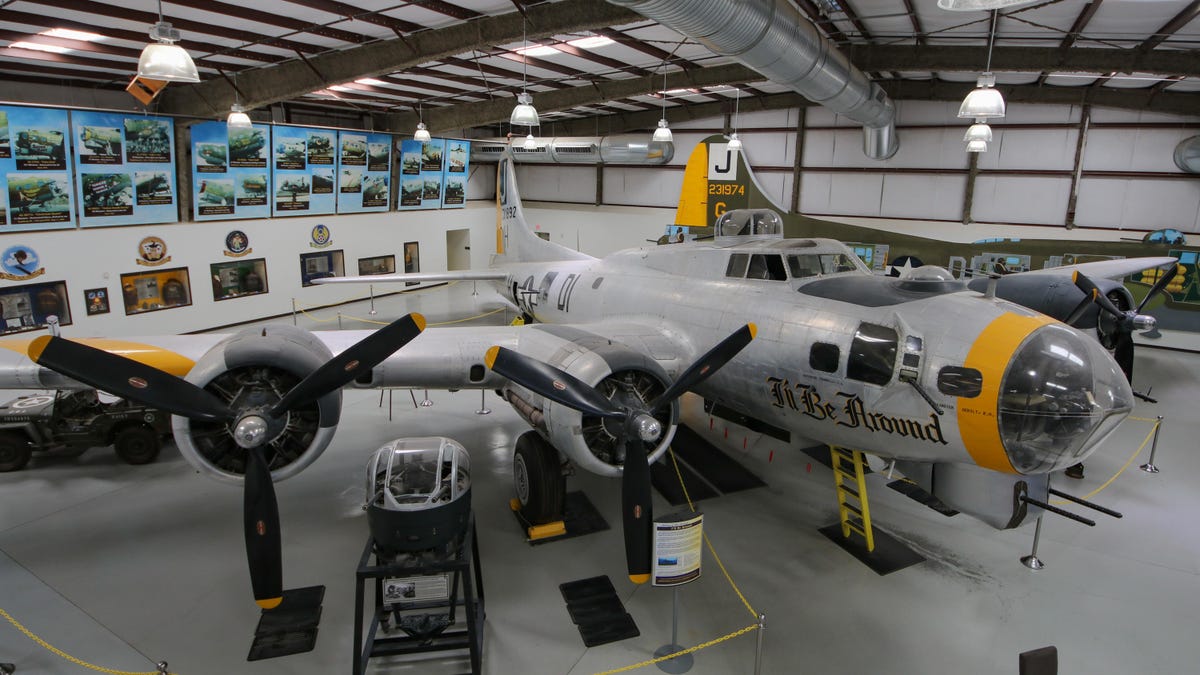
I’ll Be Around
The incredible Pima Air and Space Museum in Arizona, easily one of the best air museums in the world, has a number of famous bombers. The “I’ll Be Around” sits in its own hangar, unlike most which sit outside in the brutal desert sun. This aircraft was first registered to the US Air Force, then served in the Navy, Coast Guard and with various private owners including as a fire-fighting air tanker.
41 of 46 Geoffrey Morrison
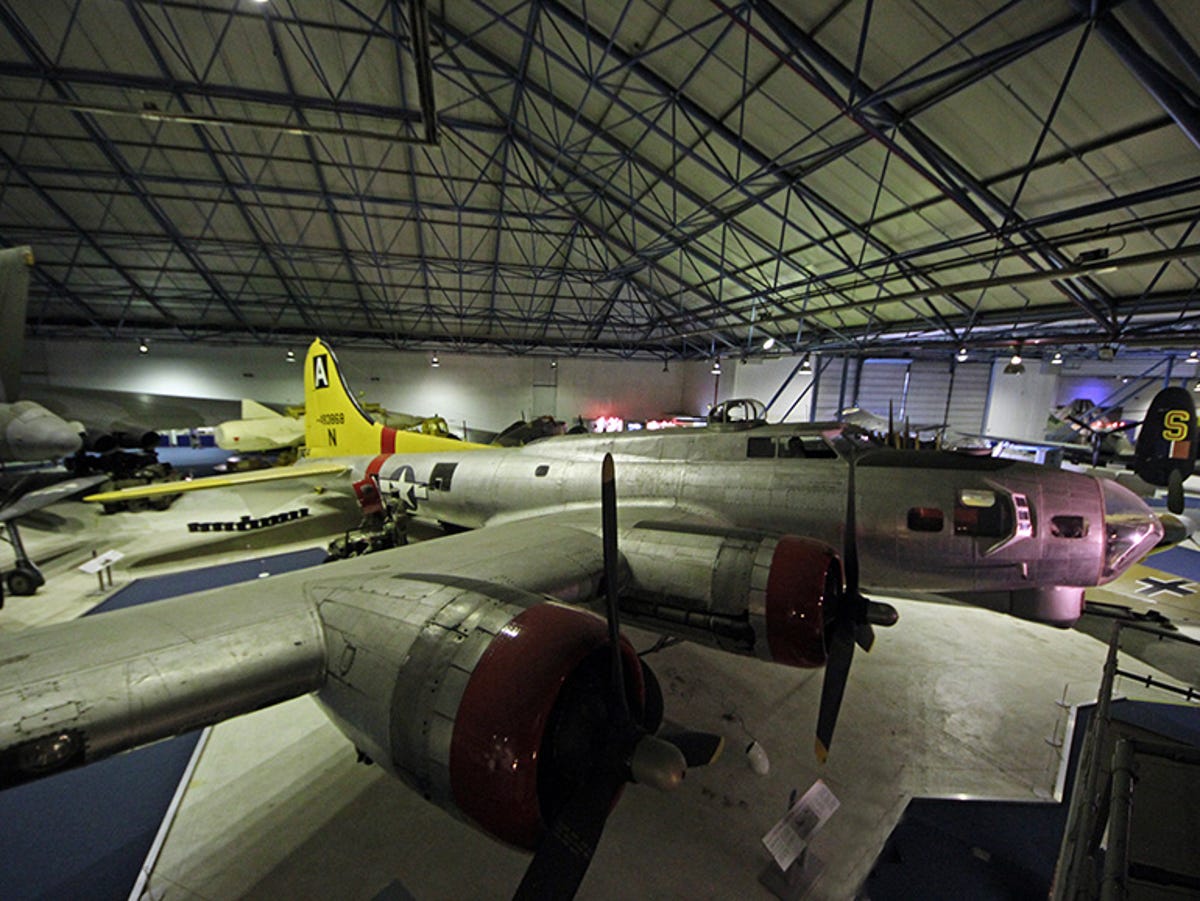
British
Most B-17s were stationed in Britain during the war. Not surprisingly, there are some in the air museums there, like this G variant at the Royal Air Force Museum in London.
42 of 46 Geoffrey Morrison
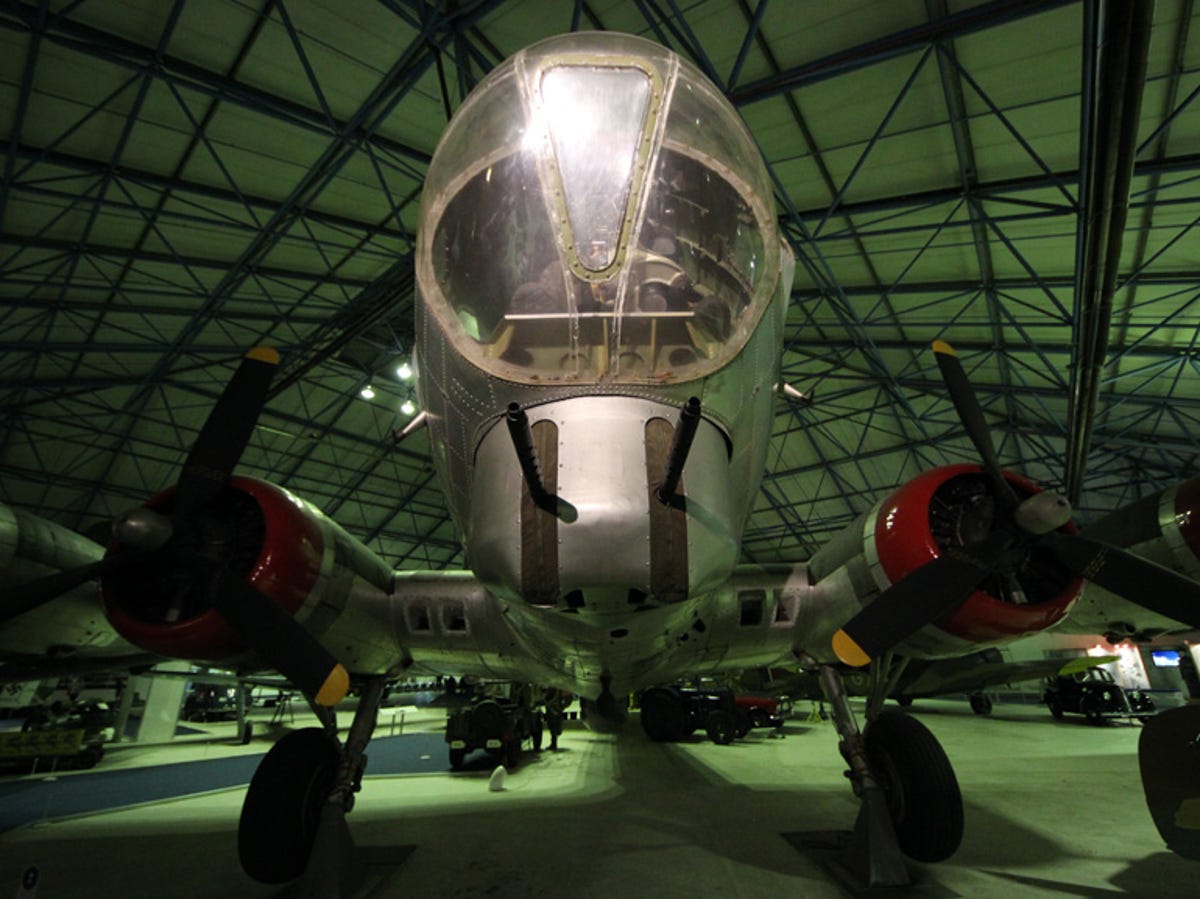
LA to London
This aircraft was built in July, 1945, in Long Beach, California. It was one of the last B-17Gs built by Douglas.
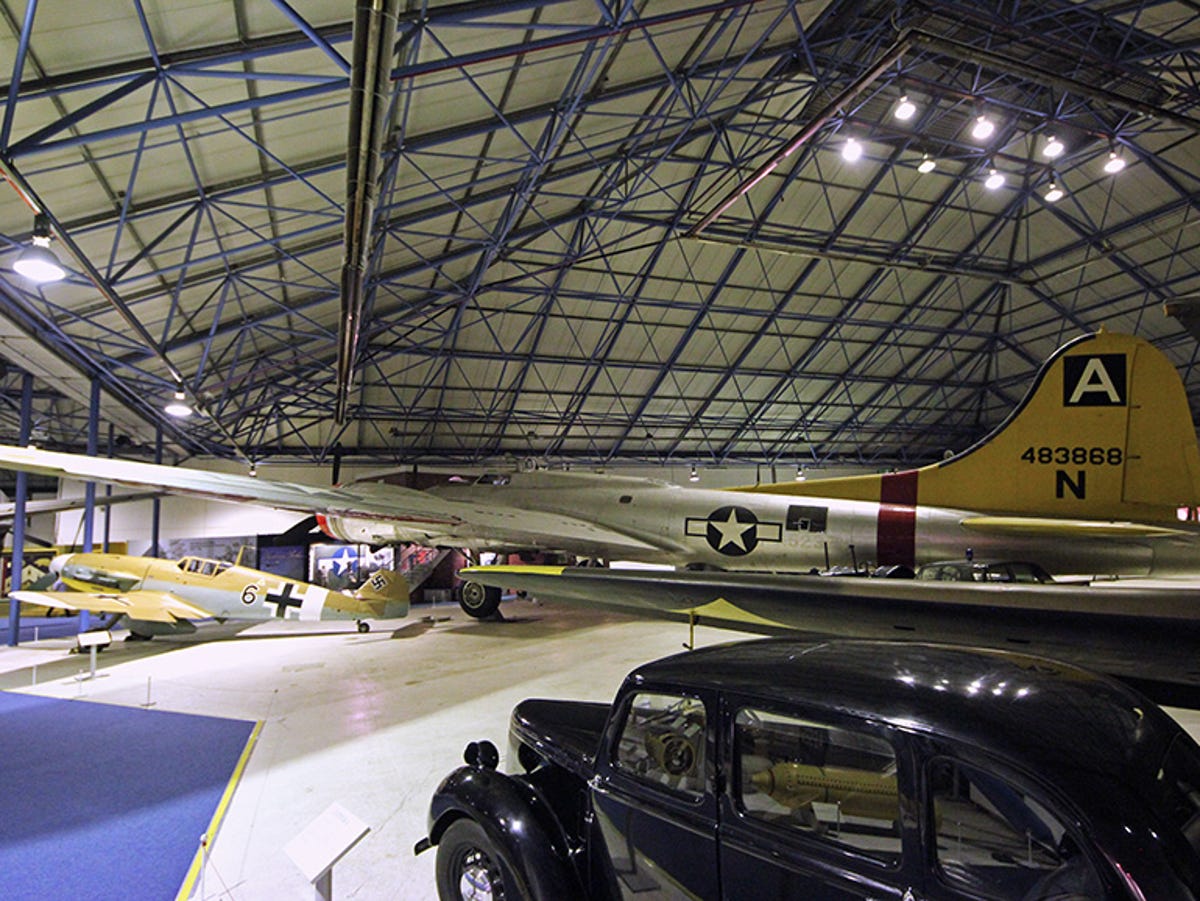
43 of 46 Geoffrey Morrison
Patrol and water bomber
Like all surviving B-17s, this one has an extensive and varied history. It was a search and patrol aircraft, a water bomber and more. It actually flew to the UK from the US in the early ’80s.
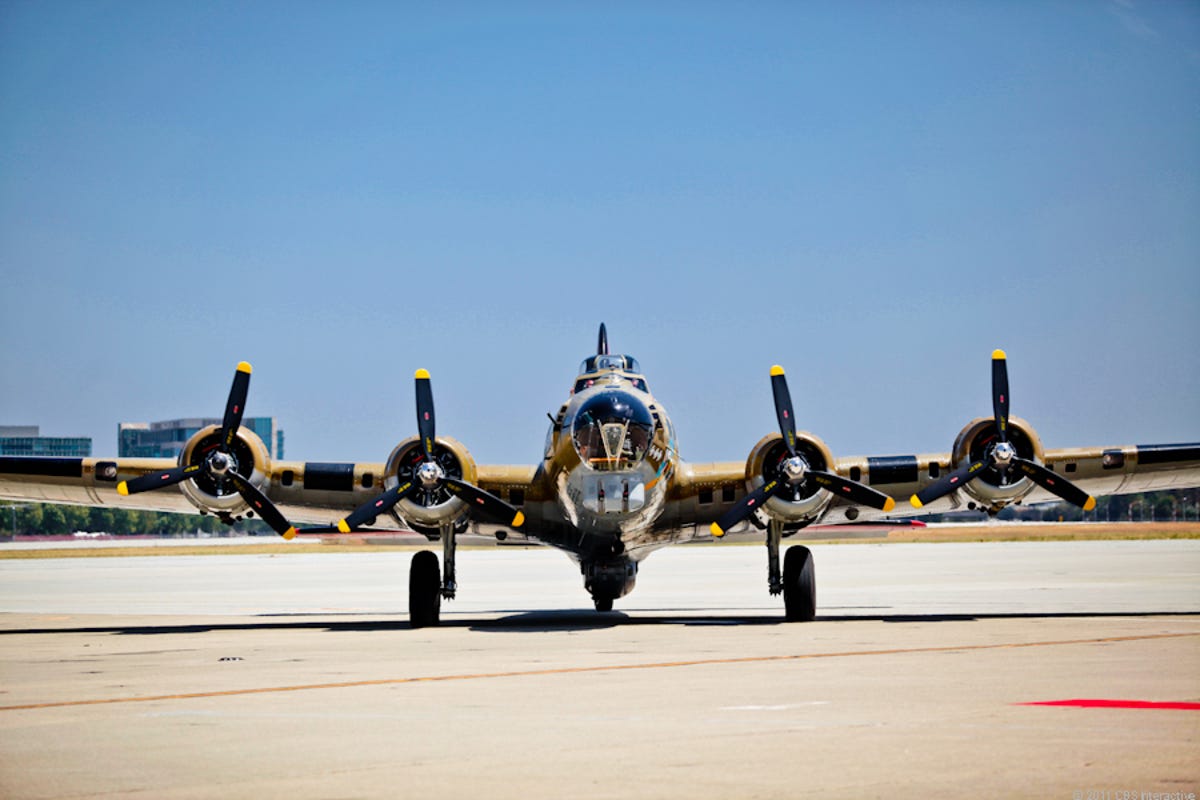
44 of 46 James Martin/CNET
Radials
Each version of the B-17 had four radial engines that in final form generated a total of 4,800 horsepower.
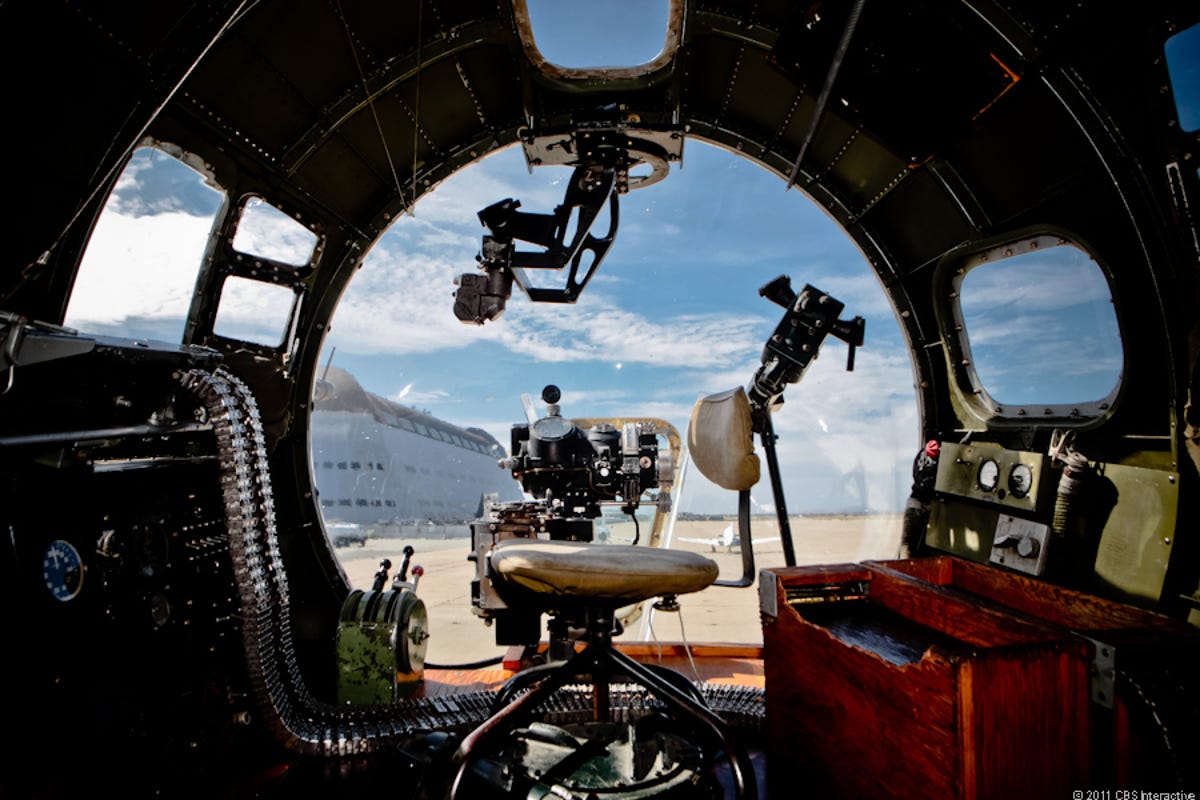
45 of 46 James Martin/CNET
The view
The view out the front bubble.
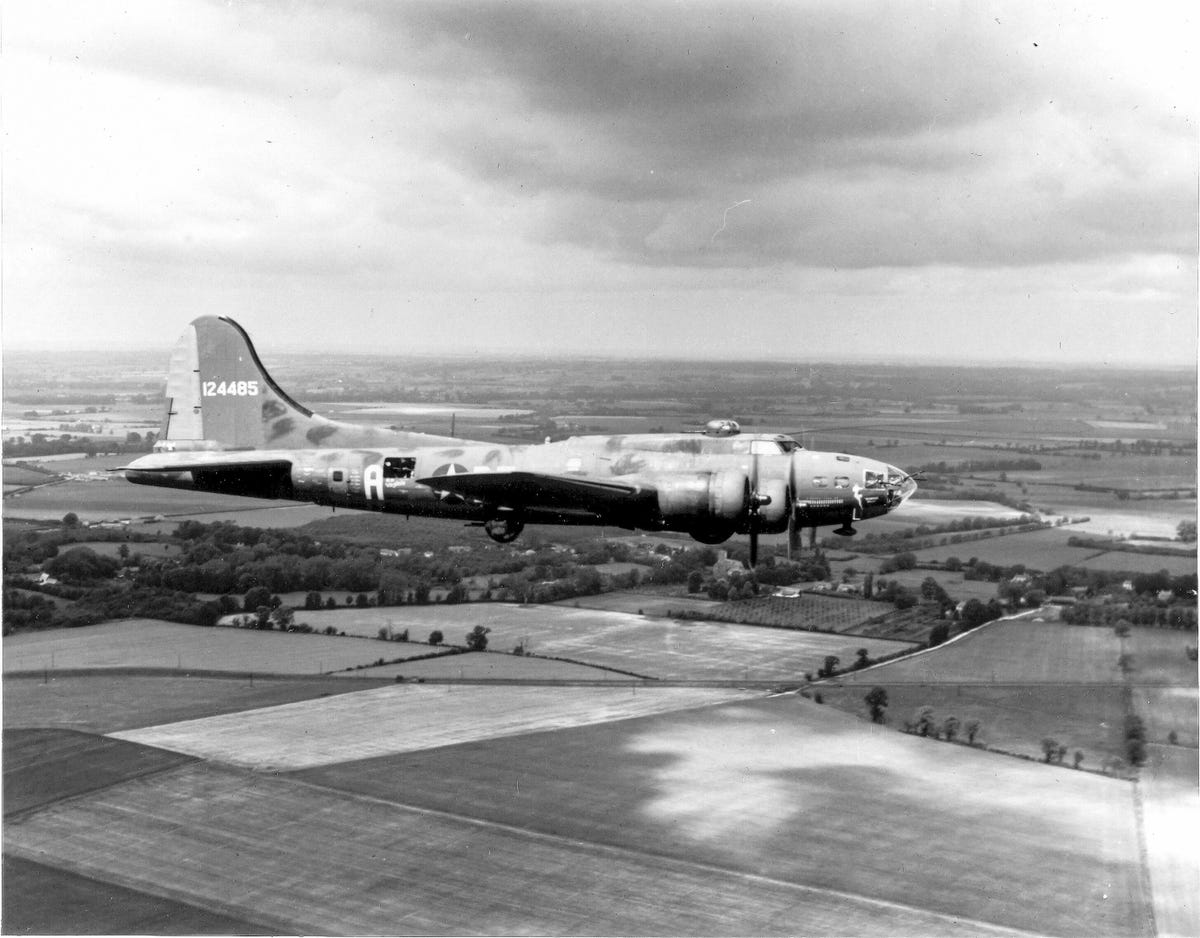
46 of 46 USAF
The most famous B-17
Here’s the most famous Boeing B-17, the “Memphis Belle,” headed back to the US on June 9, 1943, after completing 25 missions over Europe.