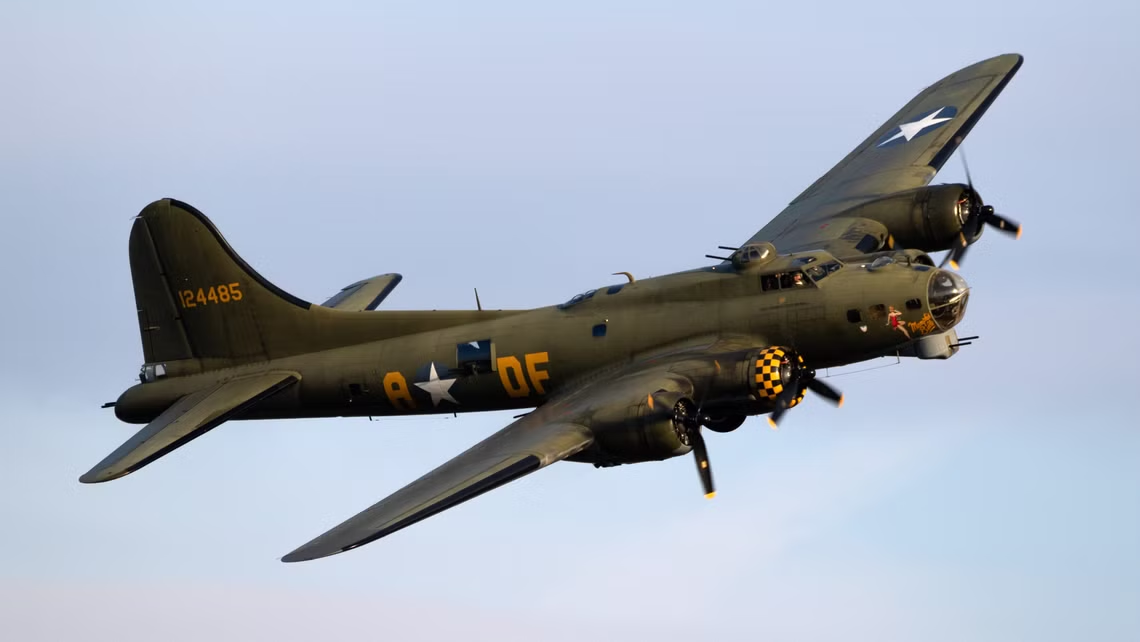
The Boeing B-17, also known as the Flying Fortress, is one of the most memorable aircraft in the history of United States aviation. The Flying Fortress was coined by the Seattle Daily Times. The newspaper published a photograph of the aircraft shortly after its first flight and captioned it “15 Ton Flying Fortress.” Boeing immediately registered the aircraft under that name. Let’s take a look at the brief history of the heavy bomber and what makes it so unique.
Early development
The United States Army Air Corps began looking for a replacement for the Martin B-10 in August 1934. Boeing started to design a prototype bomber designated the B-17. The aircraft would conduct its first flight on July 28, 1935, just under a year after the initial proposal.
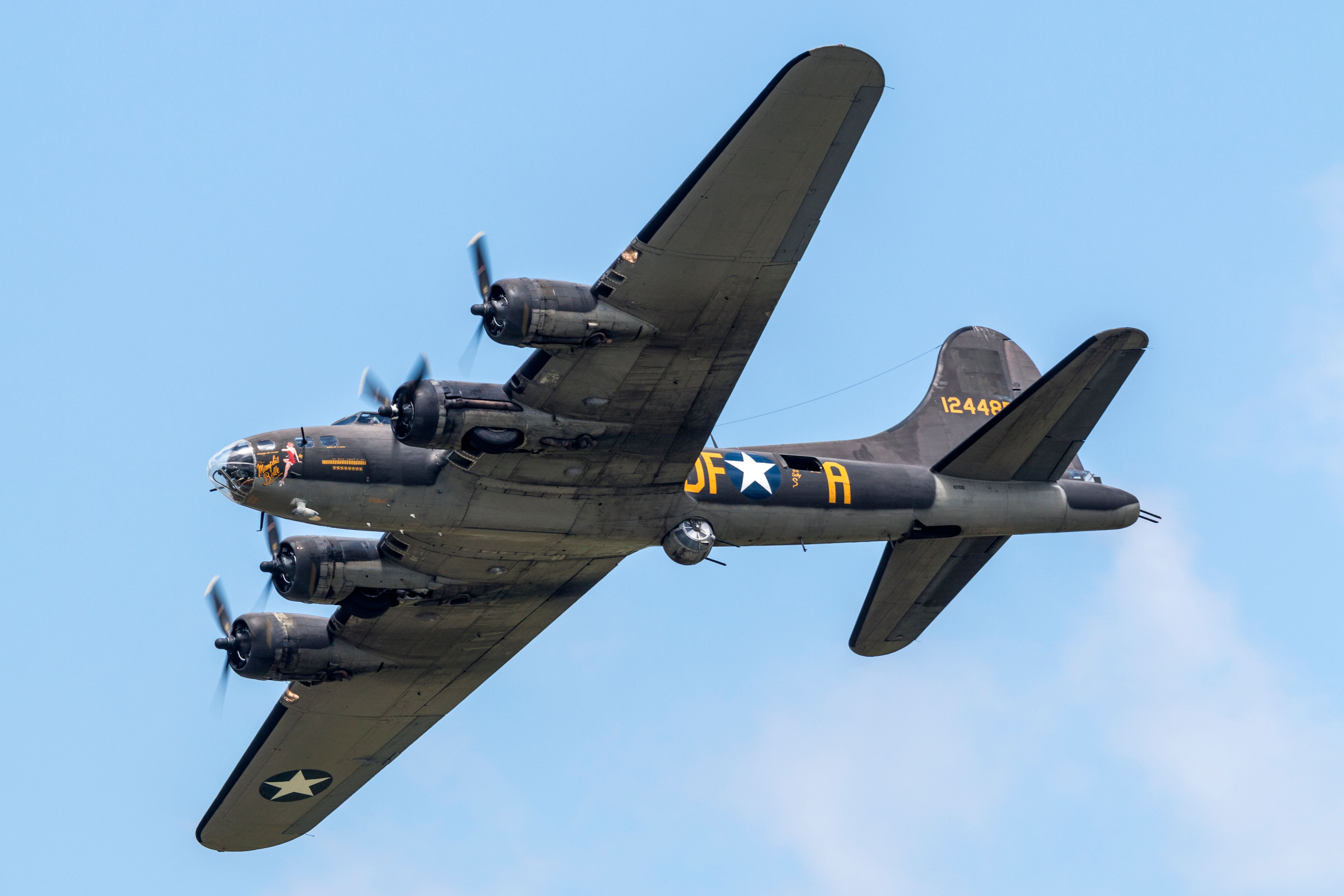
Photo: BlueBarronPhoto | Shutterstock
The aircraft would take place in a “fly-off” against its main competition, the Martin Model 146 and the Douglas DB-1. The aircraft was so awe-inspiring to the US military that even after the prototype was destroyed in a crash, they ordered 13 examples for service testing. The initial twelve aircraft were delivered in March 1937. The military was impressed with its evaluations and ordered several more aircraft. B-17s would begin entering operational service in 1939.
Interesting design features
The B-17 was upgraded several times throughout its production. The initial design included five .30 caliber machine guns and two bomb racks behind the cockpit. This allowed for a payload of nearly 5,000 pounds. The aircraft utilized four Pratt & Whitney R-1690 Hornet engines to power the large aircraft. It could reach an altitude of 35,000 feet and had a range of over 2,000 NM.
Upgrades designs, as the B-17 added more variants, added several new features. The B-17B added larger rudders and flaps to assist slow-speed performance. The B-17C added another gun housing on the bottom of the aircraft and streamlined existing gun housings.

Bigger upgrades came with the B-17E variant. It featured a fuselage extended by ten feet and a larger rear section, rudder, and horizontal stabilizer. Another gun position was installed in the larger tail. With the new enhancements came an increase in weight, so Boeing upgraded the engines to more powerful versions. 512 aircraft of this variant would be built.
The B-17F standardized the ball turrets for guns across the aircraft. The B-17G would take this further and increase the number of firearms from seven to 13. 8,680 B-17Gs would be produced.
Operational history
Only 200 aircraft were in service at the time of the attack on Pearl Harbor, although this event would accelerate production. The B-17 first saw combat in 1941, after the Royal Air Force acquired twenty. The US Army Air Force would begin operating the aircraft from bases in the UK and Europe. The USAAF would utilize this bomber in August 1942, flying the plane in a bombing raid in Rouen, France.
Allied operators would utilize the aircraft during World War II, mainly in Europe, to take advantage of the aircraft’s operational range. After World War II concluded, the US military would begin phasing out the B-17. Many of the remaining examples were utilized for patrol work or civil air transport. There are around forty remaining aircraft in the world today, although less than ten are airworthy.