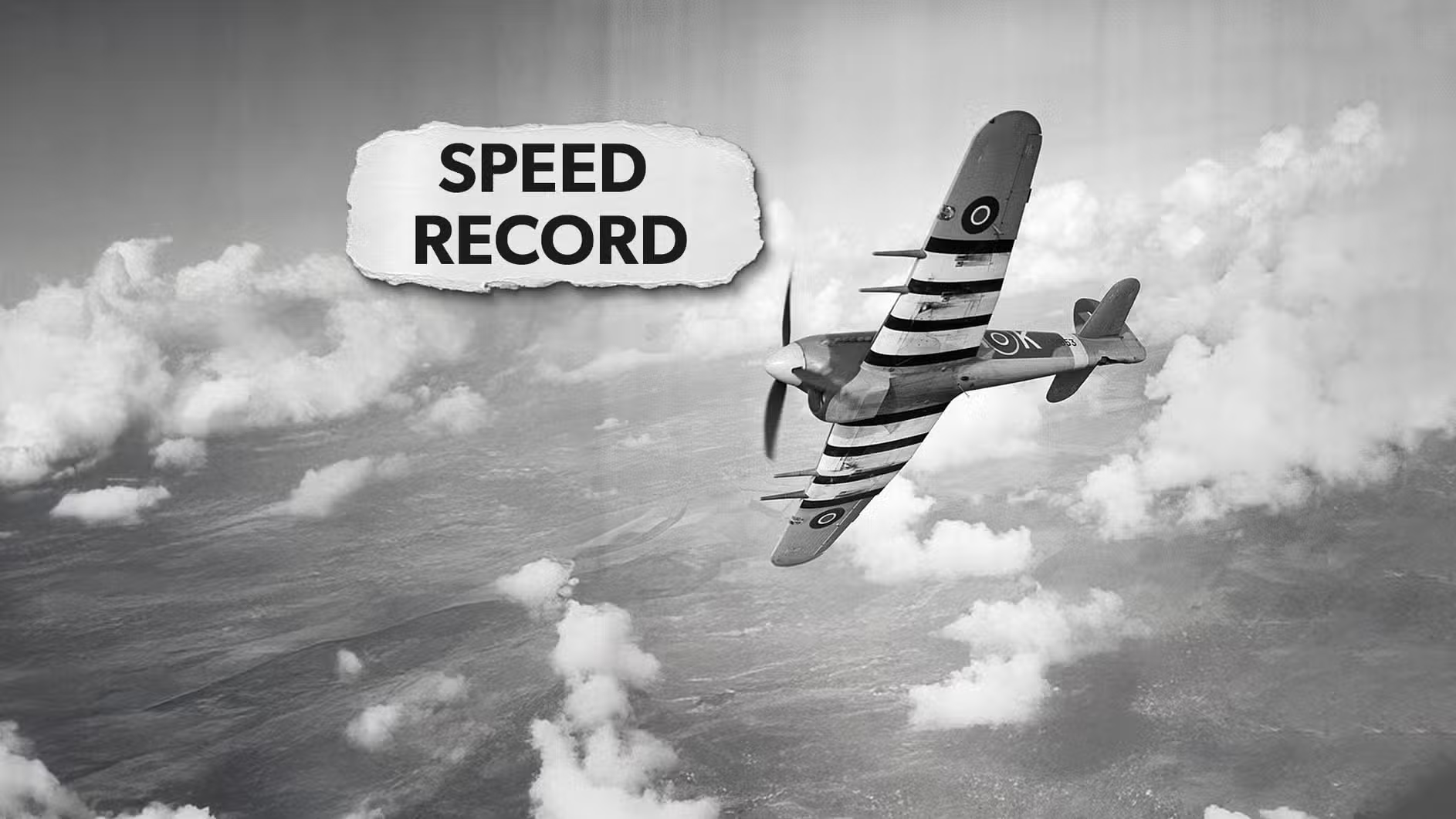
Not to be confused with the Eurofighter Typhoon, the Hawker Typhoon is a British single-seat fighter-bomber aircraft produced by manufacturer Hawker, one which was designed to serve as a high-altitude interceptor that could be a replacement for the Hawker Hurricane. However, several major design challenges ultimately restricted the aircraft’s potential and hamstrung its ability to truly replace the Hawker Hurricane.
Get all the latest aviation news from Simple Flying!
The Hawker Typhoon was originally designed to be armed with twelve .303-inch Browning machine guns, and it was set to be powered by a pair of next-generation 2,000-horsepower engines. The aircraft entered service in mid-1941, and it was quickly plagued by problems that left the aircraft without a real service future for months. However, the introduction of the Focke-Wulf Fw 190 by the Luftwaffe later that year now meant that the Typhoon was the only aircraft in the Royal Air Force’s operational inventory that would be capable of catching the Nazi combat aircraft at low altitudes, solidifying the Typhoon’s future as a low-altitude interceptor.
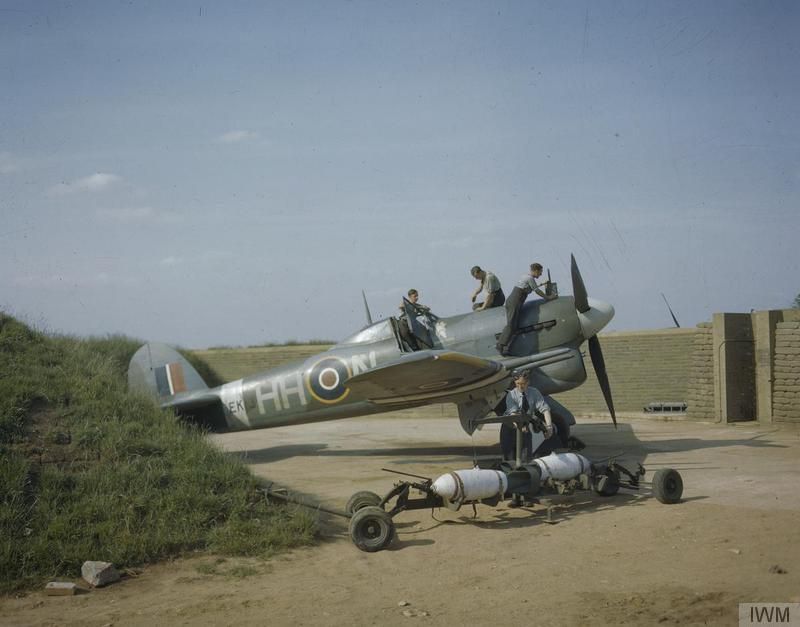
Photo: Royal Air Force
The Typhoon soon became the go-to aircraft for nighttime intrusion and long-range fighter roles. From 1942 onwards, the Typhoon was to be equipped with bombs, and these models were nicknamed the Hawker “Bombphoon” by the press. Starting in 1943, RP-3 rockets were later added to the aircraft’s potential armaments. In addition to these weapons, the aircraft was fitted with four 20-mm Hispano autocannons, which helped the aircraft quickly become one of the most important ground-attack aircraft of the Second World War. In this article, we will take a deeper look at the story of the Hawker Typhoon.
A deeper look at the design and development of the Hawker Typhoon
The development of the Hawker Typhoon began back in 1936 when Sydney Camm, the designer of the Hurricane, began to design the plane’s successor. Camm quickly proposed two new designs, one which was powered by the Napier Sabre engine and a different version (the Type R) which was powered by the Rolls-Royce Vulture engine, both of which could deliver more than 2,000 horsepower.
These two designs were submitted to the Air Ministry, which examined which of the two it would issue a specification for to replace the Supermarine Spitfire and the Hawker Hurricane. In March 1938, the Air Ministry issued Specification F.18/37, which called for a fighter aircraft that could fly at over 400 miles per hour at 15,000 feet. The aircraft would have an impressive service ceiling of 35,000 feet and would be heavily armed with four machine guns.
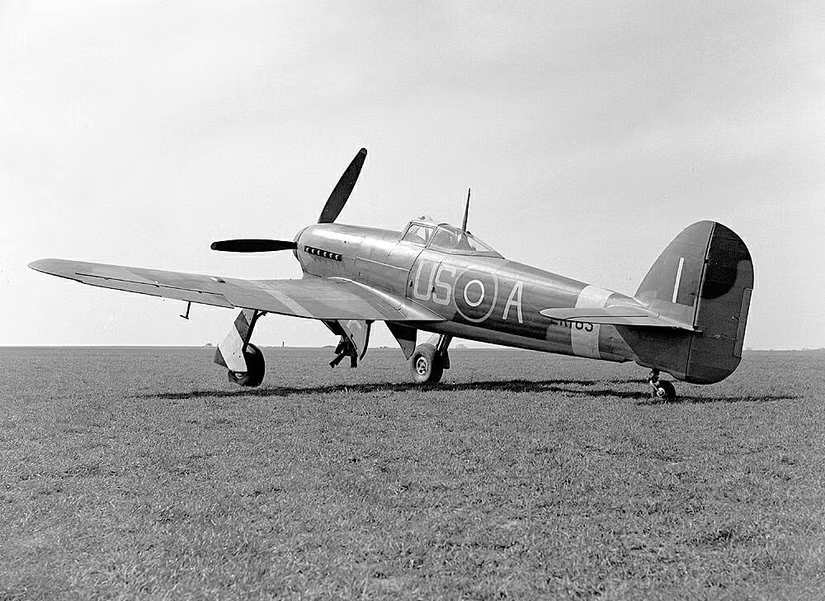
In July 1939, the Air Ministry placed 500 orders for each of Camm’s two designs, which would be dubbed the Tornado and the Typhoon. The Typhoon would be built using a combination of traditional and modern construction techniques, and the front of the plane’s fuselage would feature steel and duralumin tubes, which would feature removable panels that offered easy access to the engine and control systems. The rear fuselage would be flush-riveted, with a semi-monocoque structure.
The plane’s wing featured a slightly inverted gull shape, and it spanned more than 41 feet with a total wing area exceeding 270 square feet, providing impressive lift-generating capabilities. The thickness of this wing offered immense space for fuel tanks and heavy armament due to its impressive structural strength. However, when the plane was operating at speeds exceeding 400 miles per hour, the large wing did create excessive drag. Issues also arose with the wing during high-speed diver operations, as it encountered compressibility issues. Later Hawker aircraft, such as the Hawker Tempest, would be built with thinner wings to prevent exactly these kinds of issues from occurring.
The aircraft suffered from several setbacks during testing
The first prototype Typhoon model took to the skies on February 24th, 1940, and it was powered by the problematic Napier Sabre engine, which was slow to be developed and thus halted the aircraft’s development process. The aircraft was initially armed with twelve machine guns, but later variants would quickly be updated to be armed with Hispano Mk II cannons. The plane did perform well in many early tests, demonstrating that it could potentially be very successful if it could overcome these teething issues.
The aircraft’s development program yet again suffered a major setback when the prototype suffered from a mid-air structural failure in May 1940. Despite this occurring, test pilot Philip Lucas was able to heroically land the aircraft, a feat which ultimately earned him the George Medal. The aircraft’s development process again came grinding to a halt when Lord Beaverbrook, the Minister of Aircraft Production at the time, decided to prioritize the wartime production of more proven aircraft like the Supermarine Spitfire and the Hawker Hurricane.

The second prototype model, this time armed with Hispano cannons, took to the skies for the first time on May 3rd, 1941. By this time, the Air Ministry had ordered more than 1,000 fighters from Hawker, and the balance between Typhoon and Tornado models would depend on the results of further testing. The Tornado’s development process was soon assigned to manufacturer Avro, to keep the manufacturer focused on building the all-important Hurricane.
Despite suffering from earlier delays, the aircraft’s development process proceeded rapidly, and it was again handed off by the Air Ministry to a different manufacturer to focus on the production of other kinds of aircraft. This time, it would be up to Gloster Aircraft to finish developing the plane. The first production model took to the skies on May 27th, 1941, just a few weeks after the second prototype did so. Ultimately, the aircraft’s thick wing and early engine problems limited its performance capabilities, but it would eventually be developed into a low-level, capable ground attack aircraft as the war raged on.
A quick look at the aircraft’s operational history
The Hawker Typhoon was rushed into service in 1941, but its earlier operations exposed many of the plane’s principal flaws, which restricted its ability to counter the superior Focke-Wulf Fw 190, according to the Canadian Aviation & Space Museum. The aircraft’s structural failures and persistent engine problems limited the plane’s capabilities, and they required extensive modifications to be made to the airframe. A series of early crashes, including that which resulted in the death of test pilot Ken Seth-Smith, revealed dangerous flutter caused by extensive structural weaknesses in the plane’s tail, which required structural correction. Despite these challenges, the Typhoon’s excellent ability to fly at high speeds at low altitudes attracted the attention of notable aviators during the war, including Squadron Leader Roland Beamont, who praised the plane’s heavy firepower.
By the end of 1942, the aircraft had proven it could be effective against low-level Luftwaffe raids when it could successfully intercept Fw 190 fighter-bombers. Starting in 1943, when Britain began to carry out targeted strikes against German positions, the Typhoon was quickly transitioned to serving a ground-attack role, mostly by using its powerful engine to carry up to two 1,000-pound bombs. The aircraft could also deploy RP-3 rockets, which proved extremely effective for the heavy amount of damage that they could inflict, albeit the accuracy of these weapons was somewhat of a challenge. Squadrons of Typhoons played a key role in the Allied invasion of Normandy, mostly by targeting German supply lines and troop concentrations, according to the Air Force History and Museums Program.
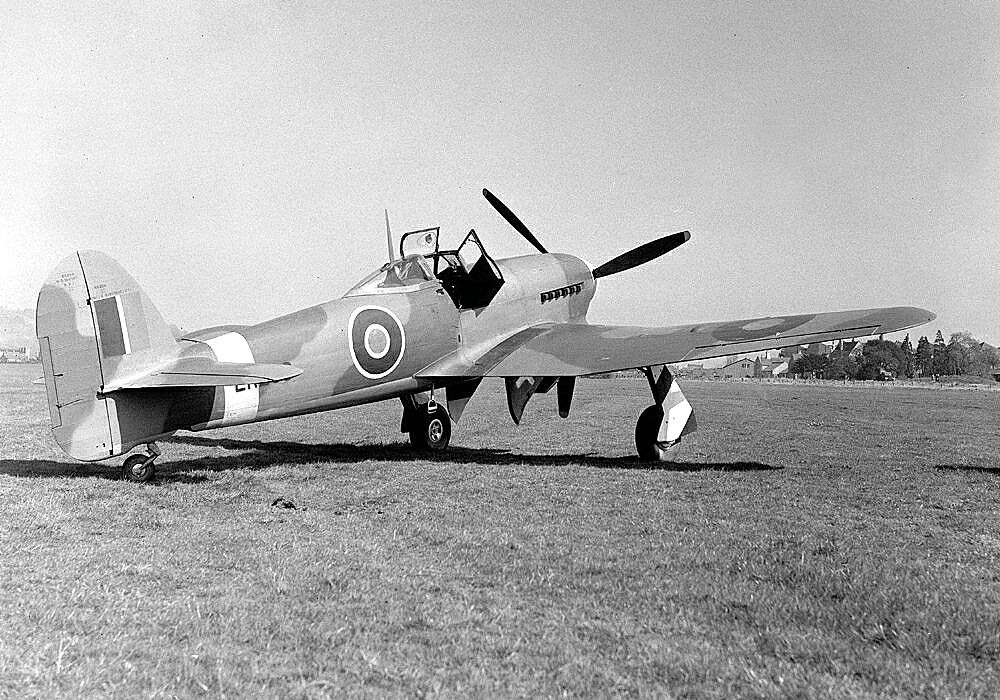
Photo: Royal Air Force
The aircraft was extremely effective throughout the war
Despite many pilots overclaiming the number of kills registered by the aircraft, the Typhoon’s effectiveness did have a major role in impacting German morale and disrupting the Nazi military’s occupations. German soldiers became known for abandoning vehicles when they came under attack from Typhoons, and the aircraft’s ground-attack dominance continued throughout 1944 and 1945. The aircraft supported Allied advances across the continent through “cab rank” missions, where Typhoons were called in quickly to provide immediate air support for troops on the front lines.
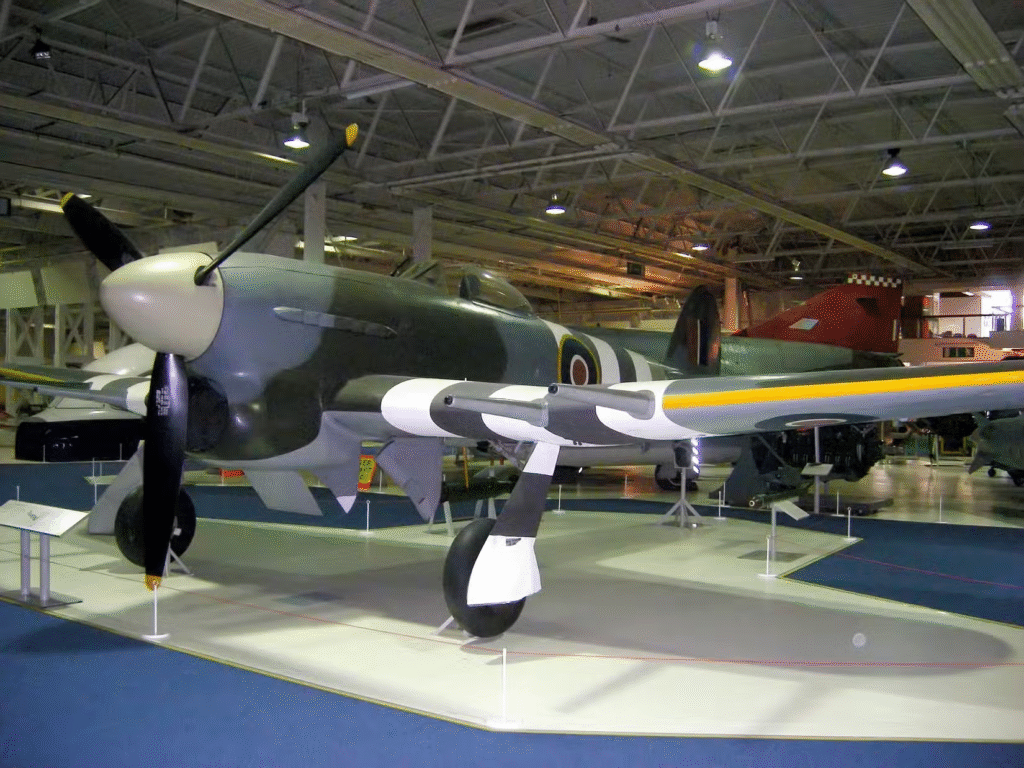
The Typhoon’s time in operational service ended quickly after the war, with the plane being quickly replaced by improved ground-attack and low-altitude interceptor planes like the Hawker Tempest. The last Typhoons were withdrawn from the battlefield in October 1945. Of the 3,317 aircraft built, the majority were actually produced by Gloster. Many Typhoons were actually captured by the Luftwaffe throughout the conflict, which were ultimately flight-tested to train German pilots against the aircraft that was giving them so much trouble. The aircraft, despite earlier struggles, leaves behind a legacy as an exceptional ground-attack jet.