

INTERESTED IN LEARNING MORE ABOUT MAYAN MYTHOLOGY?
You’re in the right place! Living in Mexico since 2018, I have been immersed in the spectacular and ancient Mayan culture over the last few years.
The Mayan mythology gods and goddesses are filled with rich history, rituals, and mysteries — some of which we’re still uncovering today — and some of which you can see in sculpture form when you visit the Mayan ruins near Tulum.
In this post, we’ll dive into the fascinating mythology of the Mayans’ gods and goddesses, from their creator gods to their death goddesses, and all the unique deities in between.
Without further ado, let’s get to this epic list of important Mayan Gods & Goddesses.
The Pantheon of Mayan Deities
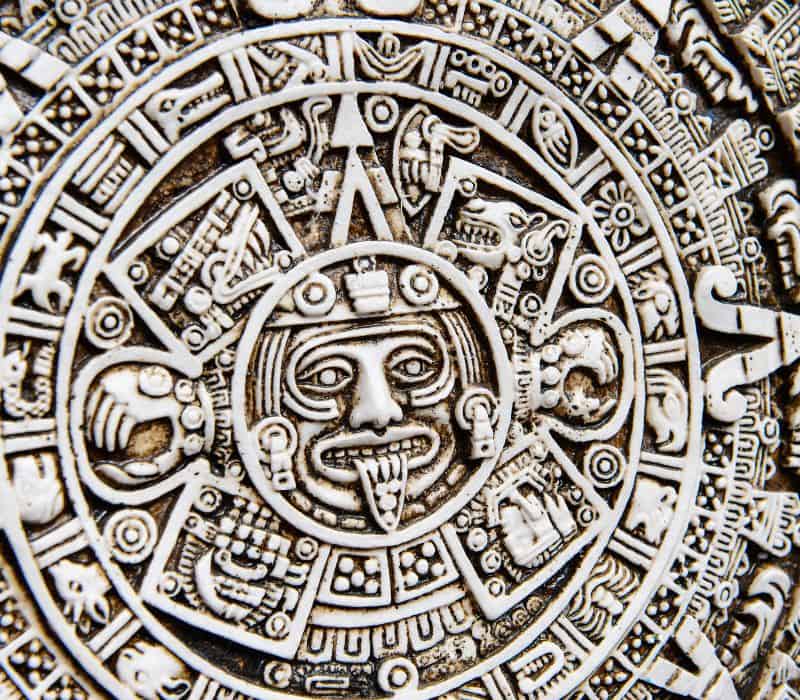
At the heart of Mayan religion was the belief in a pantheon of deities. The Mayans were polytheistic, meaning they worshiped many gods.
Each god was believed to have their own unique attributes and powers — and it’s said there were 250 Mayan gods and goddesses.
Today, the Mayan gods pantheon is separated into three distinct periods:
- Classic Period with gods including Chaac, Bacab, Kʼawiil, Xolotl and Yopaat
- Post-Classic Period with gods including Akna, Chin, Ixtab, Kukulkan and Yum Kaax
- Contact Period, or Popol Vuh Era with gods including Awilix, Camazotz and Tohil
The Mayan gods are also classified in other ways, including by type.
There are Major Mayan Gods and Goddesses, Lesser Known Maya Deities, Mayan earth gods, creator gods, nature gods, howler monkey gods, death gods, and more.
While some were believed to have formed the universe, like the powerful Itzamná (sometimes spelled as Izamna), others were said to control the rain and ensure bountiful crops for the Mayan people.
Some gods, like Mayan nature gods and creator gods, were benevolent and helpful, providing the Mayan people with blessings such as fertility, family, and health.
Conversely, the death gods were more malevolent, bringing destruction and chaos to the world.
Whether creator or destructor, each Mayan god was respected and feared in their own way.
These gods continue to play an important role in many aspects of Mayan life, so let’s discover some of the most important and lesser-known gods and goddesses of the Maya.
Mayan Gods and Goddesses
15 Mayan Gods & Goddesses You Should Know About
Below, you’ll find a list of Mayan gods names, and some Mayan gods facts to go along with each important deity.
Note: The names of Mayan Gods can often have more than one spelling. I tried to list all variations of each, so I hope you don’t get confused if you see various spellings for the same Maya deities.
1. Itzamná, Mayan God of The Sky

One of the most significant patron gods in the Mayan pantheon was Itzamná, the god of wisdom and defender of the sciences.
Furthermore, Itzamná was also known as the Creator God of the Sky , the ruler of Heaven, the Day, and the Night.
Itzamná taught the Mayans to grow corn and practice medicine. It’s no surprise that he’s considered one of the Mayan main gods.
With one of the most broad and diverse influences over Maya culture, Itzamná Mayan god is considered the supreme god.
Mayan Gods and Goddesses
2. Kukulcan, Mayan Feathered Serpent God

The Kukulkan Mayan god is arguably the most prominent and most well-known figure in Mayan mythology.
This god’s name is sometimes spelled as Kukulcan, so if you see references to the Kukulcan Mayan god, it is the same god.
In the ancient Mayan religion gods belief system, Kukulkan was distinguished as a creator god, and the bringer of rain and winds.
Kukulkan’s name directly translates from Yucatec Maya, the Mayan language. In Maya, Kukulkan means “feathered serpent god,” and this god is depicted as such.
In fact, many pictures of Mayan gods and goddesses are depicted as having human characteristics, mixed with animal features.
Temple of Kukulkan Pyramid at Chichen Itza
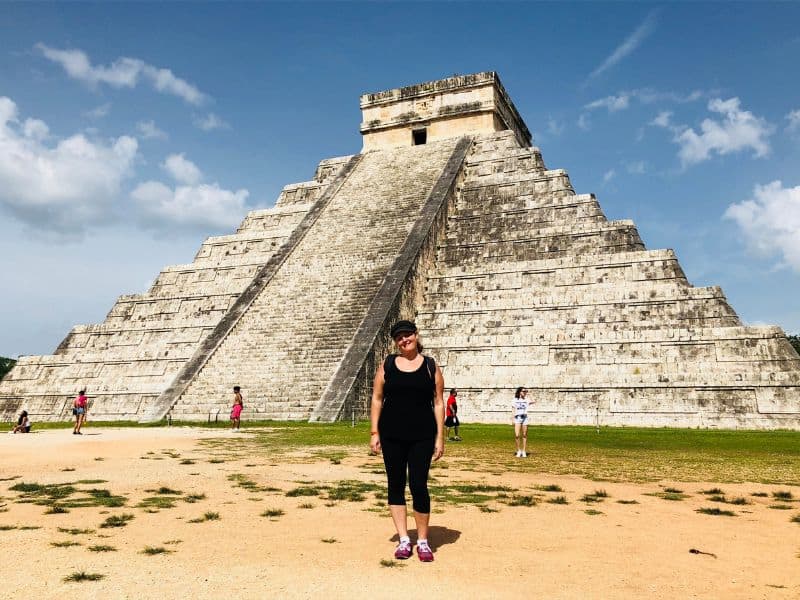
At Chichen Itza, there are several Mayan pyramids and unique sites to explore — including Temple of the Warriors, Group of a Thousand Columns, Great Ball Court and Sacred Cenote.
Entering the site, the first thing you’ll see is the Temple of Kukulkan (also called El Castillo in Spanish, meaning “The Castle”).
This is the Chichen Itza pyramid you’ve likely seen in photos, and it’s dedicated to the Mayan Kukulkan God.
At the base of this giant pyramid, you will see large snake heads in honor of Kukulkan, but you will also see these throughout the site.
Kukulkan and Chichen Itza Ruins

The ancient city of Chichen Itza is said to have been built in his honor.
It’s a staple attraction near Tulum that has earned recognition as one of the New Seven Wonders of the World and a UNESCO World Heritage Site.
Today, visitors and Mayans alike gather at the Chichen Itza site during the Spring and Fall Equinoxes to honor the powerful deity Kukulkan — a creator god, and the god of rain, wind, storms, and life.
During the two Equinoxes, the sun casts rays on the structure, creating a shadow that looks like a snake.
Although he had bird features and some people think he was the Mayan eagle god, Quetzalcoatl was actually representative of the Resplendent Quetzal bird; not an eagle.
Mayan Gods and Goddesses
3. Chaac, Mayan Rain God
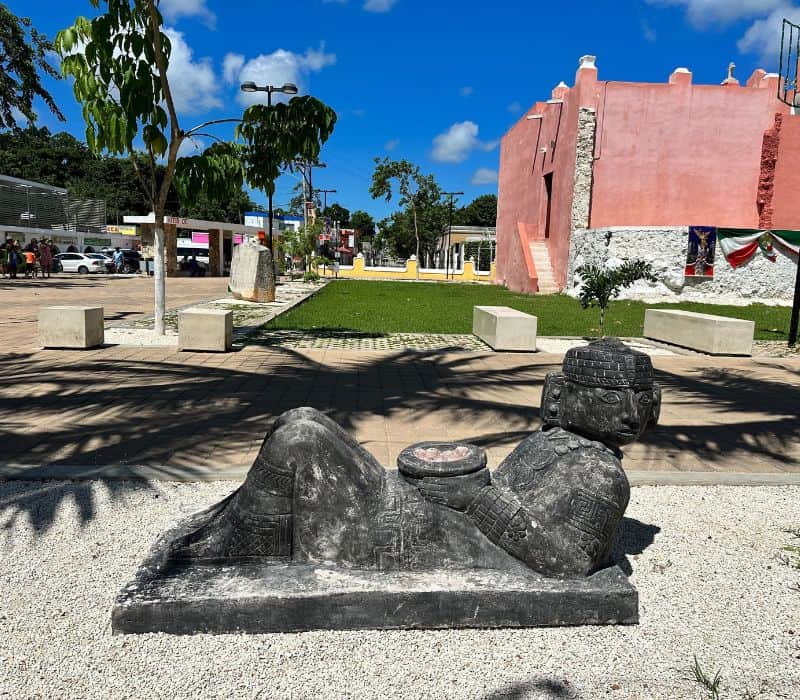
Chaac or Chaak was an important figure in the Mayan pantheon as the Rain God He was often depicted as a human/jaguar hybrid.
However, at the Tollan Ruins of Tula de Allende, Mexico, Chaak statues take on a more reptilian appearance.
This particular god was responsible for providing the rain necessary for healthy crops. An agricultural society, for the Mayans, Chaak played an essential role in their culture — and their survival.
Using his mighty ax, the Mayan weather god Chaak would strike the skies, summoning the rain needed to nourish the Mayan’s lands.
Because the Mayans believed Chaak possessed the power to influence the fertility of their crops, they would offer him food in hopes of enough rain for a bountiful harvest.
For this reason, you’ll always see Chac in a reclined position, ready to receive their offerings.
The name Chac translates to “cloud” in Mayan, highlighting his significance to this agricultural civilization.
Mayan Gods and Goddesses
4. Buluc Chabtan, Mayan God of War
Buluc Chabtan, the Mayan God of War and Violence, was prayed to not for abundance and health — but out of respect and fear.
Unlike the regular Mayan god of death, Cizin, the Mayan god Buluc-Chabtan is known as the God of Sudden Death, and is also associated with gambling.
He was often depicted setting fire to villages and roasting people in his path, creating a sense of terror among the Mayans for this particular death god.
Mayan Gods and Goddesses
5. Kinich Ahau, Mayan Sun God
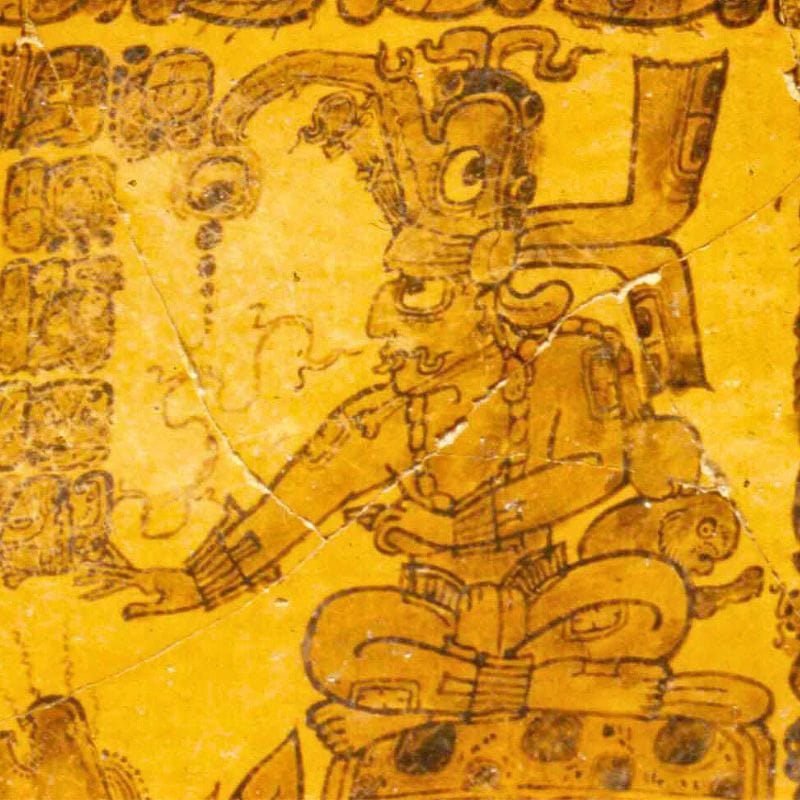
The powerful deity Kinich Ahau is one of the Mayan Sun Gods — and fun fact, in the Maya language, the word kin means sun
Some consider this solar deity the Mayan God of Life because he brings life and light to the world. However, when displeased, Kinich Ahau becomes associated with disease, drought, and war.
He is thought to control drought and the growth of crops, providing the energy that sustains the agricultural fertility of his people.
This Mayan god of the sun is also renowned for his healing powers, often called upon to cure disease.
The Kinich Ahau Mayan God’s association with the sun has led him to be incorporated into calendars.
His Maya sun god power over the success of the people plays a vital role in Mayan culture. You could even consider Kinich to be the Mayan god of prosperity.
Mayan Gods and Goddesses
6. Kinich Kakmó, Mayan Solar God
Kinich Kakmó (sometimes spelled as Kinich Kak Moo) means “fire macaw with the sun face” or “fire parrot” in the Maya language.
This solar deity has a macaw’s head and human body, and carries a lit torch in each hand.
It is said that as the sun reaches its apex in the sky, Kinich Kakmó flew to Earth to accept offerings. When displeased, he would bring with him scorching heat and drought.
Kinich Kakmó Pyramid
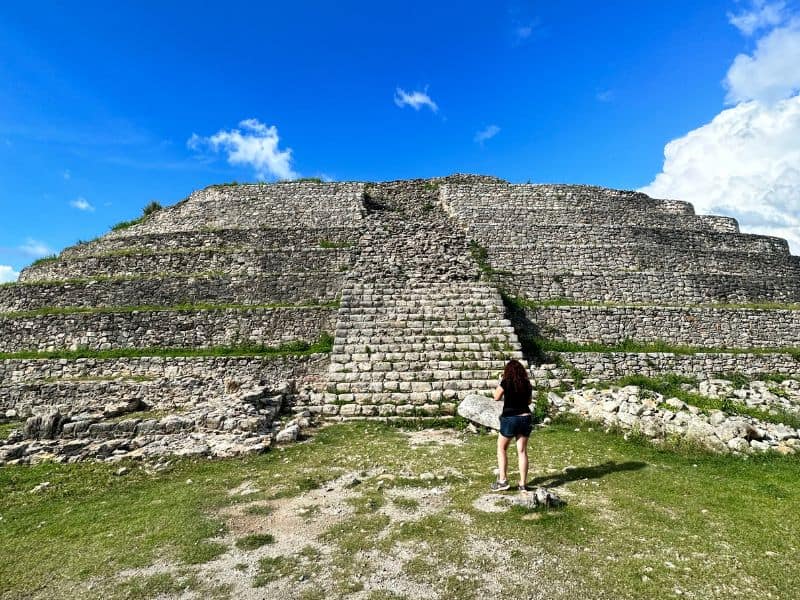
There are many Mexico pyramids in Izamal The Yellow City, but none more impressive than Piramide Kinich Kakmo Ruins — named after the Mayan solar god.
These Izamal Ruins are an important pilgrimage site, religious center and ceremonial center for the Maya to this day.
At 700,000 m³, it’s one of the biggest pyramids in Mexico by volume (the largest is in Cholula). Unlike some other pyramids in Mexico, you can climb Kinich Kakmó Pyramid.
From the top you have some great views of Izamal, one of the most unique Mexico pueblos magicos (magic towns) because all buildings in downtown are painted yellow.
Mayan Gods and Goddesses
7. The Mayan Descending God
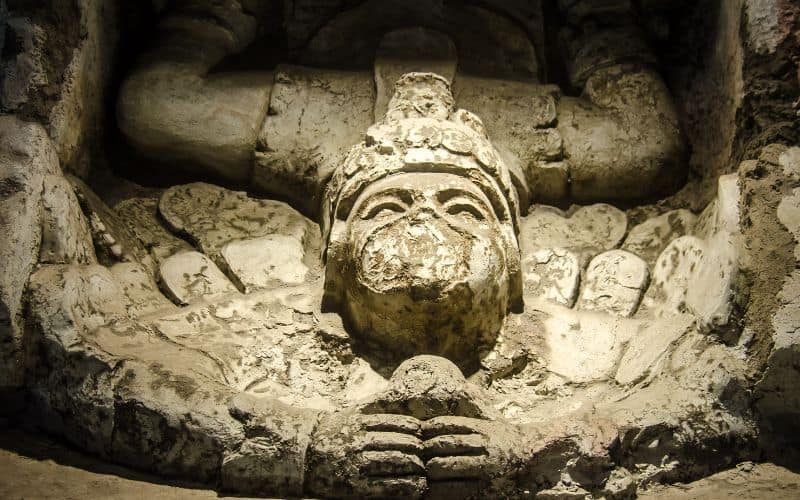
The Mayan Descending God is unique because it’s depicted upside down, with the head and arms below the legs, as if in free-fall.
For this reason, you might also see this god referred to as the Diving God. In fact, the story of this god can be a bit confusing!
According to some Mayan historians, it might also be Ah-Muzen-Cab, the Mayan God of Bees and Honey (which can also be spelled as Ah Muu Zen Caab).
For the Maya, honey was a sacred substance and used in many ways, including at religious ceremonies and as medicine.
It was also used to make balché, a fermented honey drink, and xtabentún, the Mayan honey liquor — and one of the most unique Mexican drinks.
Temple of the Descending God Pyramid in Tulum
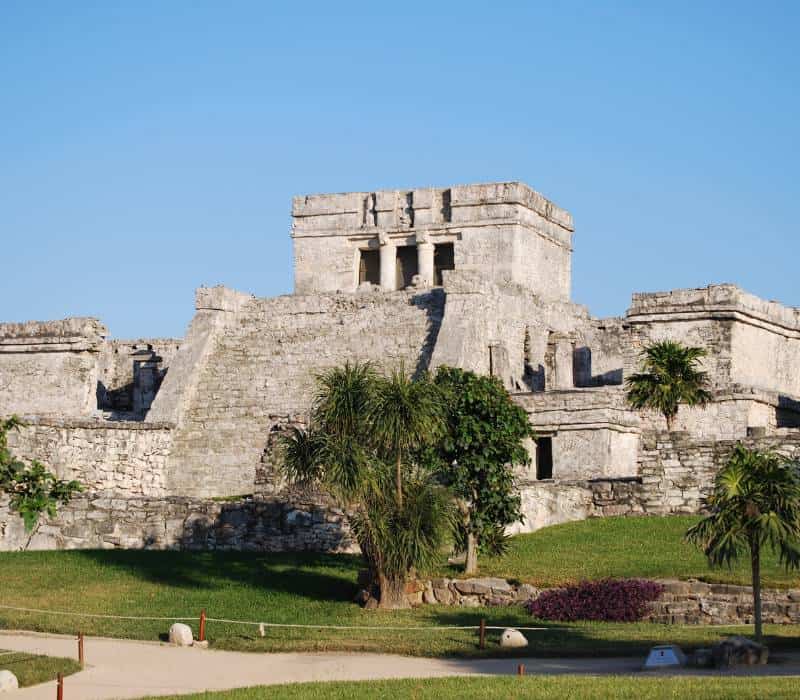
The Temple of the Descending God is one of the most beautiful temples in Tulum Ruins Archeological Site. At the top, you can see a statue of the Descending God.
Besides this grand temple, there are other noteworthy structures to see when you visit Tulum Ruins.
These include Wind God Temple (Templo del Dios del Viento), The Castle (El Castillo), Temple of the Frescoes (Templo de Los Frescos) and more.
Mayan Gods and Goddesses
8. Ix Chel, Mayan Moon Goddess
Now that we’ve covered the most important Mayan gods list, let’s look at some of the Mayan goddess names and their significance to the culture.
This list represents the most important Mayan goddesses, but there are many others.
The Mayan Goddess of the Moon, Ix Chel holds likely the greatest significance of any goddess in Mayan mythology.
This powerful deity is respected for her control over the moon’s cycles, which were crucial for knowing when to harvest crops.
Additionally, she wields influence over areas such as medicine, fertility, childbirth, love, sexuality, midwifery, and feminism. This allows her to stand out as an important symbol of life and vitality.
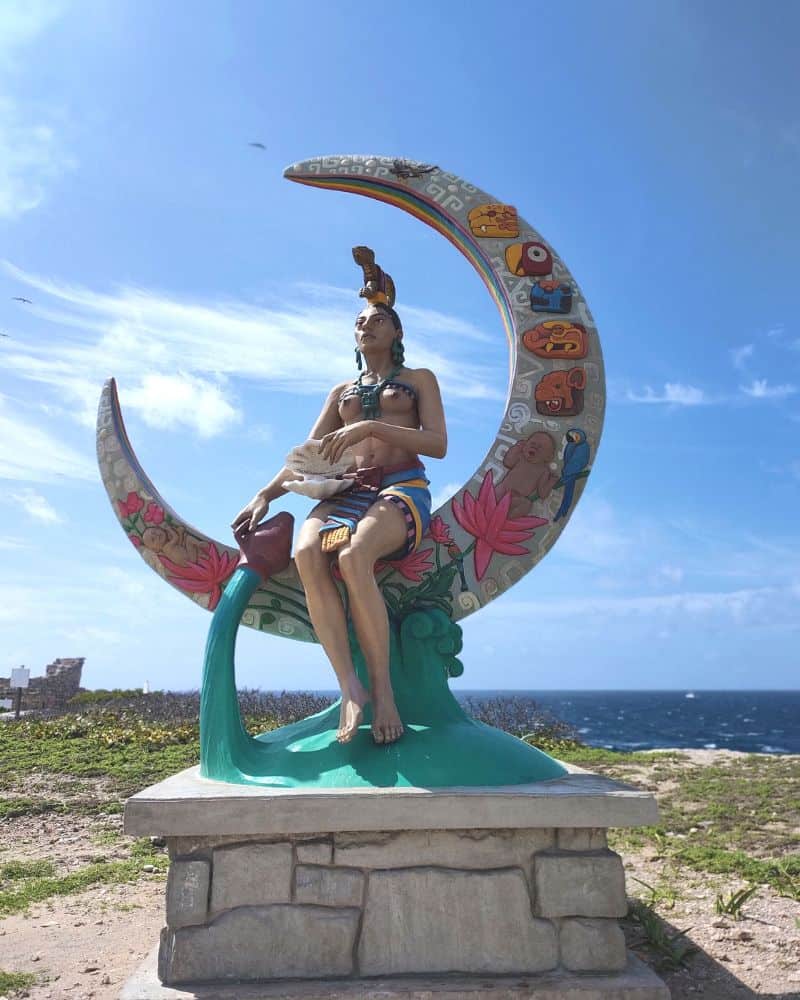
Known as the “Rainbow Woman,” Ix Chel is depicted in two forms, representing both youth and old age.
This can be seen as similar to the Triple Goddess in Paganism, which represents the same woman as maiden, mother and crone.
Temple of ixchel ruins in isla Mujeres
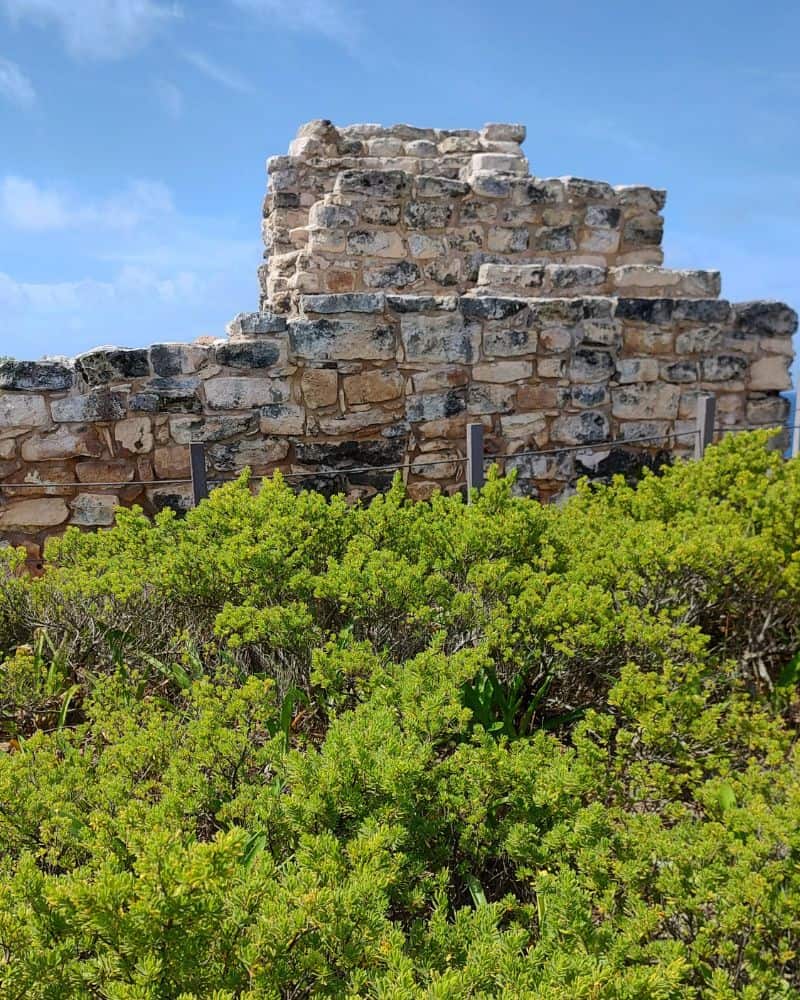
The Temple of Ixchel Ruins & Sculpture Park in Isla Mujeres is one of the most-visited sites on the island.
It is located cliff-side on the southern tip of the island, in Punta Sur EcoPark. This is the easternmost point in Mexico, so it’s the first place in the country that sees the sunrise each day.
Sacred Maya canoe journey for ixchel
Ix Chel is also celebrated annually during the Sacred Maya Journey (or, Travesía Sagrada Maya in Spanish), which is held in her honor.
During the ancient ritual still practiced to this day, followers make their way via canoe to her temple in Cozumel Island, located off the coast of Playa del Carmen in Quintana Roo state.
In total, the round-trip journey is about 30 miles (50 km).
Mayan Gods and Goddesses
9. Awilix, Mayan Lunar Goddess
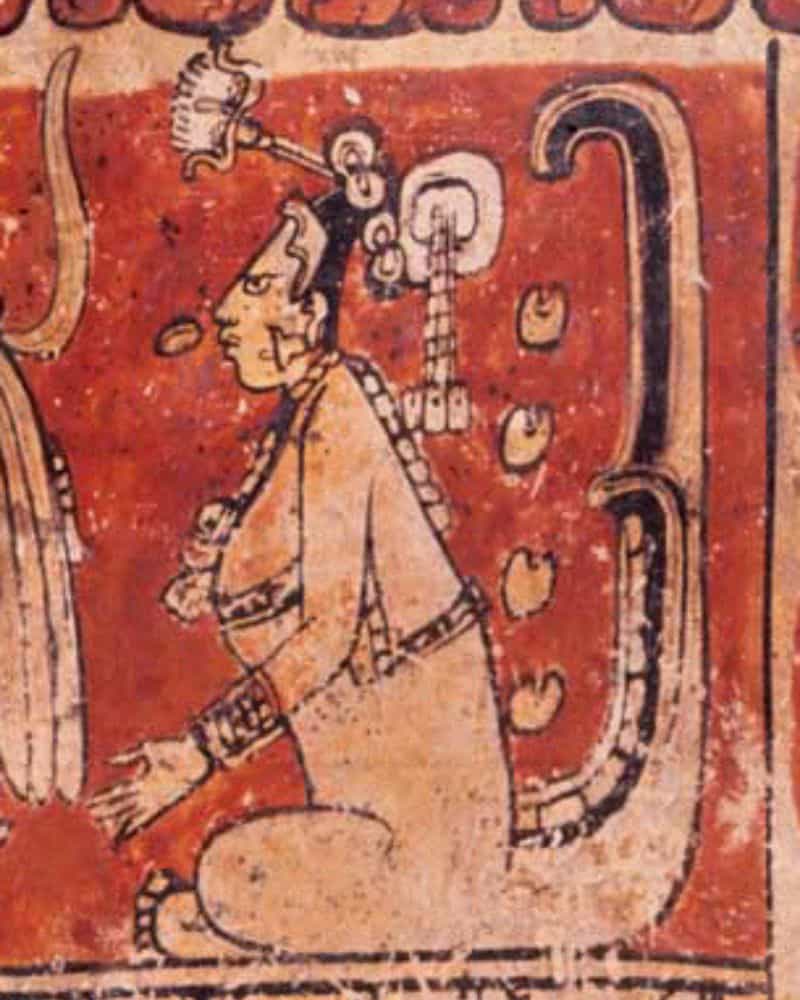
Awilix is another Mayan Goddess of the Moon. She is also known as the Mayan Queen of the Night, reigns over the dark shadows after dark.
Her connection with the jaguar, who prowls and hunts at night, is a reminder of her strength and power. Awilix is also worshipped as one of the Maya Guatemalan gods.
She’s not the only Mayan cat god associated with the jaguar, though.
Ek Chuaj, the Maya God of Cacao, the Mayan Moon Goddess Ix Chel, and the Maya God El are just a few of the Mayan animal gods often depicted as jaguars.
Mayan Gods and Goddesses
10. Ixtab, Mayan Goddess of Suicide

As the Maya Goddess of Suicide, Ix Tab (meaning, roped or hung woman) is depicted in imagery and written about in ancient Mayan texts as a hung woman, with a noose perpetually around her neck.
The ancient Mayans believed that if they committed suicide by hanging, they would be sent to paradise.
On this journey, it was Ixtab who took care of those who sacrificed their souls and guided them.
Over time, her image became more sinister, transforming into an evil spirit, known as Ixtabay, who seduces men and lures them to their death.
As Ixtabay, her visage appears beautiful to men, only to turn on them in the end. ( Note: Photo edit above is Ixtab in the Dresden Codex, via Wikipedia)
Mayan Gods and Goddesses
5 Lesser Known Maya Deities and Their Influence
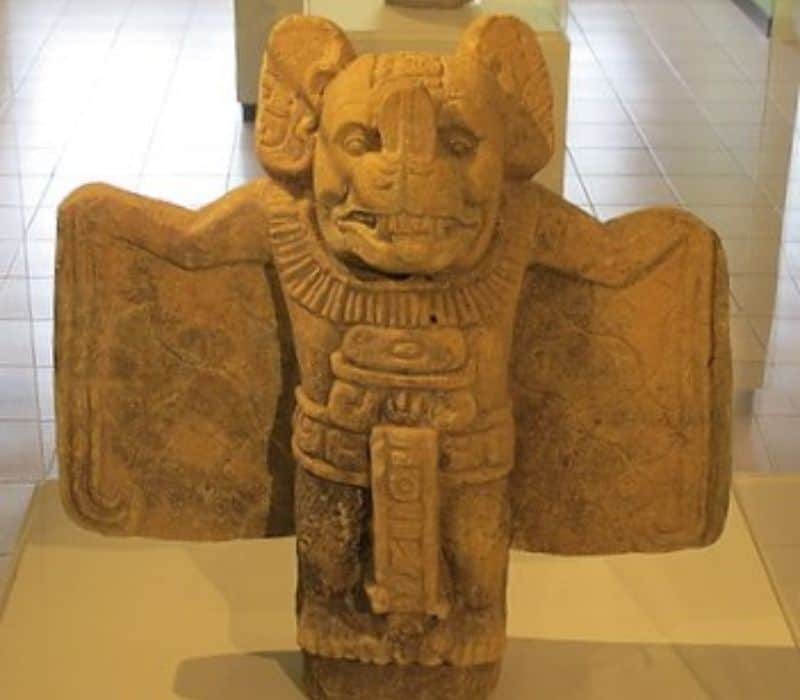
Though we’ve completed the Top 10 Mayan Gods and Goddesses lists, know that there are MANY you should know about.
Oh, and in case you’re wondering, How many Mayan Gods are there? — there are about 250 in total.
While many gods and goddesses of the Mayans, such as Itzamna and Ix Chel, are still well-known in today’s culture, several lesser-known deities also played crucial roles in Mayan daily life.
One example is Camazotz, a bat god. Considered the Mayan Death God of Sacrifice, he was an important figure in the sacrificial rituals.
While lesser known, the other deities listed below had similarly important influences in Mayan culture.
Here are five of the most significant of these less-common Maya pantheon deities:
Mayan Gods and Goddesses
11. Ek Chuaj, Mayan God of Cacao
For chocoholics, this is one of those Maya gods names you might need to know. In simple terms, Ek Chuaj (sometimes spelled Ek Chuah) was the Mayan Chocolate God
More specifically, Ek Chuaj is the Mayan God of Merchants and Cacao.
While these two things might seem unrelated, some Mayan gods and goddesses exist in duality, and can represent more than one thing.
Mayan Gods and Goddesses
12. Yum Kaax, Mayan Plant God
The son of Itzamna, Yum Kaax is a Mayan God of Wild Plants and Animals.
Yum Kaax played a vital role in protecting the Mayan corn fields from wildlife, and some consider him the Maize God (or, Mayan Corn God.
Mayan Gods and Goddesses
13. Hunahpu and Xbalanque, The Mayan Hero Twins

Although not deities per se, there is a Mayan story from the famous Popol Vuh Scrolls (sometimes called the Mayan Bible) of the Hero Twins, brothers Hunahpu and Xbalanque.
In the story, these twin brothers defeat Vucub Caquix, a vain bird demon who falsely claims to be the sun or the moon.
While not canonized in any formal way, Hunahpu and Xbalanque are definitely a big part of Mayan folklore.
Mayan Gods and Goddesses
14. Mayan Vision Serpent God
For the Mayan people, serpents connected the spiritual world with human beings in the physical world, and served as a mode for gods to show themselves to the Mayans.
The Maya Vision Serpent God is thought to be the most important of their serpent deities.
Mayan Gods and Goddesses
15. Ah-Cuxtal, Mayan God of Childbirth
Ah-Cuxtal ensured the safety and protection of unborn children. This Maya god of childbirth was responsible for their safe delivery.
Mayan Gods and Goddesses
Mayan God Symbolism and Representations
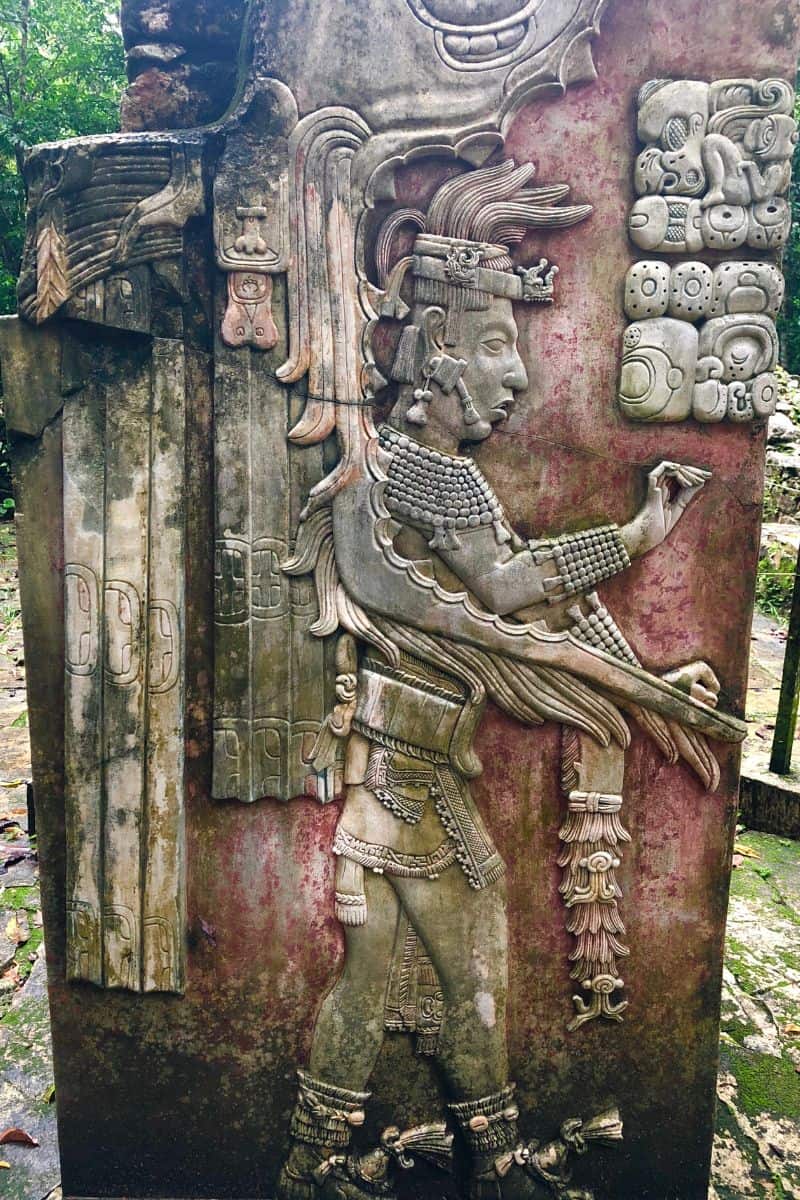
The Mayans have left us with a plethora of well-preserved artifacts, inscriptions, and Mayan Ruins that depict their once-thriving community and culture.
One particularly main god in the Mayan religion, Itzamná, is said to have created hieroglyphics. This is the first written communication method ever discovered.